






What are the best crystals for protection? In contemporary crystal and spiritual-jewelry practice, the most common choices include black obsidian, black tourmaline, smoky quartz, Tiger’s Eye, amethyst, clear quartz, agate, and turquoise. Each is used with a slightly different intention—from boundaries and grounding to focus, clarity, calm, or protective amulet symbolism.
“Protection” here is a spiritual and symbolic concept. There is no scientific evidence that wearing a stone creates an invisible shield against accidents, illness, other people, or bad luck. A protection stone can still be useful as an intention anchor: a physical reminder to maintain boundaries, stay aware, act carefully, and return to your center.
Protection crystals at a glance
| Stone | Common modern protection meaning | Best for |
|---|---|---|
| Black Obsidian | Boundaries, grounding, release | Strong, direct protection symbolism |
| Black Tourmaline | Grounding, energetic boundaries | Classic modern protection-stone practice |
| Smoky Quartz | Steadiness, grounding, clearing | Quiet everyday grounding |
| Tiger’s Eye | Focus, courage, grounded confidence | Work, travel, decision-making |
| Amethyst | Calm, discernment, spiritual protection | Reflection and evening rituals |
| Clear Quartz | Clarity, intention, amplification | Flexible pairing with other stones |
| Agate / Dzi | Stability, awareness, amulet symbolism | Tibetan-inspired symbolic jewelry |
| Turquoise | Protective adornment, balance, well-being symbolism | Himalayan material and jewelry context |
1. Black obsidian: protection and boundaries
Black obsidian is natural volcanic glass. In contemporary spiritual practice, it is one of the strongest visual symbols for boundaries, grounding, and confronting what needs to change. Its dark, glassy appearance makes it a natural choice for jewelry intended to represent steadiness and containment.
If your protection intention is “keep my boundaries clear” or “stay grounded when things become intense,” obsidian is a strong starting point. Read the full Black Obsidian meaning and benefits guide.

2. Black tourmaline: a modern protection-stone classic
Black tourmaline—often referring to black schorl—is one of the most frequently recommended stones in modern crystal protection lists. It is commonly associated with grounding and energetic boundaries.
Kailora does not currently need to force every high-volume crystal keyword into a product recommendation. Black tourmaline is included here because it is part of the wider protection-crystal conversation, even though the current Kailora assortment focuses more strongly on obsidian, quartz, Tiger’s Eye, agate, turquoise, and amethyst.
3. Smoky quartz: steady, understated grounding
Smoky quartz is a brown-to-gray variety of quartz whose color develops through natural irradiation interacting with the crystal structure. In modern spiritual symbolism, it is usually associated with grounding, stability, clearing mental clutter, and staying present.
Compared with black obsidian, smoky quartz often carries a quieter visual and symbolic tone. It works well for someone who wants protection to feel less like a “shield” and more like steady composure.
Learn more in Smoky Quartz: Gemology, Meaning, Symbolism & How to Wear It.
4. Tiger’s Eye: focus and grounded confidence
Tiger’s Eye is known for chatoyancy—the moving band of light that appears across a well-cut stone. Contemporary meanings often emphasize focus, confidence, discernment, courage, and grounded action.
That makes Tiger’s Eye especially useful for a protection intention connected with decision-making: travel, work, negotiation, public speaking, or moments when you want to remain alert without becoming reactive.

Read the Tiger’s Eye guide or see how Kailora pairs Tiger’s Eye with smoky quartz in the Eye of Insight bracelet.
5. Amethyst: calm and discernment
Amethyst is purple quartz. Historical lore and modern crystal practice connect it with restraint, clear thinking, calm, intuition, and spiritual protection. Rather than using “protection” as a barrier, amethyst is often chosen when the desired state is quieter: respond thoughtfully, sleep into a calmer routine, or create distance from overstimulation.
See Amethyst Meaning & Benefits for the distinction between mineral facts, historical lore, and modern crystal claims.

6. Clear quartz: clarity and intention
Clear quartz is frequently called an “amplifier” in contemporary crystal practice. Scientifically, it is crystalline silicon dioxide; the claim that it amplifies spiritual energy is metaphysical rather than a gemological property.
As an intention object, however, clear quartz is highly flexible. Its transparent appearance naturally supports themes of clarity, reset, focus, and deliberate action. It can also be paired visually with nearly any darker protection stone.
Continue with Clear Quartz Bracelet Benefits or the broader Clear Quartz gemology guide.
7. Agate and Dzi beads: stability, awareness and amulet symbolism
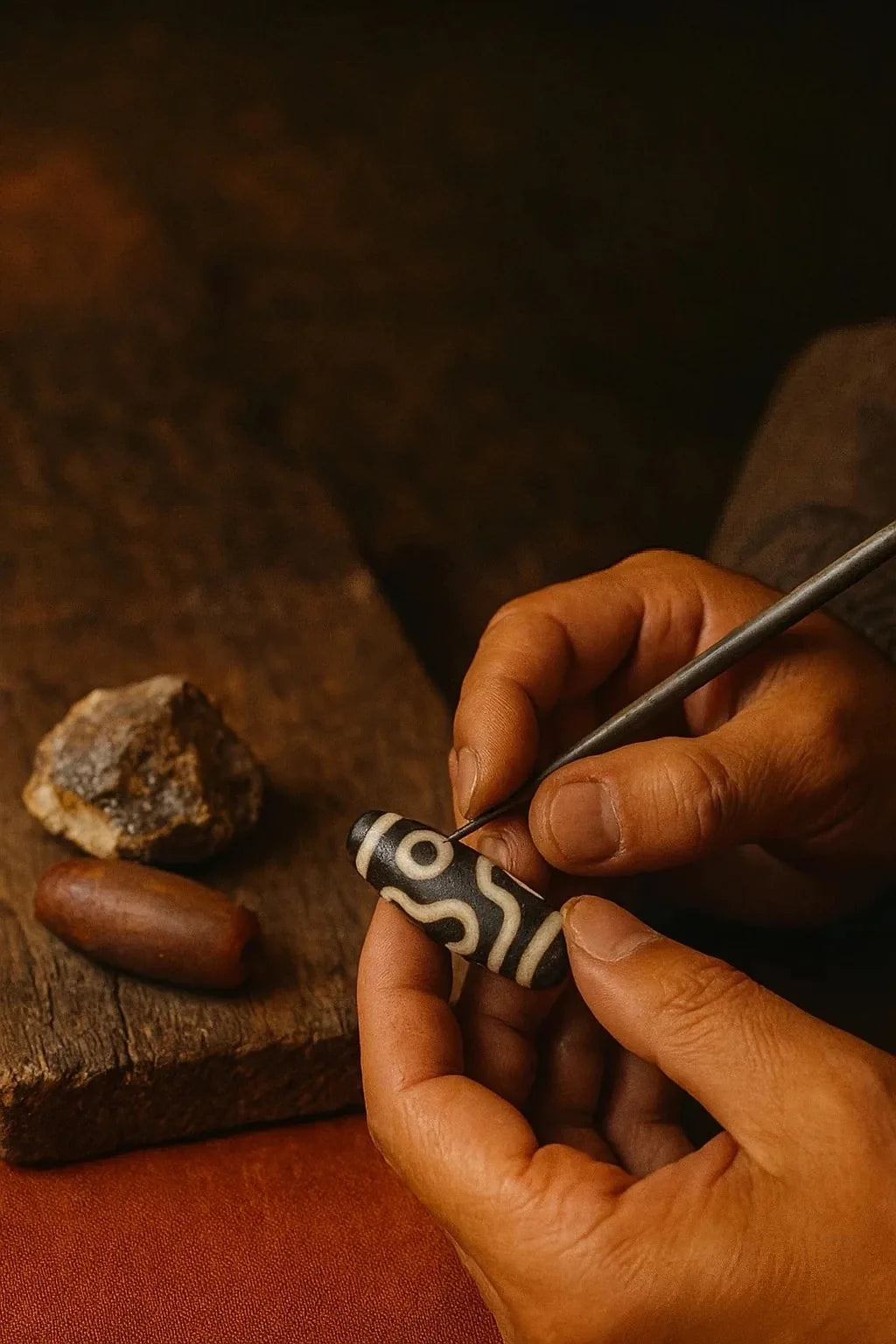
Agate is a variety of chalcedony valued for banding, color, and pattern. Dzi beads are a patterned bead tradition strongly associated with Tibetan and Himalayan jewelry; many contemporary Dzi beads are made from agate.
Modern Dzi symbolism frequently uses the language of protection, awareness, luck, prosperity, and specific “eye” meanings. Those eye-number systems are not one uniform canonical Tibetan Buddhist doctrine, but they are an important part of contemporary Dzi practice and collecting culture.
Explore the Tibetan Dzi Beads collection or start with Dzi bead symbolism.
8. Turquoise: Himalayan adornment and protective symbolism
Turquoise has a long material presence in Tibetan and Himalayan adornment. Jewelry, prayer beads, personal ornaments, and traded objects have all contributed to its cultural importance. Modern wearers also associate turquoise with balance, well-being, communication, and protection.
Because turquoise has real historical material context in Tibetan jewelry, it is especially useful for Kailora’s content system: the stone does not need an exaggerated supernatural claim to have cultural depth. Read Tibetan Turquoise: History, Gemology, Symbolism & Jewelry.
How to choose the right protection crystal
Instead of asking which stone is “most powerful,” define what protection means to you:
- Boundaries: black obsidian
- Steadiness: smoky quartz
- Focus and courage: Tiger’s Eye
- Calm discernment: amethyst
- Clarity: clear quartz
- Amulet symbolism: agate Dzi
- Himalayan material context: turquoise
Then choose a format you will actually wear. A bracelet is visible and tactile; a necklace is less exposed to desk impact; a mala-inspired piece can support repetitive meditation or reflection.
Can you wear multiple protection stones together?
Yes. There is no mineralogical reason that most of these stones cannot be worn in the same jewelry stack. In spiritual practice, combinations are personal rather than governed by one universal compatibility chart.
One useful approach is to pair a primary intention stone with a supporting stone. For example: Tiger’s Eye + smoky quartz for focused grounding; obsidian + amethyst for boundaries plus reflection; or clear quartz + a darker stone for clarity plus steadiness.
Protection jewelry at Kailora
Kailora treats protection as an intention rather than a supernatural guarantee. The Protection & Grounding collection brings together natural stones, Dzi-inspired forms, symbolic jewelry, and tactile pieces designed to remind the wearer of steadiness, boundaries, and awareness.
If you prefer a broader jewelry-first guide rather than a stone-first guide, read What Is Protection Jewelry?
Crystal and stone meanings or “benefits” described here reflect historical lore, cultural traditions, contemporary spiritual practice, and personal symbolism. They are not medical advice, are not scientifically established protective or therapeutic effects, and do not guarantee safety, healing, luck, prosperity, or other outcomes.