




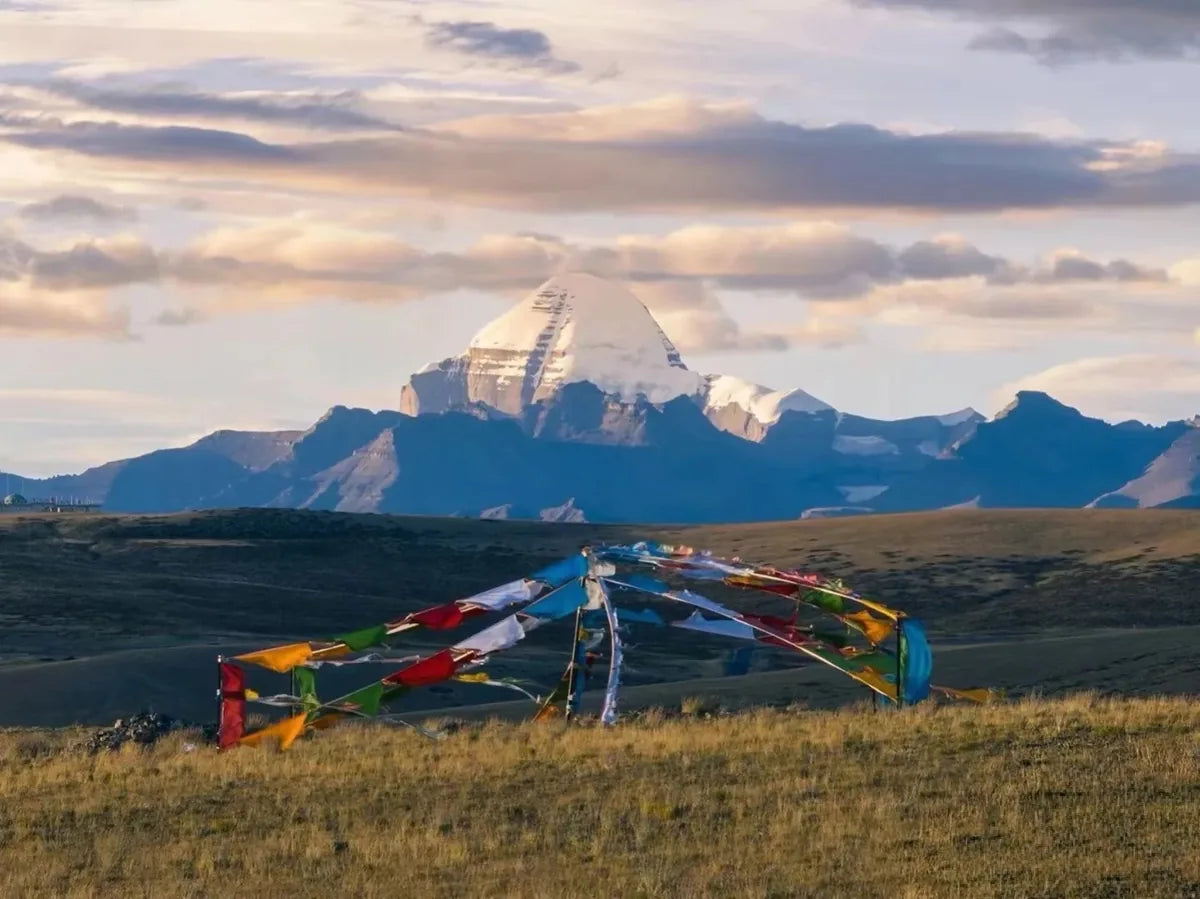
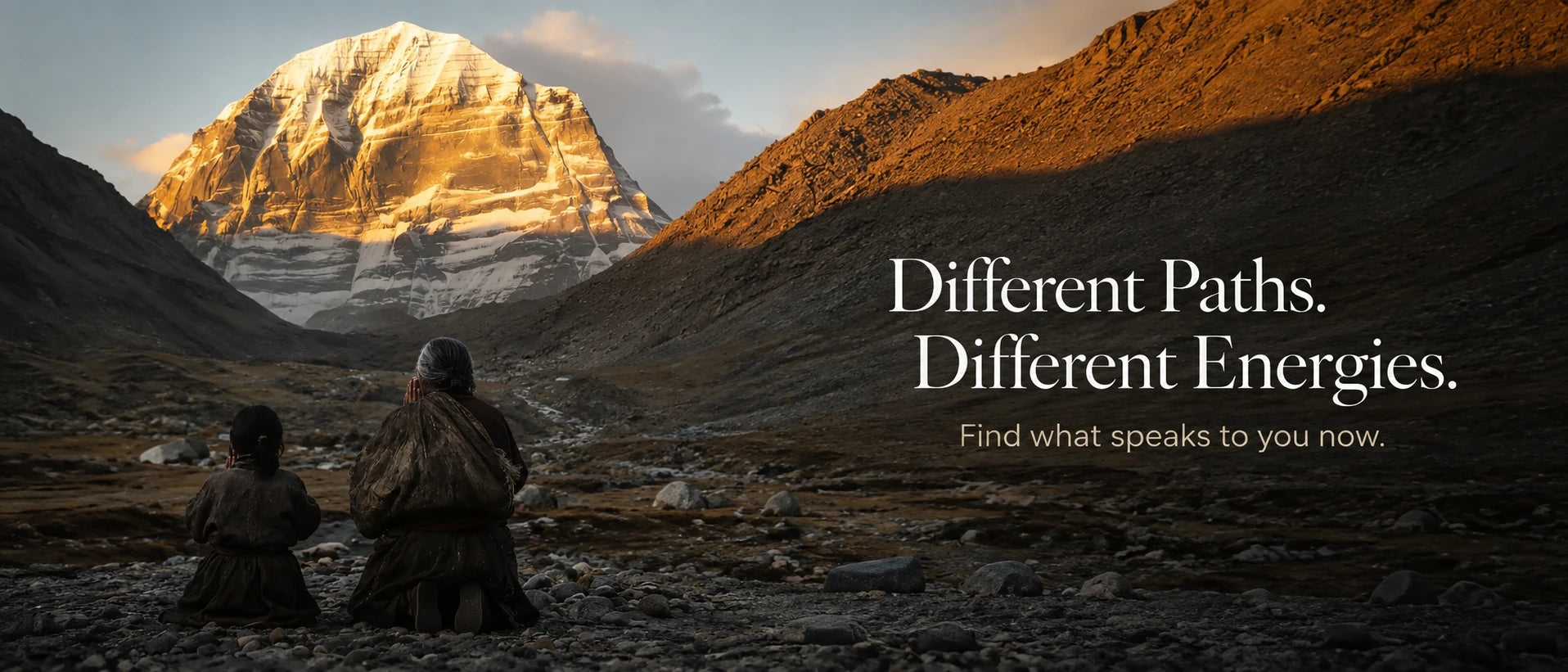


A mountain can be a geological formation. It can also be a destination, a story, a ritual landscape, a place of memory, and a sacred presence.
Sacred geography describes the ways religious traditions give particular places spiritual, historical, and ritual significance. In Tibetan Buddhist culture, sacred geography can include mountains, lakes, caves, monasteries, temples, stupas, pilgrimage roads, and entire landscapes associated with teachers, narratives, and practice.
Why Does Place Matter in Tibetan Buddhism?
Religious traditions do not exist only in books and ideas. They exist somewhere.
A teacher meditated in a cave. A monastery preserved a lineage. A mountain became associated with a deity or sacred narrative. A path was walked repeatedly by generations of pilgrims.
Through memory, art, story, ritual, and repetition, geography becomes religiously meaningful.
Pilgrimage and Sacred Landscape
Pilgrimage is one of the clearest ways sacred geography becomes embodied. A pilgrim does not simply look at a holy site from a distance; they travel toward it.
Weather, altitude, distance, fatigue, encounters with other pilgrims, offerings, prayers, and the landscape itself can become part of the experience. This is fundamentally different from encountering the same place only through a photograph.
What Is Kora?
A major practice associated with sacred sites is kora, or circumambulation. In Tibetan Buddhist contexts, pilgrims traditionally move clockwise around a sacred object or landscape.
A kora may circle a temple, monastery, stupa, sacred mountain, or another revered site. Walking therefore becomes a spatial form of practice.
Our complete guide to kora and Mount Kailash pilgrimage explains this tradition in greater detail.
Why Is Mount Kailash So Important?
Mount Kailash is one of the best-known sacred mountains of the Tibetan Plateau. It holds significance for multiple religious traditions, including Buddhism, Hindu traditions, Jainism, and Bon.
For Tibetan Buddhist pilgrims, the mountain belongs to an extraordinary ritual landscape shaped by circumambulation, sacred narratives, monasteries, high passes, and generations of pilgrimage memory.
Read more in Why Is Mount Kailash Sacred?.
Sacred Geography Is More Than Famous Mountains
It is easy for outsiders to reduce Tibetan sacred geography to a few spectacular mountain photographs. That misses much of the tradition.
A modest cave may matter because a revered teacher practiced there. A small chorten may mark religious memory. A mani wall may shape the way travelers move through a settlement. A monastery may organize the sacred geography of an entire region.
The religious importance of a place comes from relationships among landscape, history, community, narrative, and practice—not simply visual grandeur.
Mani Stones and Pilgrimage Routes
Carved mantra stones show how religious practice can become physically embedded in a landscape. A pile or wall of mani stones changes an ordinary route. Travelers may pass it in a prescribed direction, pilgrims may add stones, and written mantras become part of the terrain itself.
Continue with Mani Stones: Carved Mantras, Pilgrimage, and Tibetan Sacred Landscapes.
Can a Map Represent a Sacred Landscape?
Maps do more than measure distance. They decide which places matter and how those places relate to one another.
Pilgrimage maps can therefore represent a religious interpretation of space. Monasteries, sacred peaks, caves, temples, and narrative locations may be emphasized because the map is organizing a sacred world rather than presenting only neutral topography.
Can Sacred Places Be Carried Home?
A pilgrim cannot carry a mountain home, but religious communities have long found ways to preserve relationships with distant sacred places through paintings, prints, small images, texts, relics, models, blessed objects, and memory.
This creates an important connection between pilgrimage and material culture: objects travel because people travel.
Sacred Landscape vs. Tourism
A sacred mountain may also be photogenic. A monastery may become a travel destination. Those realities can coexist, but visitors should recognize that they are not entering an empty scenic backdrop.
Places important to religious communities deserve different behavior from ordinary attractions. Photography, clothing, entering restricted spaces, touching ritual objects, interrupting ceremonies, and ignoring local instructions can all have cultural consequences.
Kailora and Himalayan Landscape Inspiration
Mountains and pilgrimage landscapes can inspire contemporary design and personal reflection. A mountain might suggest endurance, perspective, or the idea of a journey.
Those are modern symbolic associations. They should not replace the specific religious histories attached to sacred places. Mount Kailash is not sacred because a modern brand decided that mountains symbolize strength. The tradition came first.
Respectful inspiration begins with that order: understand the place before turning it into a personal metaphor.
For a concrete example, read the design story behind Kailora’s Mount Kailash Stud Earrings, which shows how the mountain’s visual form can inspire contemporary jewelry while keeping sacred geography and personal symbolism distinct.
Explore more Tibetan pilgrimage, art, ritual, and everyday culture in the Kailora Tibetan Culture Guide.