



Some mountains are admired from a distance.
Others become points of orientation.
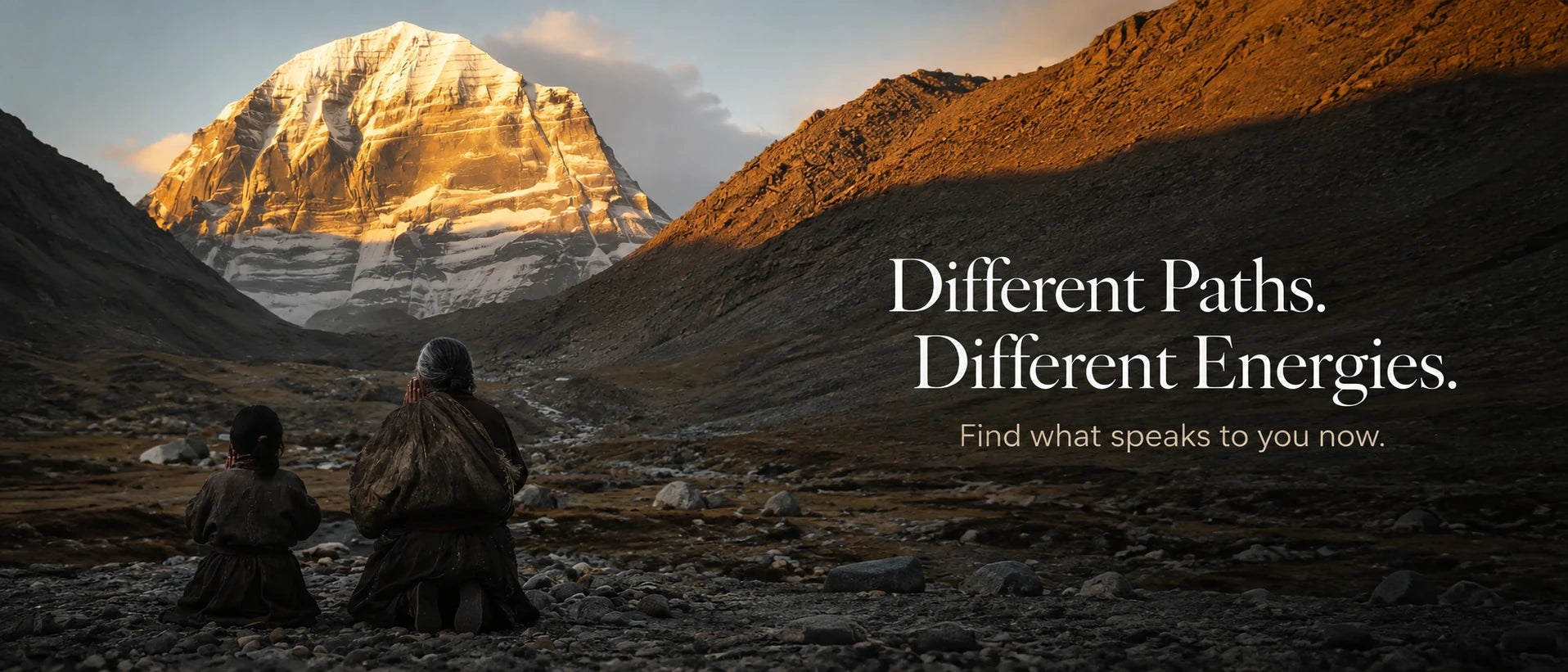
Mount Kailash rises from the landscape of western Tibet with an unmistakable presence — rock, snow, shadow and silence forming a shape that seems almost architectural.
But for Kailora, the beginning of this design was never simply the appearance of a beautiful mountain.
It began with what the mountain represents to the people who approach it with reverence, and with a question:
How can a sacred landscape inspire contemporary jewelry without reducing it to decoration?
The answer became one of Kailora’s smallest designs: the Mount Kailash Stud Earrings.
Before the Jewelry, There Is the Mountain
Mount Kailash is part of a living sacred landscape.
Known in Tibetan as Kang Rinpoche, it holds profound significance within Tibetan Buddhism and Bön, as well as Hindu and Jain traditions. Those traditions do not give the mountain one identical meaning, and Kailora does not attempt to collapse them into one.
That distinction matters.
A contemporary piece of jewelry cannot reproduce a pilgrimage, a religious tradition or the spiritual authority of a sacred place.
It can, however, begin with respect.
For readers who want the cultural context first, our Journal explores why Mount Kailash is sacred and the tradition of kora around Mount Kailash in dedicated articles.
For this design story, we begin somewhere different: with form.

The Silhouette
The first thing we wanted to preserve was the mountain’s distinctive presence.
Not every detail. Not a miniature landscape. Just the essential shape.
The Mount Kailash Stud Earrings use a softly rounded triangular form that recalls the visual structure of the peak while remaining small enough for understated everyday wear.
Reducing the mountain to a compact silhouette changed the scale, but not the central idea.
A large landscape became a small personal object. A mountain in a quieter form.

Why We Kept the Earrings Small
There was an opportunity to make the design larger, more decorative and more immediately recognizable.
We chose not to.
The finished studs sit close to the ear. They do not need to dominate an outfit or explain themselves from across the room.
That restraint became part of their meaning.
Some symbols are most personal when they remain close. They can accompany an ordinary morning, a journey, a new beginning or a difficult day without turning every moment into a statement.
For Kailora, meaningful jewelry does not always need to be loud.
Sometimes its purpose is simply to remain with you.
The Texture
The surface of the earrings was intentionally kept tactile rather than perfectly smooth.
The fine textured finish gives the metal a slightly weathered character, recalling rock, erosion and surfaces shaped by time.
The studs are crafted with a copper base and a silver-tone electroplated finish.
The cooler metallic tone keeps the design contemporary, while the textured face prevents it from becoming a purely geometric object.
The result sits somewhere between landscape and jewelry: not a literal replica of Mount Kailash, but a modern form shaped by its visual presence.

From Mount Kailash to Protection & Grounding
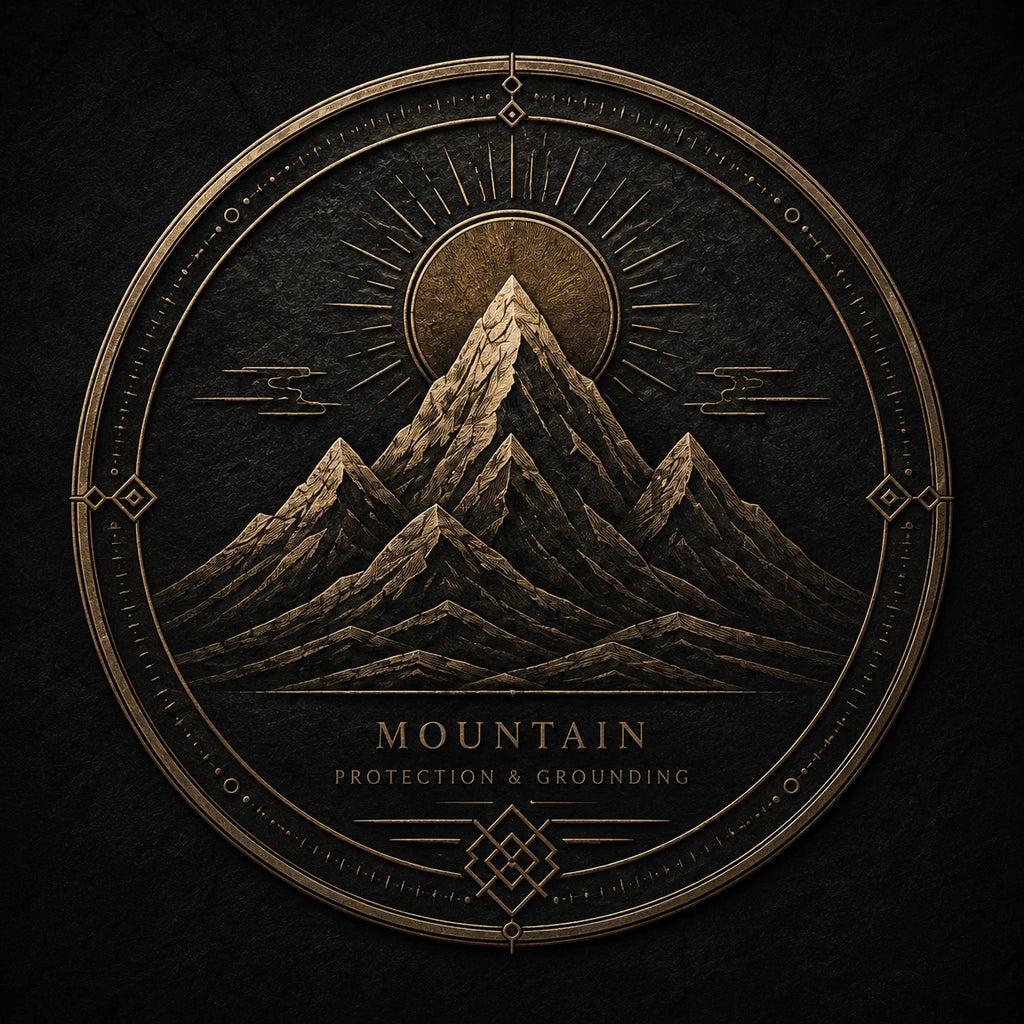
Within Kailora’s Six Energy Journeys, this piece belongs to Protection & Grounding.
That does not mean Kailora is defining the religious meaning of Mount Kailash as “protection” or “grounding.”
Those words belong to Kailora’s contemporary design language.
What inspired us was something simpler.
A mountain remains while conditions around it change.
Clouds move. Weather shifts. Light disappears and returns. People arrive and continue along their paths.
The mountain stays.
That image became a metaphor for an inner quality we wanted this design to carry:
steadiness without rigidity.
presence without noise.
strength without performance.
Within Kailora, Protection & Grounding is about returning to your center, holding your boundaries and finding something steady within change.
The jewelry does not guarantee protection. It is designed as a wearable reminder of the intention you choose to carry.

Why the Design Is Unisex
Stillness is not feminine.
Grounding is not masculine.
Inner strength does not belong to one style of dress.
That is why the Mount Kailash Stud Earrings were designed as a unisex piece.
Their compact scale and restrained silver-tone finish allow them to sit naturally within different styles without losing their identity.
On one person, they may feel minimal. On another, symbolic. For someone else, they may simply be a small mountain worn close to the body.
The meaning remains personal.

Kailash and Kora: The Idea Behind Kailora
Mount Kailash is also deeply connected to Kailora’s own name.
Kailash — the mountain.
Kora — the path around the sacred center.
One remains.
The other moves.
Together, they reflect an idea that has shaped the brand from the beginning:
Life moves. Your center does not have to disappear with it.
We travel. We change. We begin again.
We move through relationships, places, uncertainty, ambition and new chapters. The path never stays exactly the same.
But through all of that movement, we can continue returning to something quieter within ourselves.
That relationship between movement and stillness is one of the ideas behind Kailora. And it is why Mount Kailash continues to appear in our visual world.
Carry Your Mountain Within
A mountain cannot travel with you.
A symbol can.
That is ultimately what these earrings are designed to become.
Not a substitute for Mount Kailash.
Not a religious object.
Not a promise that wearing them will change what happens around you.
Something quieter.
A small reminder to return to yourself when the world becomes loud. To remain grounded when circumstances shift. To carry steadiness into movement.
Protection · Grounding · Inner Strength
Carry your mountain within.

Explore the Piece
Mount Kailash Silver-Tone Copper Stud Earrings
Inspired by the silhouette of Mount Kailash and created within Kailora’s Protection & Grounding journey.
Editorial note: Kailora uses symbolic intention as contemporary design language for mindful daily wear. These meanings are personal reflections, not guaranteed spiritual outcomes or definitions of religious doctrine.