



At first glance, kora can look remarkably simple.
People walk. They follow a path around a monastery, a stupa, a temple, a lake, or a mountain. Then they return to the place where they began.
But in Tibetan Buddhist culture, walking in a circle can carry meanings far beyond ordinary movement.
This practice is commonly known as kora, a Tibetan form of circumambulation: moving around a sacred object or place as an act of reverence, devotion, and religious practice.
For some, a kora may take only a few minutes around a small stupa. For others, it may become a demanding pilgrimage through a vast mountain landscape. One of the most famous examples takes place around Mount Kailash, known to Tibetans as Kang Rinpoche.
Quick Answer
Kora is the Tibetan practice of circumambulation: moving around a sacred object or place as an act of reverence and religious practice. Tibetan Buddhists normally circumambulate clockwise, while Bön traditions generally preserve a counterclockwise convention. Kora can take place around stupas, monasteries, temples, sacred mountains, lakes, and other significant sites.

What Does “Kora” Mean?
The Tibetan term commonly associated with circumambulation is skor ba—the practice of going around or circling something.
In Tibetan Buddhist practice, that sacred focus might be a stupa, monastery, temple, shrine, sacred mountain, or another religiously significant place. The circle is not simply a convenient walking route. The movement itself becomes part of the devotional act.
Kora is therefore better understood as religious movement through sacred space, rather than simply walking around an object.
Why Walk in a Circle?
In many modern cultures, “going in circles” can sound like a metaphor for getting nowhere. Kora gives the circle a very different meaning.
The purpose is not necessarily to arrive somewhere new. Instead, the practitioner repeatedly returns to the sacred center. A stupa remains at the center while the body moves around it. A monastery remains fixed while pilgrims pass along its outer path. A mountain rises almost immovably while generations of people walk around its base.
For Buddhist practitioners, the journey may be accompanied by prayer, mantra recitation, prayer wheels, full-body prostrations, or quiet attention, depending on the place, tradition, and practitioner.

Why Is Kora Usually Clockwise?
Himalayan Buddhists traditionally circumambulate clockwise around stupas, monasteries, temples, and sacred mountains. The same directional convention explains why Tibetan Buddhist prayer wheels are normally turned clockwise.
There is, however, an important distinction. The Tibetan Bön tradition has its own ritual conventions and traditionally circumambulates in the opposite, counterclockwise direction. Tibetan religious traditions should not be treated as identical.
For the relationship between direction, mantra, and movement, read What Is a Tibetan Prayer Wheel?.
What Can People Perform Kora Around?
Kora is not limited to one kind of sacred object.
At a relatively small scale, people may circumambulate a chorten or stupa. At monasteries and temples, routes may follow exterior walls or extend around a larger complex. Prayer wheels and Mani stones and walls can also help define these pathways.
At a much larger scale, an entire natural landscape may become the sacred center. Mountains, lakes, caves, and other natural places occupy important positions in Tibetan and Himalayan religious geography.
When the Landscape Itself Becomes Sacred
One of the most striking features of Himalayan religious culture is that sacred space is not limited to buildings.
A monastery can be sacred. A stupa can be sacred. But so can a mountain.
Through pilgrimage, story, ritual, and repeated practice, landscape becomes part of religious life. The larger relationship among sacred mountains, routes, monasteries, caves, lakes, and embodied practice is explored in What Is Sacred Geography in Tibetan Buddhism?.
Some sacred landscapes are also interpreted in relation to Buddhist cosmology or mandala systems. That does not mean every sacred mountain is simply “a mandala.” For the visual and ritual concept itself, see What Is a Tibetan Mandala?.
Mount Kailash: Kang Rinpoche
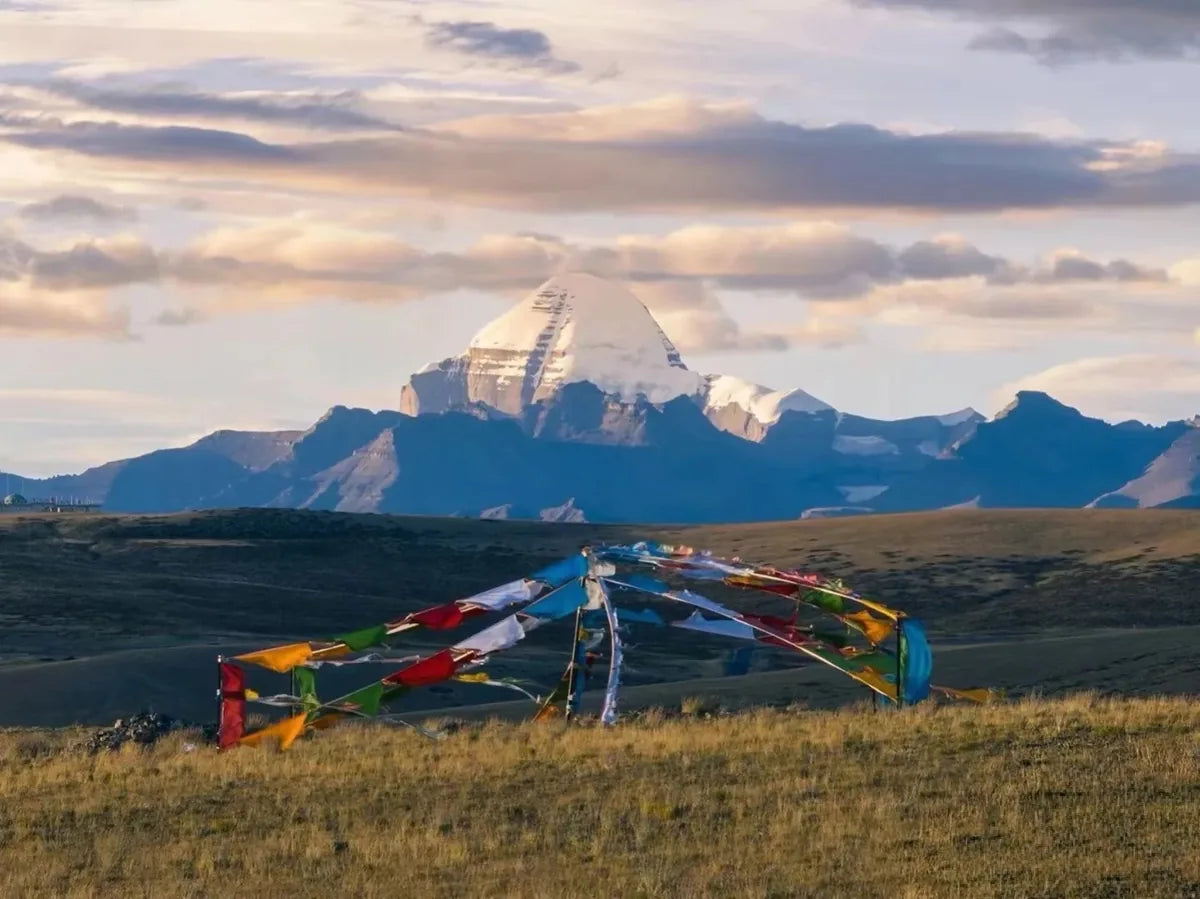
Mount Kailash rises in far western Tibet and is widely known in Tibetan as Kang Rinpoche, often translated as “Precious Snow Mountain” or “Jewel of the Snows” in English-language contexts.
The mountain occupies an extraordinary place in Asian religious geography and is sacred to more than one tradition. It has major significance in Buddhism, Bön, Hinduism, and Jainism, although these traditions do not interpret the mountain in identical ways.
Calling Kailash simply “a Buddhist mountain” removes much of the complexity that makes the place remarkable. For the comparative context, read Why Is Mount Kailash Sacred?.

Why Do Pilgrims Walk Around Mount Kailash?
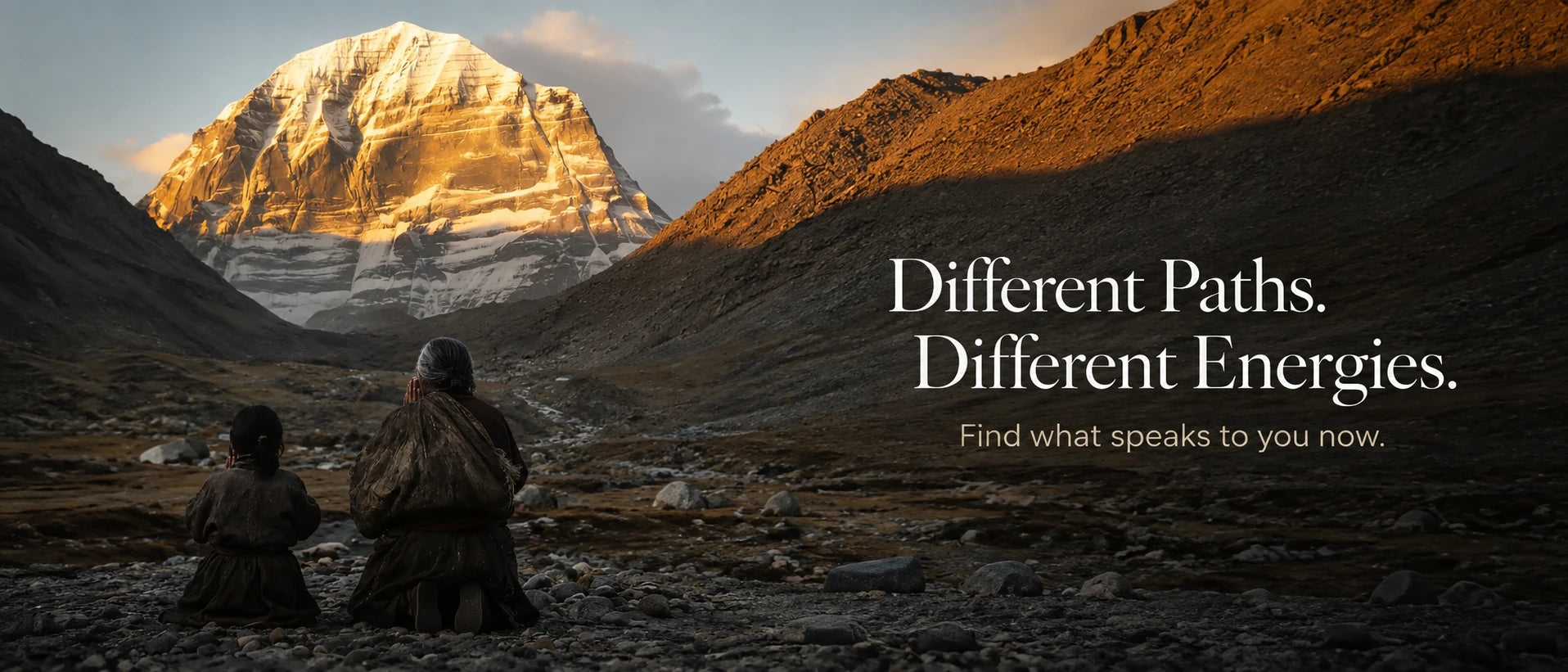
Pilgrims travel to Mount Kailash not primarily to conquer its summit, but to move around it.
In ordinary mountaineering, the summit is often the goal. Kora reverses that logic. The mountain remains the sacred center; the pilgrim moves around it. The body repeatedly changes its relationship to the mountain—seeing it from different directions and under changing weather and light.
The landscape is not simply a background for ritual. It participates in the experience itself.
Kora, Merit, and Devotion
In Tibetan Buddhist practice, circumambulation is traditionally connected with merit—the positive karmic potential associated broadly with wholesome actions.
But this should not be reduced to a simple numerical equation such as “one circle equals one spiritual reward.” Kora exists within a larger religious context involving motivation, reverence, prayer, generosity, ethical conduct, and dedication.
Some pilgrims recite mantra. Others turn prayer wheels. Some perform repeated full-body prostrations along sections of a route.
What unites these different actions is that the body participates. Devotion is walked, repeated, carried, and enacted through movement.


Kora During Saga Dawa
Pilgrimage and circumambulation can become especially visible during Saga Dawa, an important period of Tibetan Buddhist commemoration and practice. Communities may intensify prayer, generosity, scripture reading, offerings, kora, and prostrations during the month.
This shows that pilgrimage is shaped by sacred time as well as sacred space.
Kora and the Prayer Wheel
A person walking around a monastery may pass a row of mounted prayer wheels and turn them one by one. Another pilgrim may carry a handheld prayer wheel while walking. Someone else may recite Om Mani Padme Hum as the route continues.
Walking, rotating, reciting, and remembering become interconnected practices. The wheel turns. The pilgrim circles. The mantra repeats.
Is Kora the Same as Hiking?
No.
A visitor may physically walk the same route and experience altitude, weather, distance, scenery, and exhaustion. Those features can make a route feel like a trek.
But for pilgrims, the religious meaning is central. The destination is sacred. Direction can matter. Prayer and ritual may accompany the journey, and the act can be connected with merit, devotion, vows, or religious aspiration.
Calling kora simply “Tibetan hiking” therefore misses the practice's cultural meaning.
Repetition Is Not the Same as Meaninglessness
The pilgrim follows a circular route. Prayer beads move bead by bead. Prayer wheels turn again and again. Mantras are repeated.
From an outside perspective, repeated action can look monotonous. Within ritual life, repetition can create rhythm, anchor attention, and return a person to the same intention again and again. The purpose is not necessarily novelty.
How Should Visitors Approach a Kora Route Respectfully?
Sacred pilgrimage sites increasingly receive visitors who may not share the religious traditions connected with them.
Participation does not require pretending to hold beliefs you do not have. But it does require recognizing that the path may carry meanings beyond tourism.
At Tibetan Buddhist sites, observe the direction in which local practitioners move. Prayer wheels, Mani stones, shrines, offerings, and other sacred materials should be treated as parts of a living tradition rather than props for photographs.
At Mount Kailash in particular, remember that the landscape is sacred to multiple religious communities.
Watch before acting, and learn before interpreting.
Traditional Meaning and Modern Reflection
Traditionally, kora is circumambulation rooted in devotion, sacred geography, ritual direction, and merit.
A modern reader may draw personal lessons from repetition, returning to intention, or understanding progress as non-linear. Those can be meaningful contemporary reflections, but they are not definitions of Tibetan Buddhist doctrine.
Frequently Asked Questions
What is kora in Tibetan culture?
Kora commonly refers to circumambulation—moving around a sacred object or place as an act of reverence and religious practice.
Why do Tibetan Buddhists walk clockwise?
Clockwise circumambulation is a traditional convention in Tibetan Buddhist practice around stupas, monasteries, temples, and sacred mountains.
Do Bön practitioners also perform circumambulation?
Yes. Bön traditions also practice circumambulation, but the traditional direction is generally counterclockwise rather than clockwise.
What is Mount Kailash called in Tibetan?
Mount Kailash is widely known in Tibetan as Kang Rinpoche.
Why is Mount Kailash sacred?
Mount Kailash has major religious significance in Buddhism, Bön, Hinduism, and Jainism. The traditions understand its sacredness differently.
Is kora the same as hiking?
No. Although a kora route may involve demanding walking, its traditional purpose is religious and devotional.
Is kora only performed around Mount Kailash?
No. Kora can be performed around stupas, monasteries, temples, shrines, mountains, and other sacred places.
Cultural note: Circumambulation practices and pilgrimage customs vary by place, tradition, and community. Mount Kailash should not be described as belonging exclusively to one religion.
Continue exploring this wider context in the Tibetan Culture Guide.