





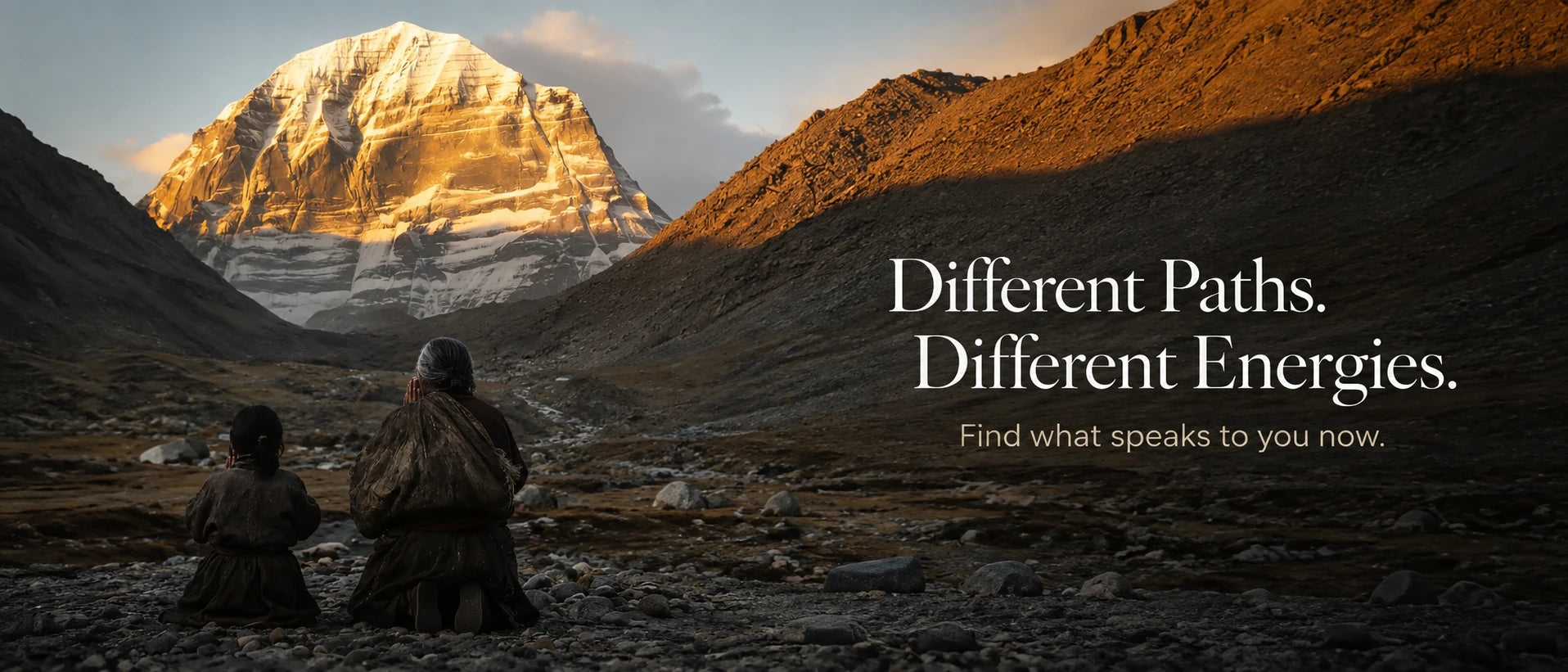


Quick answer: Tibetan Buddhist prostration is an embodied devotional practice. Depending on the lineage and ritual context, it can express homage, refuge, devotion, aspiration, purification, merit-making, humility, and commitment to the Buddhist path. Full-body prostrations may be performed a few times in prayer, repeated extensively in preliminary practice, or combined with pilgrimage across sacred landscapes.
From the outside, the movement can look like exercise or dramatic submission. Within Tibetan Buddhism, however, the physical action is inseparable from religious intention. The more useful question is not simply how the body moves, but why Buddhist practice sometimes asks the whole body to participate.
What Is a Tibetan Buddhist Prostration?
A prostration is a bodily gesture of reverence and religious practice. Tibetan Buddhism includes shorter bows as well as full-length forms in which the practitioner lowers and extends the body toward the ground before rising again.
Details vary by lineage and teacher. A common sequence may involve hands joined at the upper body, kneeling, extending the body, and returning to standing. This description is cultural rather than instructional; practitioners learning a formal liturgy should follow the method taught in their own tradition.
Why Do Tibetan Buddhists Prostrate?
Prostrations can express respect toward the Buddha, Dharma, Sangha, teachers, lineage, sacred images, or the awakened qualities represented by them. They can also appear alongside refuge, confession, aspiration, offerings, bodhicitta, and other practices.
This is why prostration should not be isolated as a physical technique. The same outward motion can take on different meaning according to the prayer, visualization, teacher, or pilgrimage context in which it occurs.
Is Prostration an Act of Humiliation?
It should not automatically be interpreted that way. Lowering the body can look like social submission when viewed through a secular or political lens, but Buddhist explanations commonly frame the gesture through refuge, reverence, devotion, and orientation toward awakened qualities rather than self-denigration.
A practitioner placing the body on the ground is not necessarily saying, “I am worthless.” The action can instead express that the path and qualities toward which one is orienting oneself are worthy of serious commitment.
Why Is the Whole Body Involved?
Religious respect can remain invisible as a thought or feeling. Prostration turns an inward orientation into bodily action. In Tibetan Buddhist practice, body, speech, and mind are often trained together: the body moves, speech may recite prayers or refuge formulas, and the mind directs intention or visualization.
This embodied quality helps explain why prostrations can feel so different from simply reading about devotion.
What Is the Connection with Refuge and Ngöndro?
Prostrations often appear in connection with refuge and with Tibetan Buddhist preliminary practices known as ngöndro. In several traditions, practitioners may combine refuge recitation, visualization, and repeated prostrations as part of structured training.
Different Tibetan Buddhist schools and lineages organize preliminary practices differently. There is no single universal ngöndro program shared by every practitioner.
Why Do Some Practitioners Perform 100,000 Prostrations?
Large accumulations—often around 100,000 or related counts—appear in some Tibetan Buddhist preliminary-practice systems. The number belongs to disciplined repetition, not to a mechanical formula in which one final repetition suddenly unlocks spiritual power.
Motivation, refuge, understanding, concentration, and the larger practice framework remain important. It is therefore inaccurate to present 100,000 as a universal requirement for every Tibetan Buddhist or as a magical number.
Do Prostrations Purify Karma?
Traditional Buddhist practices can connect prostration with confession and purification of nonvirtue or negative karma. These are specifically Buddhist religious concepts and should be explained within that framework.
They should not simply be replaced by modern language such as “energy detox,” “vibrational cleansing,” or a guaranteed method for erasing karma. Buddhist purification is not a consumer performance claim.
Prostrations and the Seven-Limb Practice
Prostration also appears within the seven-limb practice, where it is joined by offerings, confession, rejoicing, requesting teachings, asking awakened teachers to remain, and dedication. Seeing it within this larger structure makes clear that the gesture belongs to a network of devotional and contemplative practices rather than functioning as a standalone exercise.
How Are Prostrations Connected with Pilgrimage?
Some Tibetan pilgrims perform full-body prostrations repeatedly along sections of a route, moving forward approximately one body-length at a time. A journey that could be walked much faster becomes a prolonged devotional discipline.

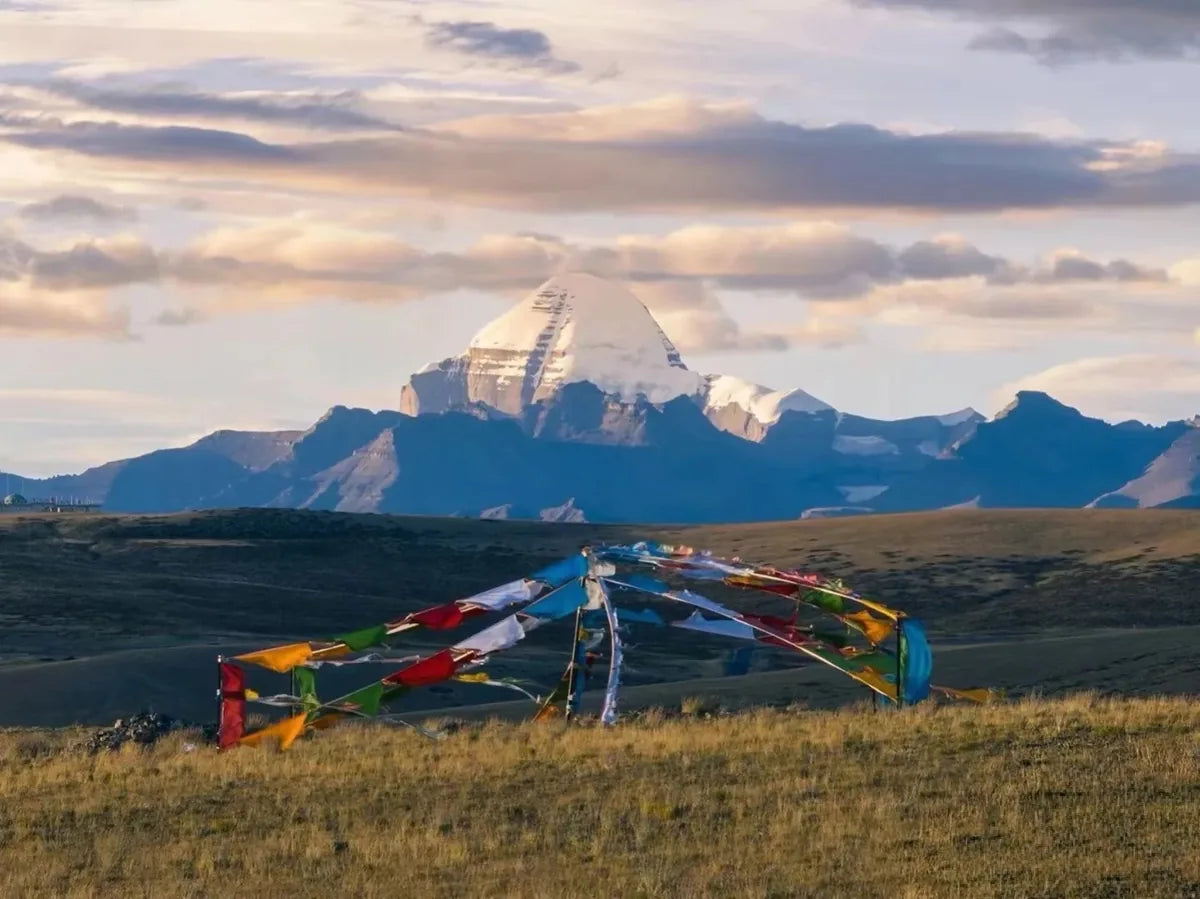
At Mount Kailash and other sacred places, prostration exists within a wider pilgrimage culture. See What Is Kora?, Why Is Mount Kailash Sacred?, and Tibetan Buddhist sacred geography.
Is Prostration the Same as Kora?
No. Kora is circumambulation around a sacred person, place, object, temple, stupa, or landscape. Prostration is a bodily gesture of homage and practice.
A person can perform kora by walking without prostrating. A person can perform prostrations in one place without going anywhere. In some pilgrimage settings, the two can be combined.
Do All Pilgrims Prostrate an Entire Route?
No. Pilgrimage practices vary widely. Many pilgrims walk; some prostrate only at particular sites; others undertake extended full-body prostration journeys. Age, health, lineage, vows, terrain, time, and personal circumstances all affect what a practitioner does.
A dramatic photograph of one pilgrim should never be used to claim that every Tibetan Buddhist travels in the same way.
Why Are Hand Boards or Protective Clothing Sometimes Used?
Repeated contact with rough ground is physically demanding. Long-distance pilgrims may use hand boards, aprons, knee protection, or durable clothing to reduce abrasion from roads, stone, dust, and cold surfaces.
These practical tools remind us that religious devotion and bodily reality coexist.
Prostrations in Monasteries and Practice Halls
Prostration is not limited to outdoor pilgrimage. Practitioners may prostrate before sacred images, when entering important spaces, before teachers, during liturgy, or as part of personal preliminary practice.
Our guide to Tibetan gompas and monasteries provides the wider context of study, ritual, meditation, debate, art, and devotion.
Are Prostrations Just Exercise?
No. Full-body prostration requires strength and endurance, but describing it as “Tibetan fitness,” “Buddhist yoga,” or a weight-loss technique removes the movement from its religious context. It should not be marketed as a medical treatment or guaranteed wellness method.
How Should Visitors Behave Around People Prostrating?
Give practitioners space. Do not step over someone’s body, block the path of repeated movement, or position a camera close to a practitioner without permission. At busy pilgrimage sites, observe the flow of movement before crossing a route.
The goal is to recognize that the person may be engaged in a serious vow or long-term practice rather than performing for spectators.
Frequently Asked Questions
Why do Tibetan Buddhists prostrate?
Depending on context, prostrations can express homage, refuge, devotion, aspiration, purification, merit-making, and commitment to Buddhist practice.
What is a full-body Tibetan prostration?
It is a form in which the practitioner lowers and extends the body toward the ground before rising again.
Do all Tibetan Buddhists perform 100,000 prostrations?
No. Large accumulations occur in several ngöndro systems, but practice requirements differ by lineage and teacher.
Are Buddhist prostrations humiliating?
They should not automatically be understood as self-denigration. Traditional explanations often frame them through refuge, reverence, and devotion.
Is prostration the same as kora?
No. Kora is circumambulation; prostration is bodily homage. The practices may be combined in some pilgrimage contexts.
Do prostrations clear negative energy?
That is not a precise traditional description. Buddhist teachings may discuss purification of nonvirtue or karma in specific practices, which is different from modern “energy-clearing” language.
Cultural note: Prostration methods, counts, visualizations, prayers, and meanings vary across Tibetan Buddhist lineages. This article is a cultural introduction rather than formal practice instruction.
Explore the broader context in the Kailora Tibetan Culture Guide.