









Saga Dawa is one of the most important periods in the Tibetan Buddhist calendar. It is the fourth month of the Tibetan lunar year, and its full-moon day—Saga Dawa Düchen—is traditionally associated with the birth, awakening, and parinirvana of Buddha Shakyamuni.
For Tibetan Buddhist communities, however, Saga Dawa is not only a date on a calendar. The month is marked by intensified religious practice, generosity, pilgrimage, prayer, circumambulation, prostrations, scripture reading, and offerings. Practices differ among monasteries, families, regions, and lineages, but a common theme is the deliberate cultivation of beneficial actions.
Quick Answer
Saga Dawa is the fourth month of the Tibetan lunar calendar and one of the most important periods of Tibetan Buddhist practice. Its full-moon day, Saga Dawa Düchen, commemorates major events in the life of Buddha Shakyamuni in Tibetan Buddhist tradition. Prayer, generosity, pilgrimage, kora, prostrations, scripture reading, and light offerings may intensify during the month.
What Does “Saga Dawa” Mean?
Saga Dawa refers to the fourth month of the Tibetan lunar calendar. Because the Tibetan calendar is lunisolar, its dates shift relative to the Gregorian calendar from year to year.
The fifteenth day, corresponding to the full moon, is called Saga Dawa Düchen. “Düchen” is commonly translated as a “great occasion” or major sacred day.
What Does Saga Dawa Düchen Commemorate?
According to Tibetan Buddhist tradition, Saga Dawa Düchen commemorates three central events in the life of Buddha Shakyamuni: his birth, awakening, and parinirvana.
Other Buddhist cultures mark related events through observances often called Vesak or Buddha Day, although calendars and ritual forms vary. It is better to describe the Tibetan observance within its own calendrical tradition than to treat it as a modern historical anniversary with one universally agreed Gregorian date.
Why Is Saga Dawa Called a Month of Merit?
Tibetan Buddhist communities often describe Saga Dawa as a period in which the merit or karmic significance of actions is especially important. Traditional teachings may describe merit as multiplied during the month and especially on sacred days.
These multipliers belong to religious belief and practice; they are not scientifically measurable claims. The cultural point is that the calendar encourages practitioners to pay special attention to conduct, generosity, compassion, prayer, and disciplined practice.
What Do Tibetan Buddhists Do During Saga Dawa?
There is no single checklist followed by every Tibetan Buddhist, but commonly documented practices include prayer and mantra recitation, reading Buddhist texts, lighting butter lamps, making offerings, circumambulating sacred places, performing prostrations, giving to people in need, and making pilgrimages.
Some practitioners also take additional ethical commitments or change dietary practices for a period of time. Monastic communities may organize large scripture readings or special ceremonies. These practices reflect local and lineage traditions rather than one standardized global program.

Pilgrimage and Kora During Saga Dawa
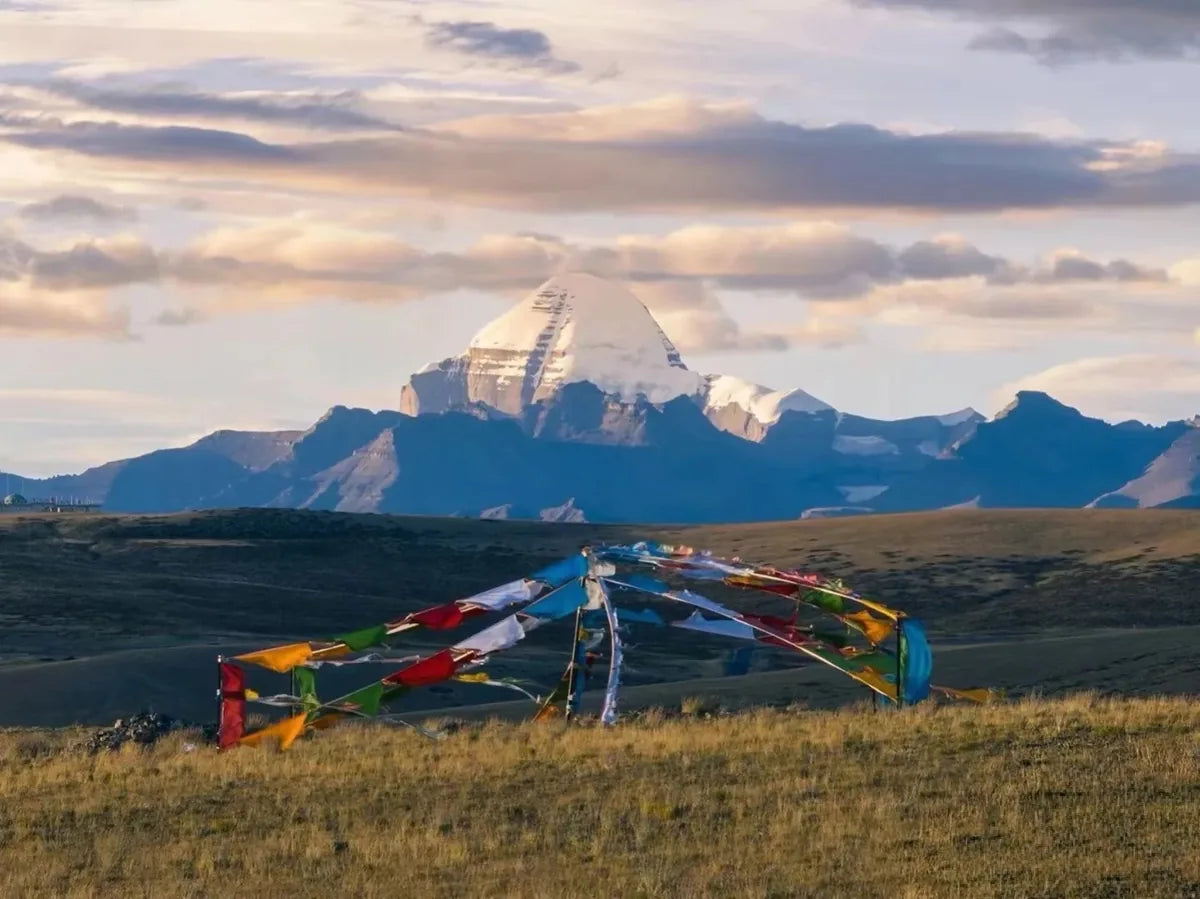
Pilgrimage becomes especially visible during sacred calendar periods. People may travel to temples, monasteries, stupas, mountains, and other revered places, performing kora, or circumambulation, as they move around a sacred site.
Mount Kailash is among the best-known pilgrimage landscapes connected with Tibetan religious culture. Its significance extends across Tibetan Buddhism, Bön, Hindu, and Jain traditions. Our guide to why Mount Kailash is sacred explains why its meanings cannot be reduced to one tradition.
For the broader relationship between religious practice and landscape, see Tibetan Buddhist sacred geography.
Why Are Prostrations Important?
Prostration is an embodied form of Buddhist practice. Depending on context, it can express reverence, refuge, devotion, purification, merit, or commitment to a path of practice. Some pilgrims repeat full-body prostrations many times, including along pilgrimage routes.

For a detailed explanation of the movement, religious context, and pilgrimage practice, see Why Do Tibetan Buddhists Prostrate?.
Butter Lamps and Offerings
Lighting butter lamps is another practice associated with Tibetan Buddhist devotional life and with special observances during Saga Dawa. Traditionally, clarified butter could serve as fuel in lamps placed before sacred images, although modern communities may also use other fuels or electric alternatives.
The offering of light carries religious meanings that should be understood through Buddhist teachings rather than reduced to a generic idea of “positive energy.” See What Are Tibetan Butter Lamps?.
Other offerings may include water, incense, flowers, and food. For the altar context, see seven offering bowls.
Scripture Reading During Saga Dawa
Some Tibetan Buddhist monastic communities undertake extensive scripture reading during Saga Dawa, including readings from the Kangyur—the collection traditionally understood as translated words of the Buddha.
To understand how the Kangyur fits into the larger Tibetan canon, read Kangyur and Tengyur.
Is Saga Dawa the Same as Losar?
No. Losar is the Tibetan New Year and includes household preparation, family life, food, social customs, and religious observance. Saga Dawa occurs later in the Tibetan lunar calendar and is especially focused on Buddhist commemoration and practice.
Both are major moments in Tibetan calendrical culture, but they have different histories, meanings, and social rhythms.
How Can a Visitor Approach Saga Dawa Respectfully?
If you encounter Saga Dawa observances while traveling or visiting a Tibetan Buddhist community, approach them as living religious practices rather than as a festival staged for photography.
Follow local guidance, avoid interrupting prostrations or circumambulation routes, and ask before photographing individuals at close range.
Most importantly, do not assume that performing an isolated gesture automatically carries the same meaning as practice rooted in Buddhist vows, teachings, and community context.
Why Saga Dawa Matters Beyond a Single Day
Saga Dawa shows how a calendar can shape ethical and devotional attention. The sacred month creates a recurring period when individuals and communities intensify practices of generosity, discipline, remembrance, pilgrimage, and compassion.
That makes it an important bridge between Tibetan calendrical knowledge and everyday religious life. It is not simply a festival date but a month in which time itself becomes a framework for practice.
Frequently Asked Questions
What is Saga Dawa?
Saga Dawa is the fourth month of the Tibetan lunar calendar and an important period of Tibetan Buddhist commemoration and practice.
What is Saga Dawa Düchen?
It is the full-moon day of Saga Dawa, traditionally associated in Tibetan Buddhism with the birth, awakening, and parinirvana of Buddha Shakyamuni.
Why does the Gregorian date change every year?
The Tibetan calendar is lunisolar, so Tibetan lunar dates do not correspond to one fixed Gregorian date each year.
What do people do during Saga Dawa?
Practices can include prayer, generosity, scripture reading, pilgrimage, kora, prostrations, offerings, and other lineage- or community-specific observances.
Is Saga Dawa the same as Losar?
No. Losar is Tibetan New Year; Saga Dawa is a later sacred Buddhist month with a different religious and social focus.
Are claims about multiplied merit scientific claims?
No. They belong to Tibetan Buddhist religious belief and practice rather than to scientific measurement.
Cultural note: Saga Dawa practices vary by monastery, lineage, region, and community. Statements about multiplied merit belong to Tibetan Buddhist religious belief.
Continue with the Kailora Tibetan Culture Guide for related pilgrimage, ritual, sacred art, and everyday cultural topics.