







Water and sunlight are two of the most popular crystal-cleansing methods online—and two of the easiest ways to damage the wrong material. There is no universal rule such as “all quartz can go in water” or “all crystals can charge in the sun.” Safe care depends on the mineral, treatments, porosity, inclusions, and the jewelry construction.
If you cannot confidently identify the stone or its treatment, the safest default is simple: do not soak it and do not leave it in prolonged intense sunlight.

Quick answer: crystals to keep out of water
Be especially cautious with:
- Selenite and other gypsum varieties: soft and water-sensitive; avoid soaking.
- Halite: natural sodium chloride and water-soluble.
- Pyrite: prolonged moisture is not a good care method and can contribute to surface alteration or oxidation.
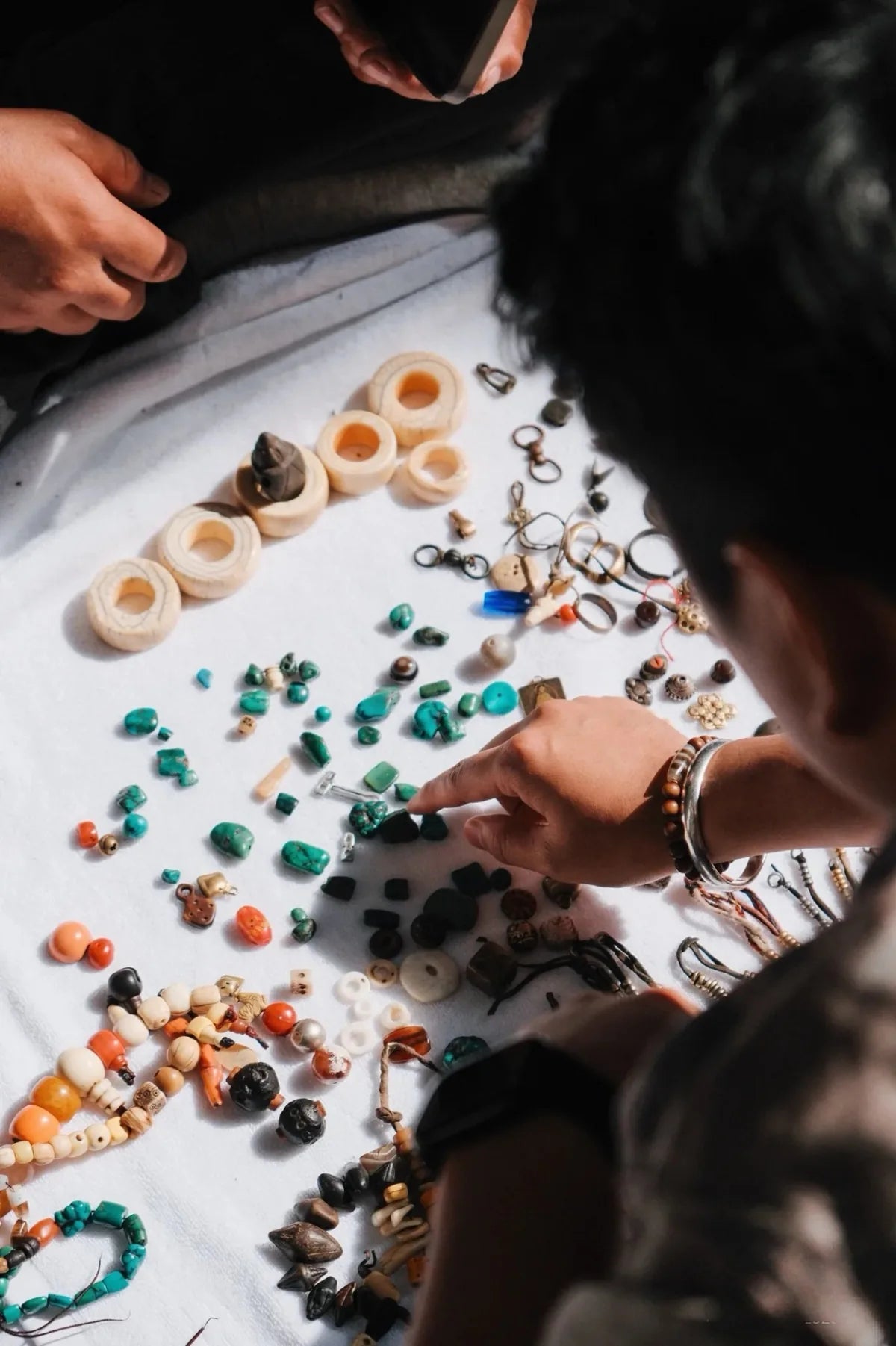
- Turquoise: porous material can absorb liquids and is sensitive to chemicals, cosmetics, oils, and heat.
- Malachite: relatively soft and better cleaned gently rather than soaked.
- Lapis lazuli: a rock made from multiple minerals; prolonged soaking is unnecessary and can be risky, especially with treated material.
- Unknown, dyed, coated, glued, or mixed-material jewelry: keep it dry unless the maker provides specific care instructions.
Why “hardness” is not the only water rule
The Mohs hardness scale describes scratch resistance. It does not tell you whether a mineral is porous, water-soluble, chemically reactive, fracture-filled, dyed, stabilized, or assembled with an adhesive. A hard stone can still have a treatment that does not belong in water; a softer stone can sometimes tolerate a brief damp cleaning but not soaking.
This is why crystal care cannot be reduced to a single hardness number.

Turquoise: especially important for jewelry wearers
Turquoise commonly appears in jewelry and deserves conservative care. It can be porous, and some turquoise is treated to improve durability or appearance. Oils, perfume, cleaning products, and cosmetics may affect the surface or color over time.
For turquoise jewelry, use gentle material-specific care rather than immersion. Put turquoise on after lotions and perfume, and avoid household cleaners.
For cultural and material context, see our Tibetan Turquoise guide.
Can clear quartz go in water?
Quartz itself is relatively durable and warm soapy water is commonly used for physical cleaning of many quartz gems. But that does not mean every clear-quartz bracelet, mala, pendant, or treated specimen should be soaked. Elastic, cord, plated metal, adhesives, drilled beads, coatings, and other materials can change the answer.
For jewelry, a short careful clean is different from leaving the entire piece submerged as a ritual.

What crystals should avoid prolonged sunlight?
Some colored gems can fade or change color with prolonged exposure to intense light. The most relevant examples for crystal collectors include:
- Amethyst: some material can fade with prolonged intense light.
- Citrine: prolonged exposure to light and heat can affect color in some material.
- Kunzite: known for light sensitivity and often best protected from prolonged bright light.
- Some treated or dyed stones: color stability depends on the treatment.
Even when a gem is generally stable, windows can create heat. Prolonged display in strong direct sun is rarely necessary for a spiritual ritual.

What about Rose Quartz?
Rose quartz is generally a durable quartz gem and is often stable in normal light. However, color and treatment history can vary. There is no practical reason to leave rose quartz in harsh direct sun for hours as a routine “charging” method. Indirect light is a conservative choice.
What about Citrine?
Citrine belongs to the quartz family, but color is the reason to be cautious with prolonged intense light and heat. If you want to use citrine in a ritual, choose a dry, shaded or indirect-light method instead.

Should you make crystal water or crystal elixirs?
We do not recommend placing unidentified mineral specimens directly in drinking water. Natural specimens may contain inclusions, coatings, treatments, residues, metals, or minerals that are inappropriate for ingestion. Water-safe for cleaning is not the same as food-safe for drinking.
If your goal is symbolic, keep the stone outside the drinking vessel rather than immersing it.
Safer alternatives to water and sunlight cleansing
If ritual cleansing matters to you, choose methods that do not depend on mineral compatibility:
- a soft dry cloth plus a spoken intention;
- sound, such as a bell or singing bowl;
- a brief breathing or journaling ritual;
- indirect light in a dry indoor location.
Our safe crystal cleansing guide explains these options in more detail.
A practical care checklist
- Identify the mineral.
- Check whether it is treated, dyed, coated, stabilized, or porous.
- Consider the entire jewelry construction, not only the stone.
- Avoid long soaking when a quick gentle clean will do.
- Avoid prolonged intense sunlight for color-sensitive material.
- When uncertain, keep the piece dry and use a soft cloth.
Final thought
Crystal care becomes much easier when you stop asking whether a spiritual method is “powerful” and start asking whether it is physically compatible with the material. The safest ritual is one that preserves the stone you want to keep meaningful for years.
Continue with our Crystal Meanings beginner guide or browse Kailora crystal jewelry.
Editorial note: Care guidance varies by mineral, treatment, and jewelry construction. When material identity is uncertain, consult the seller or a qualified jeweler and use conservative care.