
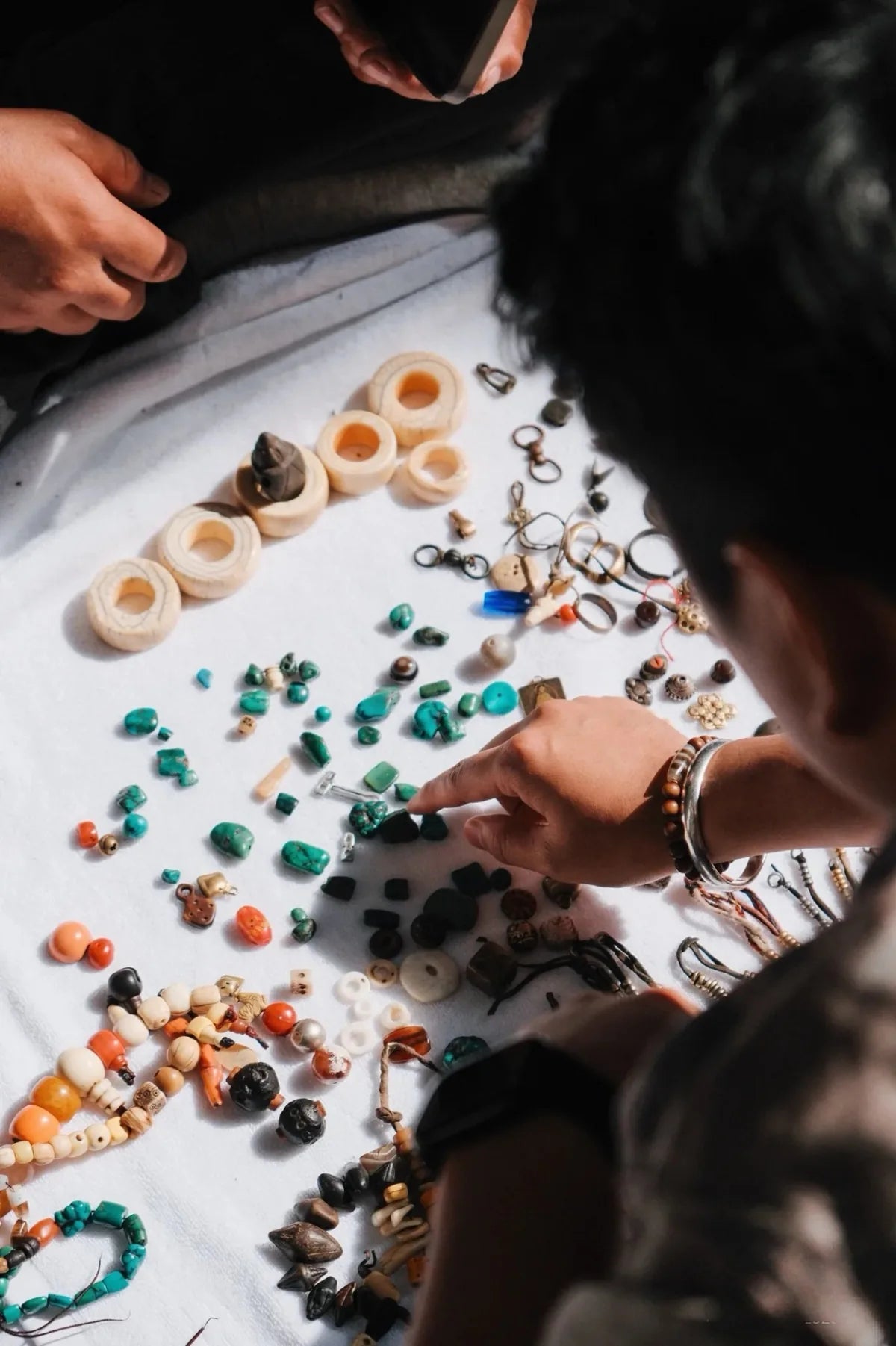
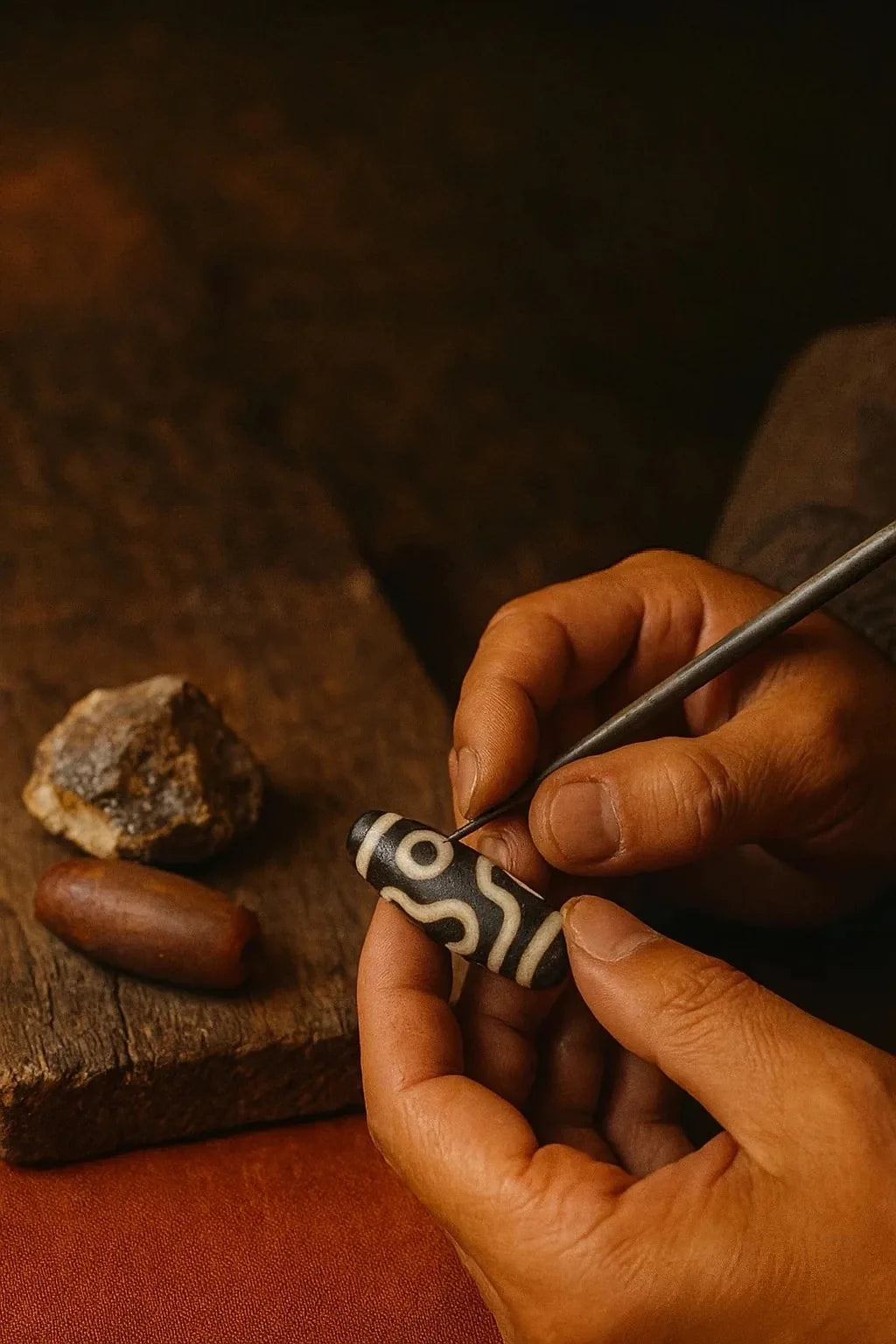








Quick answer: Yak bone is used in some contemporary Tibetan and Himalayan craft and jewelry, but it should not be described as if every yak-bone bead carries one ancient or universal Buddhist meaning. The yak is central to many pastoral communities, and makers may work with multiple animal-derived materials. For any specific commercial object, however, provenance, sourcing, age, and ritual status need to be established separately.
The featured image on this article is a contemporary Kailora product, not a historical museum object. We make that distinction deliberately because “Tibetan material culture” and “a modern Tibetan-inspired product” are related categories, not interchangeable ones.
Why Begin with the Yak?
In pastoral regions of the Tibetan Plateau, the yak supports an entire material ecosystem. Documented uses include dairy, meat, transport, fuel from dried dung, soft fiber for woolens, and coarse hair for tents. The animal’s importance is therefore practical, economic, social, and cultural at once.
Read the wider context in Why Is the Yak So Important in Tibetan Nomadic Culture?.
Is Yak Bone Documented in Tibetan Jewelry?
Yes, there are documented contemporary examples. A Smithsonian profile of Tibetan jeweler Rigzin Lhamo describes her use of yak-bone buttons in a necklace combined with traditional knotting techniques. Her work is especially useful because it shows living craft rather than a vague internet claim about an “ancient Tibetan bone tradition.”
At the same time, museum collections contain many Tibetan objects made from bone without identifying the animal species. Some ritual bone ornaments are made from human bone and belong to entirely different religious contexts. Those objects must not be used as evidence that ordinary yak-bone bracelets share the same meaning.
Bone as a Craft Material
Animal bone can be cut, drilled, polished, carved, stained, and combined with cord, metal, wood, seeds, or stone beads. Its surface may show natural color variation, pores, grain, and changes from polishing or wear. These physical traits make bone visually distinct from resin, plastic, stone, and wood.
For buyers, material identification matters more than romantic storytelling. A seller should be clear about whether an item is bone, imitation bone, resin, stone, or another material.
Yak Bone Beads and Mala-Style Objects
Bone beads may be assembled into bracelets, necklaces, or mala-style bead strands. The word mala describes a bead form associated with counting recitations and practices across Buddhist and other South Asian traditions; it does not mean that any string of 54 or 108 bone beads is automatically a consecrated ritual object.
This distinction protects both the cultural context and the customer. A contemporary wearable piece can be inspired by mala proportions without being presented as monastery-used or ritually empowered.
Does Yak Bone Have a Fixed Spiritual Meaning?
No single meaning should be treated as universal. Contemporary spiritual-jewelry marketing often assigns bone themes such as impermanence, grounding, mortality, or protection. Some of those ideas may resonate with Buddhist teachings in a broad philosophical sense, but that does not prove that every Tibetan yak-bone bead historically carried those meanings.
Kailora therefore separates documented material history from contemporary intention. If a product is placed in a Protection & Grounding collection, that is our modern design framework unless a more specific historical claim is independently supported.
What Should Buyers Ask About Yak-Bone Jewelry?
- What is the material? Ask whether the bead is genuine animal bone or an imitation.
- What is known about sourcing? Animal-derived material raises ethical and personal-preference questions.
- Is the item new or antique? Do not assume patina proves age.
- Is ritual provenance documented? A Tibetan-inspired design is not automatically a ritual artifact.
- Are treatments disclosed? Bone may be dyed, polished, sealed, or combined with other materials.
Ethics and Responsible Interpretation
Customers differ in how they feel about animal-derived materials. Some value the connection to pastoral resource use; others prefer plant, mineral, or synthetic alternatives. Neither preference should be hidden behind spiritual language. Responsible product pages should state the material plainly and avoid using culture as a substitute for sourcing information.
A Contemporary Kailora Lens
Kailora uses yak-bone beads in selected contemporary pieces because of their tactile, organic character and their connection to a broader Tibetan pastoral material landscape. We do not treat the cultural history of the yak as proof of the sourcing, age, or ritual status of an individual product.

Frequently Asked Questions
Is yak bone jewelry Buddhist?
Not automatically. The material can appear in Tibetan and Himalayan craft, while a specific object’s Buddhist use must be established from its design, provenance, and context.
Are yak bone beads the same as human-bone ritual ornaments?
No. Tibetan Buddhist collections include specialized ritual ornaments made from human bone. They belong to distinct religious contexts and should not be conflated with contemporary yak-bone jewelry.
Can yak bone be dyed?
Yes. Bone can be stained, dyed, polished, sealed, or otherwise finished. Color alone does not establish age or origin.