
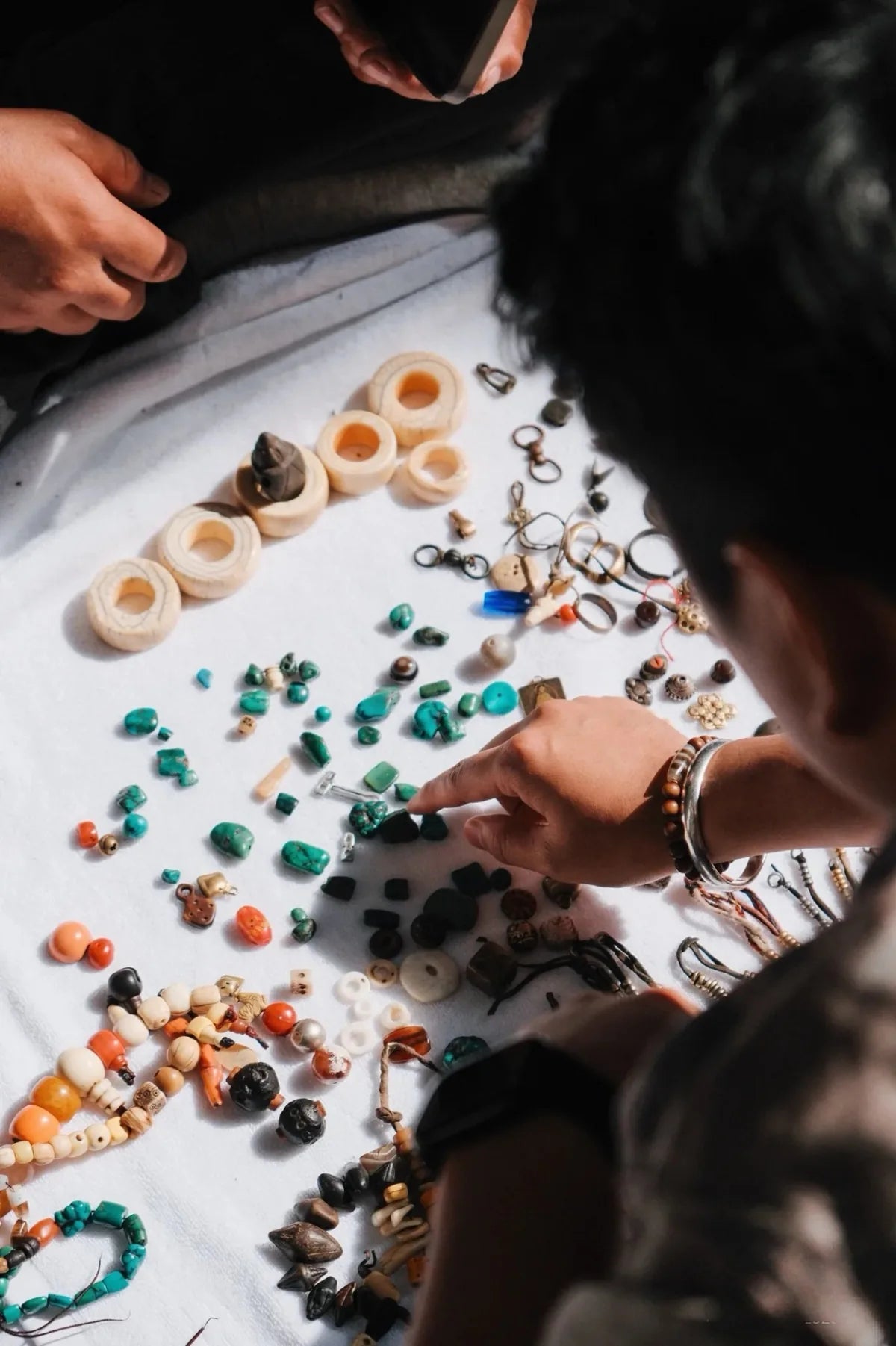
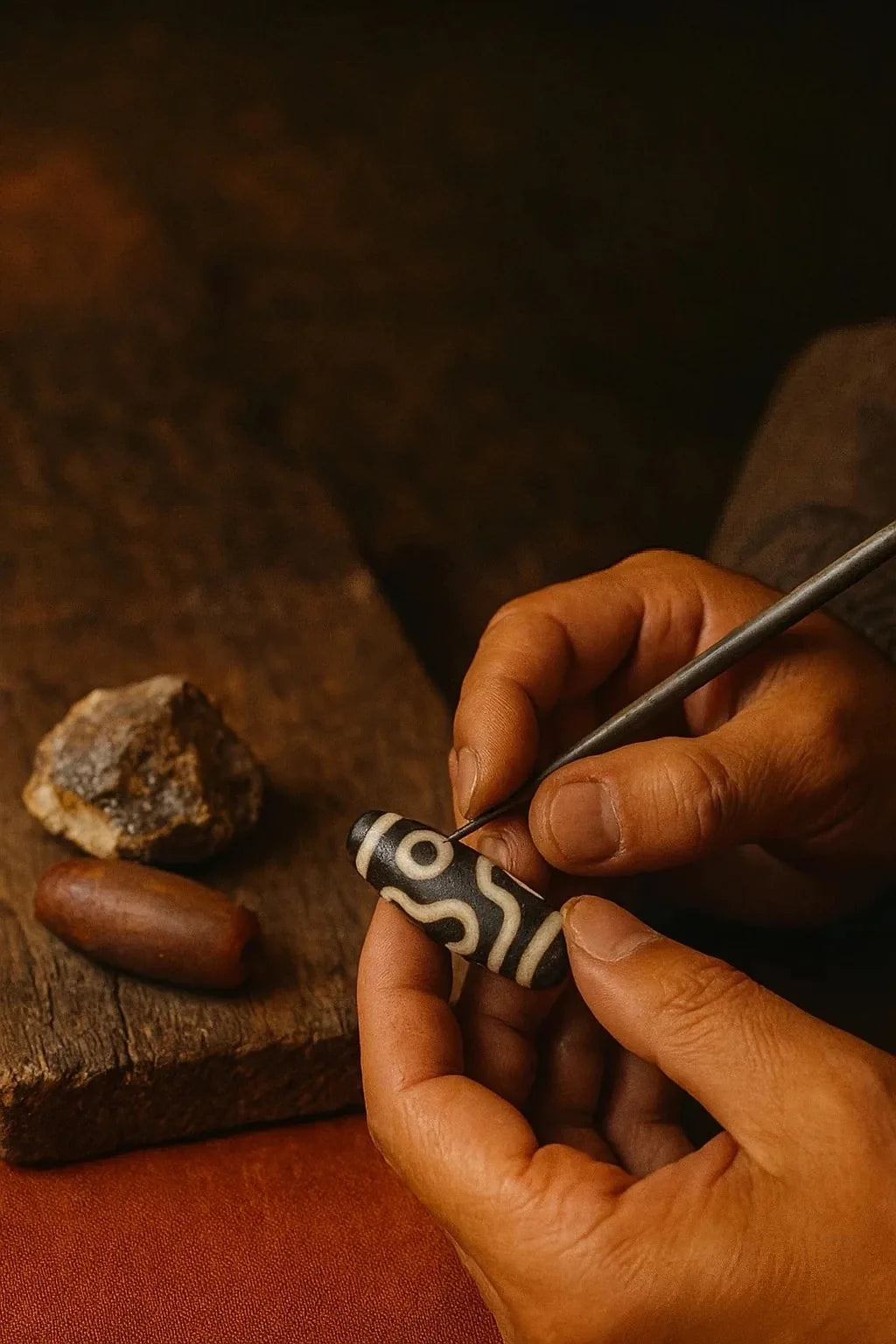






A pendant can display a Buddhist symbol without being a blessed Buddhist object. A mala-shaped necklace can resemble prayer beads without having been used in religious practice. And a Ga’u-inspired bracelet can reference an amulet form without containing consecrated material. These distinctions are important for both cultural accuracy and honest product descriptions.
Quick answer: a blessed or consecrated Buddhist object has a documented relationship to religious ritual, practice, teachers, sacred contents, or consecration. Symbolic jewelry can carry Buddhist or Tibetan-inspired imagery and personal meaning without claiming that ritual status.
Appearance does not prove consecration
Consecration is not a visual style. Blackened metal, mantra-like engraving, red cord, turquoise, a lotus, or a Ga’u shape cannot by themselves prove that an object has been blessed.
The same principle applies in reverse: a visually simple object may carry deep ritual significance if it has been prepared and used within a religious context.
What does “blessed” mean?
In Buddhist contexts, blessing can refer to an object’s connection with teachers, rituals, recitations, sacred places, or practices. The exact meaning varies across traditions. Consecration can be more formal, involving prescribed rites that establish an image, shrine, amulet, or other object as ritually meaningful within a religious framework.
Because procedures differ, sellers should avoid treating “blessed” and “consecrated” as generic synonyms for “spiritual-looking.”
Ga’u: a useful example
A Tibetan Ga’u is a portable container that can hold sacred images, texts, relics, blessed substances, or protective material. The box itself has a material history, but its ritual status can also depend on its contents and use.
A modern Ga’u-shaped pendant with an empty interior may reference this tradition aesthetically while remaining a contemporary piece of jewelry.

Prayer beads: form and practice are different
A Tibetan trengwa is a working tool for mantra and prayer recitation. Its beads, separators, counters, and attachments can support specific practices. A fashion necklace with 108 beads may borrow the numerical and visual structure without having been used as a ritual object.
For the traditional counting mechanism, see What Are Mala Counters?.
Why provenance matters
If a product is advertised as “blessed by monks,” “consecrated in Tibet,” or containing sacred material, that is a factual provenance claim. Responsible sellers should be able to explain the basis for it.
Without documentation, the safer and more accurate language is “Buddhist-inspired,” “Tibetan-inspired,” “symbolic,” or “designed as a reminder of…”
Can symbolic jewelry still be meaningful?
Yes. Religious authenticity is not the only form of meaning. A wearer can choose a piece because it represents compassion, protection, discipline, balance, or a personal commitment. Repeatedly wearing an object can make it part of a private ritual or intention practice.
The key is to name that honestly as contemporary personal meaning rather than retroactively presenting it as a traditional Buddhist doctrine.
Protection claims need the same care
Traditional Buddhist communities have understood certain consecrated amulets as protective. That belief belongs to a documented religious context. It does not provide scientific evidence that modern jewelry prevents illness, accidents, or physical harm.
At Kailora, “protection” can be used as a symbolic intention—such as remembering boundaries, steadiness, or courage—without promising a guaranteed outcome.
How Kailora describes Tibetan-inspired jewelry
Kailora’s default position is straightforward: contemporary pieces are Tibetan-inspired ritual jewelry and personal intention objects unless a specific product documents another status. We do not need to make an object “more authentic” by inventing a blessing story.
The Clear Quartz Phurba Pendant Necklace, for example, can reference Tibetan ritual imagery while remaining a contemporary symbolic design.
A practical checklist for buyers
- Ask whether “blessed” is a documented fact or just marketing language.
- Separate the object’s iconography from its ritual provenance.
- Look for clear material and origin descriptions.
- Do not assume sacred status from color, age-like finishing, or Buddhist motifs.
- Allow personal symbolism without demanding a fabricated sacred history.
Frequently asked questions
Is Buddhist jewelry automatically blessed?
No. Buddhist imagery and ritual consecration are different things.
Can a modern necklace become personally sacred to its wearer?
A person can give an object profound personal meaning, but that is different from claiming formal consecration in a Buddhist tradition.
Should I avoid Tibetan-inspired jewelry?
No. Clear labeling, cultural context, and accurate claims allow contemporary design to engage respectfully with Tibetan material culture.
Explore more context in the Tibetan Culture Guide.