






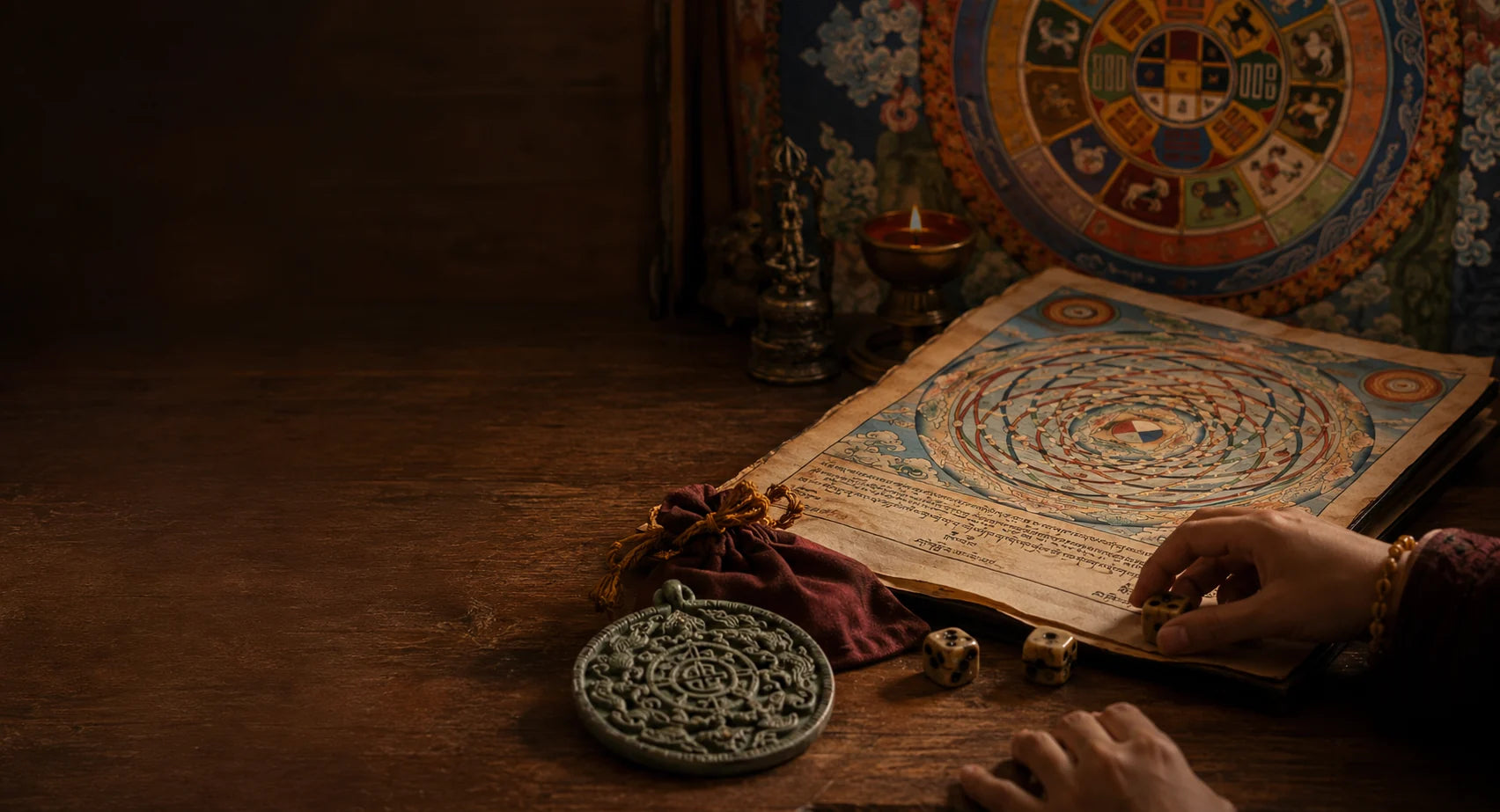

What does a Tibetan bracelet mean? There is no single meaning shared by every Tibetan or Tibetan-inspired bracelet. Meaning depends on the object: its material, bead type, symbol, color, construction, religious context, and the intention of the person wearing it. A Dzi bead bracelet, a handwoven cord bracelet, a mala-inspired wrist piece, and a yak-bone bracelet can all look “Tibetan,” yet they come from different material and symbolic traditions.
This guide is designed to help you read those differences before choosing a piece. It also separates documented material or cultural context from contemporary spiritual interpretations used in modern jewelry.
Why “Tibetan bracelet” can mean several different things
Online, Tibetan bracelet is often used as an umbrella term. It may describe jewelry made in Tibetan communities, pieces using Tibetan materials or motifs, Buddhist prayer-bead-inspired designs, Dzi bead jewelry, or contemporary designs influenced by Himalayan visual culture.
That is why the first question should not be “What does every Tibetan bracelet mean?” but rather: What kind of bracelet is this?
At Kailora, we use the term Tibetan-inspired jewelry to make that distinction clearer. A contemporary wearable piece can draw from Tibetan materials, craft language, symbols, colors, or ritual objects without claiming that every modern design is itself a traditional religious artifact.

Five common types of Tibetan and Tibetan-inspired bracelets
1. Handwoven and braided cord bracelets
Woven cords are one of the easiest ways to see craft directly. Knots, wrapped sections, tassels, color combinations, and hand tension create a tactile object that feels different from machine-finished jewelry. In contemporary intention jewelry, the cord itself can become a reminder of continuity, movement, connection, or daily practice.
Kailora’s Nomad Thread handwoven bracelet uses cotton cord, layered knots, braided sections, tassel details, and a tie-adjustable closure. Its meaning within the Vital Energy journey is a modern Kailora interpretation centered on movement and renewal rather than a claim that a particular color has one universal Tibetan meaning.
2. Dzi bead bracelets
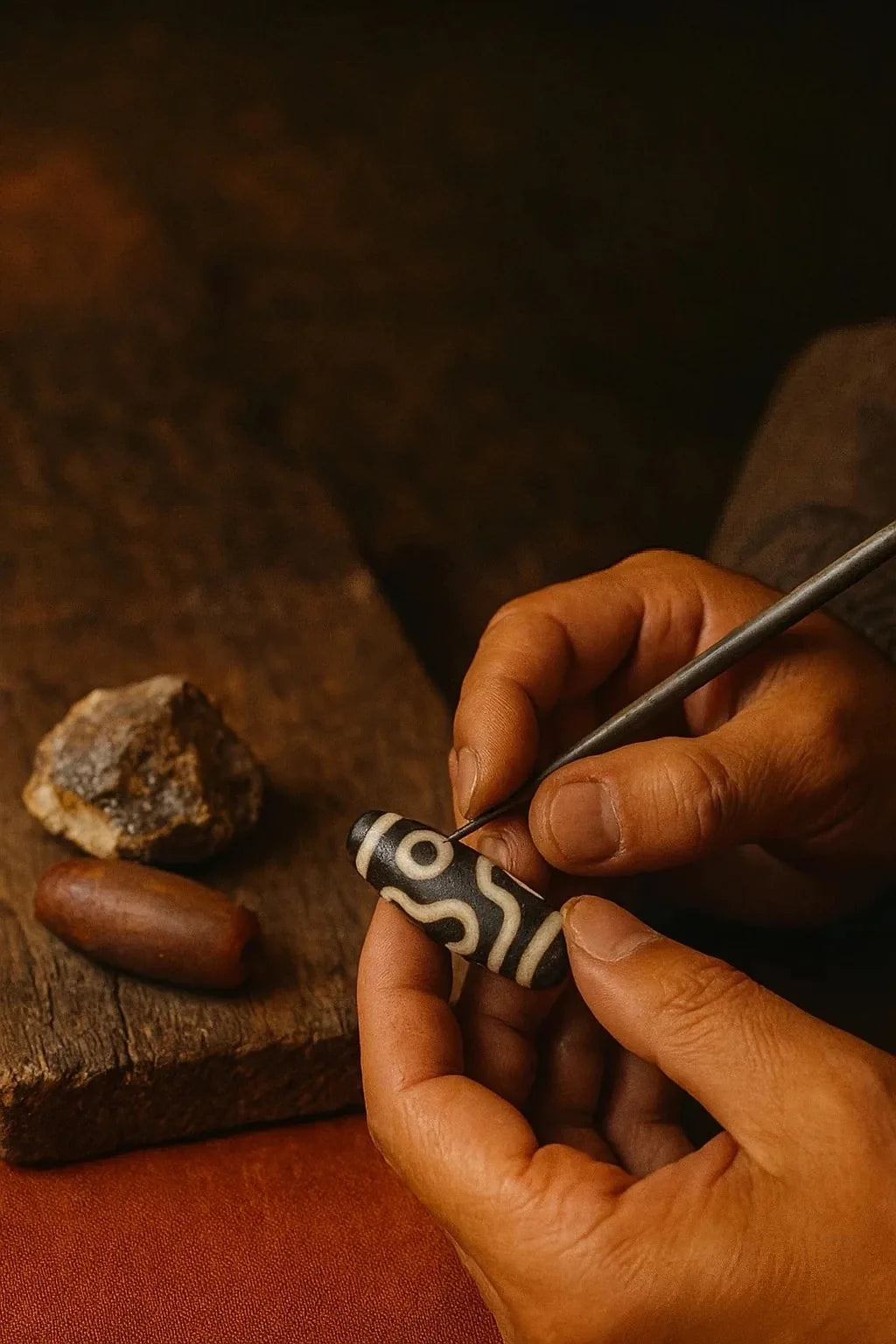
Dzi beads are patterned beads strongly associated with Tibetan and Himalayan jewelry culture. Many contemporary Dzi pieces are made from agate, while the number and arrangement of “eyes” or other motifs are interpreted in different ways by collectors and modern spiritual communities.
Because modern Dzi symbolism has developed across Tibetan, Himalayan, Chinese, and global collector contexts, specific eye-number meanings should not automatically be treated as a single canonical Buddhist doctrine. If Dzi is what draws you to Tibetan bracelets, start with our Dzi bead meaning guide and Dzi bracelet guide.

3. Mala-inspired wrist beads
Prayer beads in Buddhist traditions are tools for counting recitations and supporting repeated practice. A full mala commonly contains 108 beads, while shorter hand malas and contemporary wrap designs use other structures. A bracelet inspired by mala beads may be worn as a tactile reminder, but a fashion bracelet should not automatically be described as a consecrated ritual mala.
If bead-count structure matters to you, see what 108 mala beads mean and how they are used.
4. Natural-stone bracelets
Turquoise, agate, quartz, Tiger’s Eye, smoky quartz, amethyst, and other stones appear in both historical material culture and contemporary spiritual jewelry. Their physical properties are mineralogical facts; claims about calm, protection, abundance, intuition, or energy are better understood as traditional or modern symbolic associations rather than guaranteed effects.
For many wearers, that distinction does not make the symbolism meaningless. A stone can still function as a personal cue: “stay grounded,” “pay attention,” “remember the intention I set this morning.”
5. Bone and organic-material bracelets
Yak products have long been part of everyday life across the Tibetan Plateau, where pastoral communities have used the animal for food, fiber, transport, household materials, and craft. Contemporary jewelry may use yak bone as a tactile natural material with an earthy visual character.

The Kailora Yak Bone Barrel Bead Bracelet places that material inside the Protection & Grounding journey as a contemporary symbolic reminder of steadiness and simplicity.
What symbols can appear on Tibetan bracelets?
Depending on the piece, Tibetan-inspired bracelets may include Dzi eye patterns, the endless knot, lotus imagery, vajra-inspired forms, mantra-related motifs, prayer-wheel-inspired moving components, turquoise accents, or amulet forms. These symbols do not all mean the same thing, and some have specifically religious meanings that deserve more than a one-word “luck” label.
If you want to understand a symbol before wearing it, the better route is to read its cultural context first. Kailora’s Tibetan jewelry meaning guide connects the major motifs to deeper articles rather than reducing them to a single promise.
How to choose a Tibetan-inspired bracelet
Choose by material if texture and authenticity of materials matter most. Look for clear descriptions such as natural agate, cotton cord, silver, turquoise, quartz, or yak bone rather than vague “energy stone” labels.
Choose by symbol if a specific motif already has personal meaning for you. Learn what the motif represents in its original context before applying a modern intention to it.
Choose by intention if you want a daily reminder. Kailora organizes jewelry into six intention journeys: Protection & Grounding, Healing & Inner Peace, Vital Energy, Intuition & Awakening, Karma & Balance, and Manifestation & Abundance.
Choose by fit and construction if you plan to wear the bracelet daily. Stretch cord, tie closures, fixed-size bracelets, and multi-wrap designs feel very different on the wrist.
Choose by provenance language. Be cautious when a seller calls a new piece “ancient,” “antique,” “sacred,” or “monastery blessed” without evidence. Good product copy should distinguish what is documented from what is symbolic or interpretive.
Which wrist should you wear a Tibetan bracelet on?
There is no universal rule that every Tibetan-inspired bracelet must be worn on the left or right wrist. Modern spiritual communities sometimes describe the left side as receptive and the right side as expressive, but that is not a rule that applies to all Tibetan jewelry or Buddhist practice.
For everyday jewelry, use the wrist that is comfortable, practical, and compatible with the purpose you have given the piece. If you are using formal prayer beads within a specific religious practice, follow the guidance of that tradition rather than a generic internet rule.
Start with the bracelet, then learn the story behind it
A meaningful bracelet does not need a dramatic supernatural claim. Material, craft, cultural context, and personal intention can already give a piece depth. The strongest choice is usually the one whose construction you understand and whose symbolism you can explain in your own words.
Explore the Kailora bracelet collection, the Tibetan Dzi Beads collection, or Tibetan braided bracelets to compare different structures and meanings.
Symbolic and crystal meanings discussed in Kailora Journal reflect cultural traditions, contemporary spiritual practice, and personal interpretation. They are not medical advice and do not guarantee protection, healing, prosperity, luck, or other outcomes.