






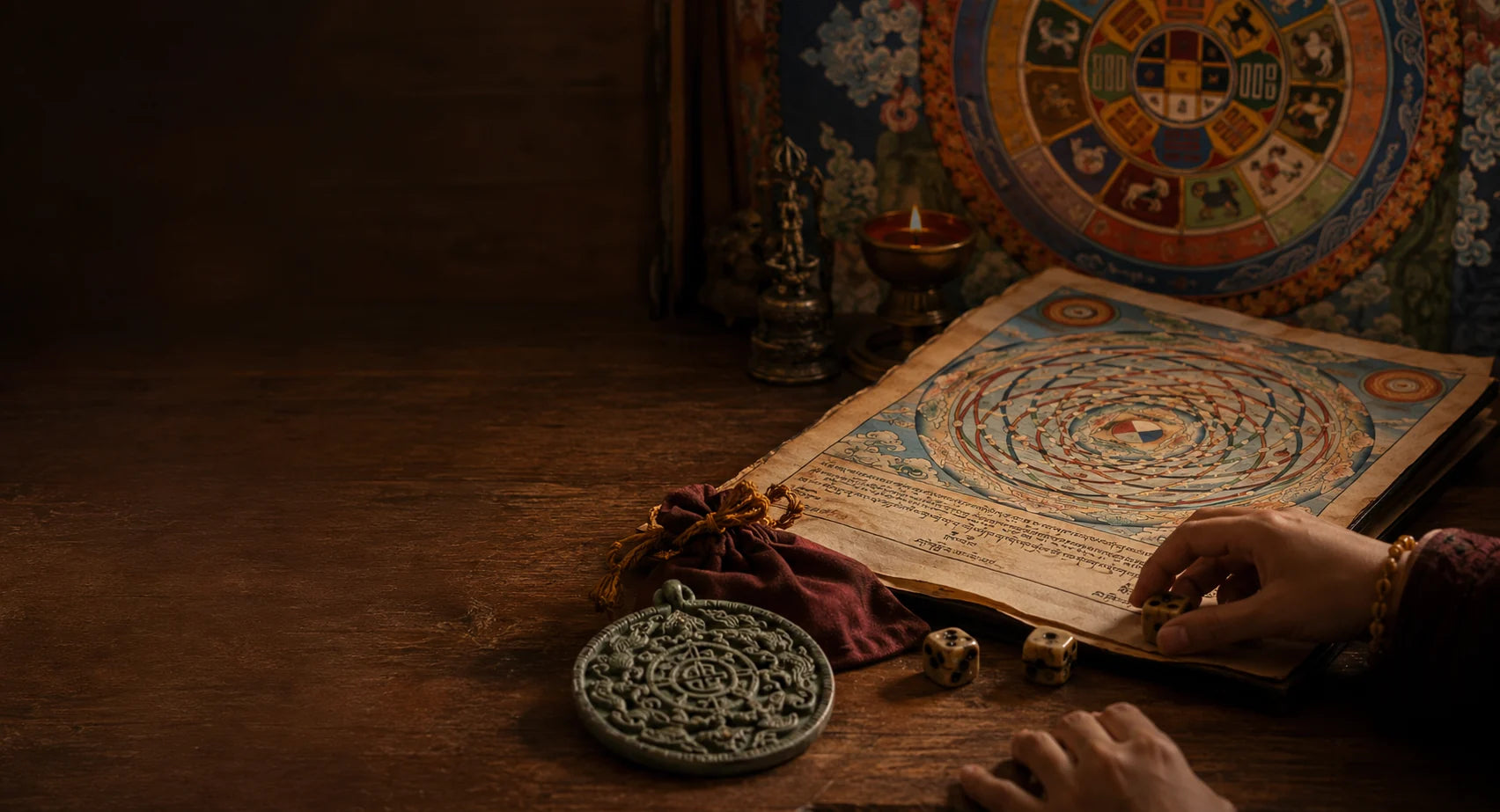

A five-color cord can look like a simple braid, yet in Tibetan Buddhist material culture colored thread can belong to a much larger world of amulets, blessings, ritual objects, and portable forms of protection. The important point is context: not every multicolored bracelet is a sacred Buddhist object, and five colors should not automatically be reduced to a universal chart of five fixed “powers.”
Quick answer: five-color cords appear in Tibetan and Himalayan amulet traditions as materials used to wrap, bind, attach, or accompany protective objects. Their religious significance comes from the ritual setting, the object they are connected to, and the way they are prepared or used—not simply from the presence of five colors.
Five-color cord is more than a color combination
Online explanations often begin with a neat list assigning one spiritual benefit to each color. Tibetan Buddhist visual culture does use color in highly developed symbolic systems, but those systems vary by iconography, ritual, artistic convention, direction, deity, and practice. A color scheme in one context should not be used as a universal key for every cord, prayer flag, painting, or piece of jewelry.
This matters because a cord can be functional as well as symbolic. Thread binds folded material, secures an amulet, suspends an object from the body, or helps a portable sacred object travel with its wearer. In that sense, meaning is inseparable from use.
Five-color cords and protective amulets
Documented Tibetan and Himalayan protective amulets can contain written mantra formulas, geometric diagrams, images, or sacred substances. Prepared material may be folded and wrapped with cords of several colors before being placed in a portable amulet box or worn on the body. This places colored cord inside a tradition of religious material culture rather than modern color therapy.
One of the most useful related objects to understand is the Tibetan Ga’u portable amulet box. A Ga’u can hold sacred or protective contents and is designed to be carried, making the relationship between container, cord, wearer, and movement especially clear.
What is a Tibetan protection cord?
The phrase “protection cord” can describe cords associated with Buddhist teachers, rituals, blessings, protective practices, or amulets. What gives such a cord religious status is not visible from color alone. Provenance can matter: where it came from, who prepared or blessed it, what ritual it was connected with, and what instructions accompanied it.
That is why a commercially made bracelet should not be described as consecrated simply because it uses red thread or five colors. A contemporary piece can still be meaningful, but its meaning should be described honestly.
Is a five-color cord the same as a prayer flag?
No. Tibetan prayer flags are printed sacred textiles that belong to their own tradition. They may carry prayers, mantras, images, or auspicious formulas and are displayed so wind can move through them. A braided cord may use a related palette but is a different object with a different material function.
The same caution applies to Tibetan-inspired jewelry: visual continuity does not make two objects ritually identical.

Why cord matters in Tibetan material culture
Stones and silver attract attention, but cord performs essential work. It connects, binds, suspends, secures, and allows an object to be worn close to the body. Traditional jewelry and ritual objects often make meaning through combinations of materials rather than through a single “magic” component.
If you are interested in the craft side of this story, see Tibetan Knotting in Jewelry, which looks at braided construction, functional knots, and contemporary craft.

Sacred cord vs. Tibetan-inspired jewelry
A ritually prepared cord and a modern braided bracelet may share colors or materials while serving different purposes. Kailora uses the language of Tibetan-inspired jewelry to preserve that distinction. Unless a product has documented religious provenance, it should be understood as contemporary wearable design rather than a consecrated Buddhist object.
For a modern wearer, cord jewelry can still become a personal reminder of steadiness, boundaries, intention, or connection. That is a contemporary symbolic interpretation, not a historical claim or a scientific guarantee of protection.
How to choose five-color cord jewelry respectfully
- Look for clear material descriptions rather than exaggerated spiritual promises.
- Be cautious with undocumented claims such as “blessed,” “consecrated,” or “guaranteed protection.”
- Distinguish traditional Buddhist objects from contemporary Tibetan-inspired design.
- Allow personal meaning without rewriting personal experience as historical fact.
Kailora’s Nomad Thread Handwoven Cord Bracelet approaches braided cord as contemporary wearable craft. Its role is symbolic and personal rather than a claim of ritual consecration.
Frequently asked questions
What does a Tibetan five-color cord mean?
It can be associated with protective amulet traditions and broader Tibetan Buddhist color symbolism, but meaning depends on context. There is no responsible single chart that explains every five-color object.
Does a five-color bracelet guarantee protection?
No. Traditional beliefs about protective objects belong to a religious and cultural framework. A modern bracelet should not be presented as scientifically preventing harm.
Can I wear Tibetan-inspired five-color jewelry?
Yes. Respectful contemporary design can draw from Tibetan color, cord, and material traditions as long as it does not falsely claim sacred provenance.
Explore the wider context through the Kailora Tibetan Culture Guide.