
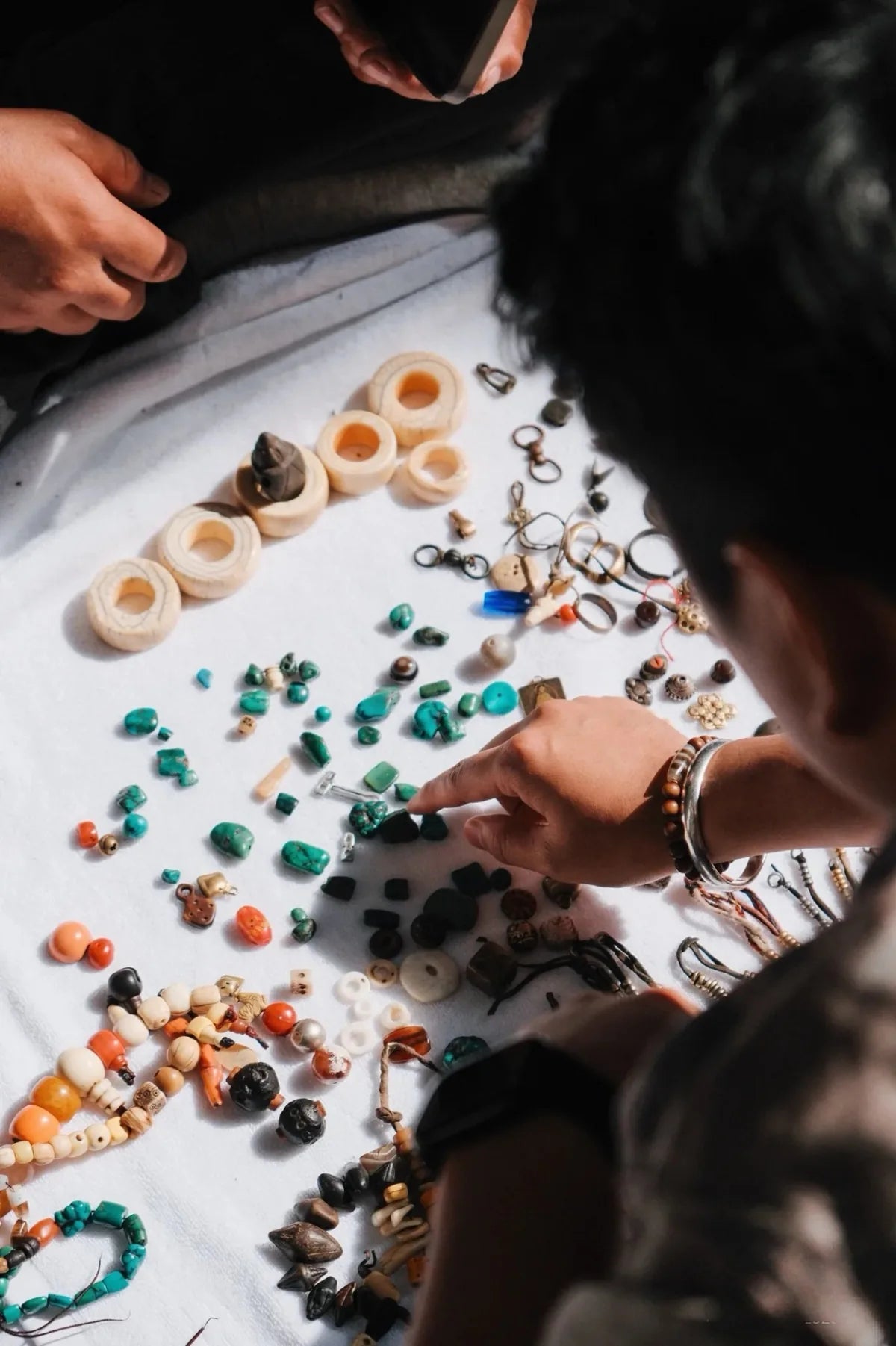
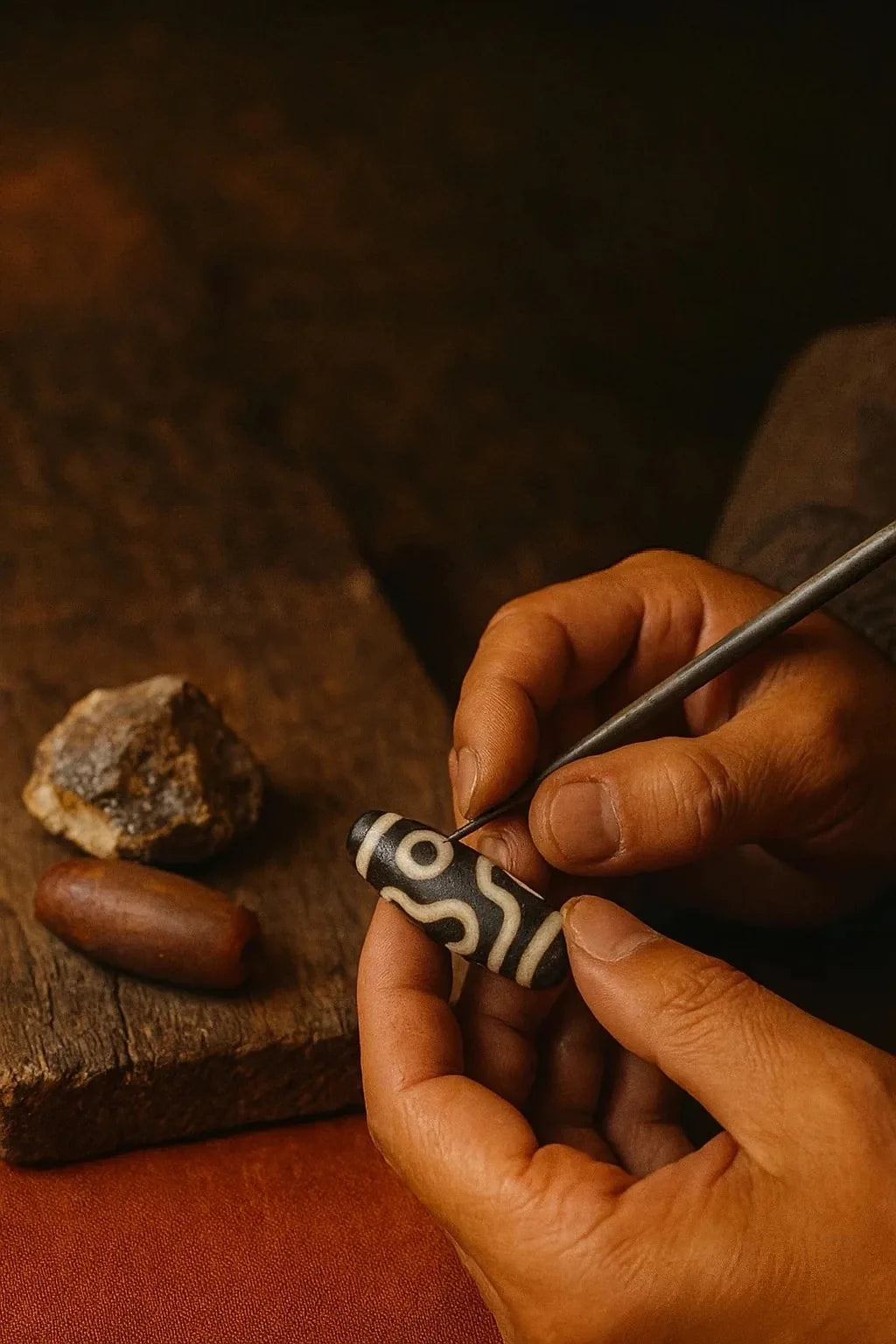





Traditional Tibetan necklaces are rarely explained well by the modern idea that one stone equals one fixed meaning. Museum objects often combine turquoise, coral, amber, silver or other metals, glass, stone, cotton, ivory or bone, and additional materials in a single piece. The mixture itself tells us something important about Tibetan adornment.
Quick answer: Tibetan necklaces combine materials because jewelry can express trade connections, wealth, regional taste, availability, family possessions, dress traditions, craftsmanship, and personal preference at the same time. Symbolism matters, but it is only one layer.
What museum necklaces actually contain
The Metropolitan Museum of Art preserves Tibetan necklaces from the nineteenth and early twentieth centuries made from combinations such as turquoise, coral, silver, amber, glass, stone, cotton, jade, and other materials. These surviving objects immediately challenge simplified online descriptions that reduce Tibetan jewelry to a single gemstone.
One necklace can contain several kinds of value at once: visual contrast, rarity, imported material, skilled metalwork, inherited components, and a form suited to a particular style of dress.

Turquoise: one of the most recognizable materials
Turquoise is deeply associated with Tibetan material culture and appears in jewelry, dress ornaments, ritual objects, and prayer beads. Its blue-green color also creates a strong contrast with red coral and warm metal tones.
For a deeper treatment of history and symbolism, see Tibetan Turquoise: History, Gemology, Symbolism & Jewelry.
Coral: a material shaped by long-distance exchange
Coral did not originate on the high Tibetan plateau. Its presence in Tibetan jewelry is therefore also a story of exchange. Coral entered Himalayan material culture through trade networks and became highly valued in adornment. Its saturated red color made it a natural visual partner for turquoise.
Read more in Coral in Tibetan Jewelry.
Amber: warmth, scale, and visual weight
Amber can appear as large warm-toned beads or ornaments, adding a very different visual quality from turquoise or coral. Museum necklaces demonstrate that amber could be used alongside jade, silver, and other materials rather than in isolation.
This is a useful reminder that material combinations were not designed as contemporary “crystal recipes.” They were part of clothing, social display, regional aesthetic systems, and the life histories of objects.

Silver and metalwork hold the composition together
Metal is not merely a background for stones. Silver and other metal components can form pendants, settings, spacers, clasps, or structural elements. They give jewelry weight, rhythm, and durability while creating a visual frame around colored materials.
Glass, cotton, bone, ivory, stone, and everyday materials
Historical Tibetan necklaces are materially diverse. Glass and cotton can appear beside precious or prestigious components. Bone and ivory occur in historical objects and prayer beads. Other stones and beads may reflect local availability, trade, reuse, or an owner’s preferences.
Modern ethical and legal considerations are different from historical museum context. Contemporary jewelry should use lawful, responsibly described materials rather than treating every historic material as something to reproduce today.
Why “one stone = one meaning” is too simple
Modern spiritual jewelry often markets a single stone through a single benefit. Those associations can be meaningful as contemporary symbolic language, but they should not be mistaken for a complete history of Tibetan jewelry.
A museum-based view is richer. Materials can signal aesthetics, status, family history, trade, ritual association, regional identity, or simply the owner’s taste. Meanings overlap.
How Kailora translates mixed materials today
Contemporary Tibetan-inspired design can learn from this layered approach without pretending to reproduce an antique. Kailora combines cord, natural stones, metal, and Tibetan-inspired forms as a modern design language. The goal is not to label every material with a guaranteed effect, but to create a wearable composition with cultural references and personal symbolism.
The Yak Bone Hand Mala with Turquoise Accents illustrates how contrasting materials can create visual rhythm in a contemporary piece.
Frequently asked questions
What materials are common in traditional Tibetan necklaces?
Museum collections document turquoise, coral, amber, silver and other metals, glass, stone, cotton, jade, bone, ivory, and other materials in different combinations.
Were all materials chosen for spiritual meaning?
No. Religious or symbolic associations can matter, but trade, wealth, dress, availability, craftsmanship, and personal preference are also important.
Is modern Tibetan-inspired jewelry the same as traditional Tibetan jewelry?
No. Contemporary work can respectfully reference historic materials and forms while clearly identifying itself as modern design.
Explore more through the Tibetan Culture Guide.