






Coral is one of the most striking materials found in historic Tibetan jewelry. Red beads appear beside turquoise, silver, amber, pearls, and other valued materials in necklaces, headdresses, amulet boxes, and personal ornaments. Yet coral tells a very different story from a stone formed in the Himalayan landscape: it came from the sea.
That simple fact opens a larger window onto Tibetan material culture. Coral in Tibetan jewelry reflects long-distance trade, the movement of valuable materials across ecological zones, and the ability of Tibetan communities to transform imported substances into locally meaningful forms of adornment.
Coral Is Not a Tibetan-Mined Gemstone
It is important to begin with what coral is not. Coral is an organic marine material, not a mineral mined on the Tibetan Plateau. Historical coral used in Himalayan jewelry had to travel through trade networks before it could be cut, drilled, restrung, mounted, inherited, exchanged, or worn in Tibetan communities.
This makes phrases such as “Tibetan coral gemstone” potentially misleading if they imply geographic origin. A more accurate description is coral used in Tibetan jewelry or coral in Tibetan material culture.
How Did Coral Reach the Tibetan Plateau?
Tibet historically participated in trade networks that connected the plateau with South Asia, Central Asia, China, Nepal, Bhutan, and regions farther west. Traders moved tea, wool, salt, textiles, metal goods, precious materials, medicines, and luxury objects across routes that were difficult but far from isolated.
Coral could enter these networks from maritime sources and then travel inland through multiple stages of exchange. By the time a coral bead appeared in a Tibetan necklace, its journey might already have crossed very different cultural and geographic worlds.
This is one reason Tibetan jewelry is best understood as material culture rather than as a closed list of “native stones.” The objects reveal both local craftsmanship and wider networks of exchange.
Coral, Turquoise, Silver, and Amber
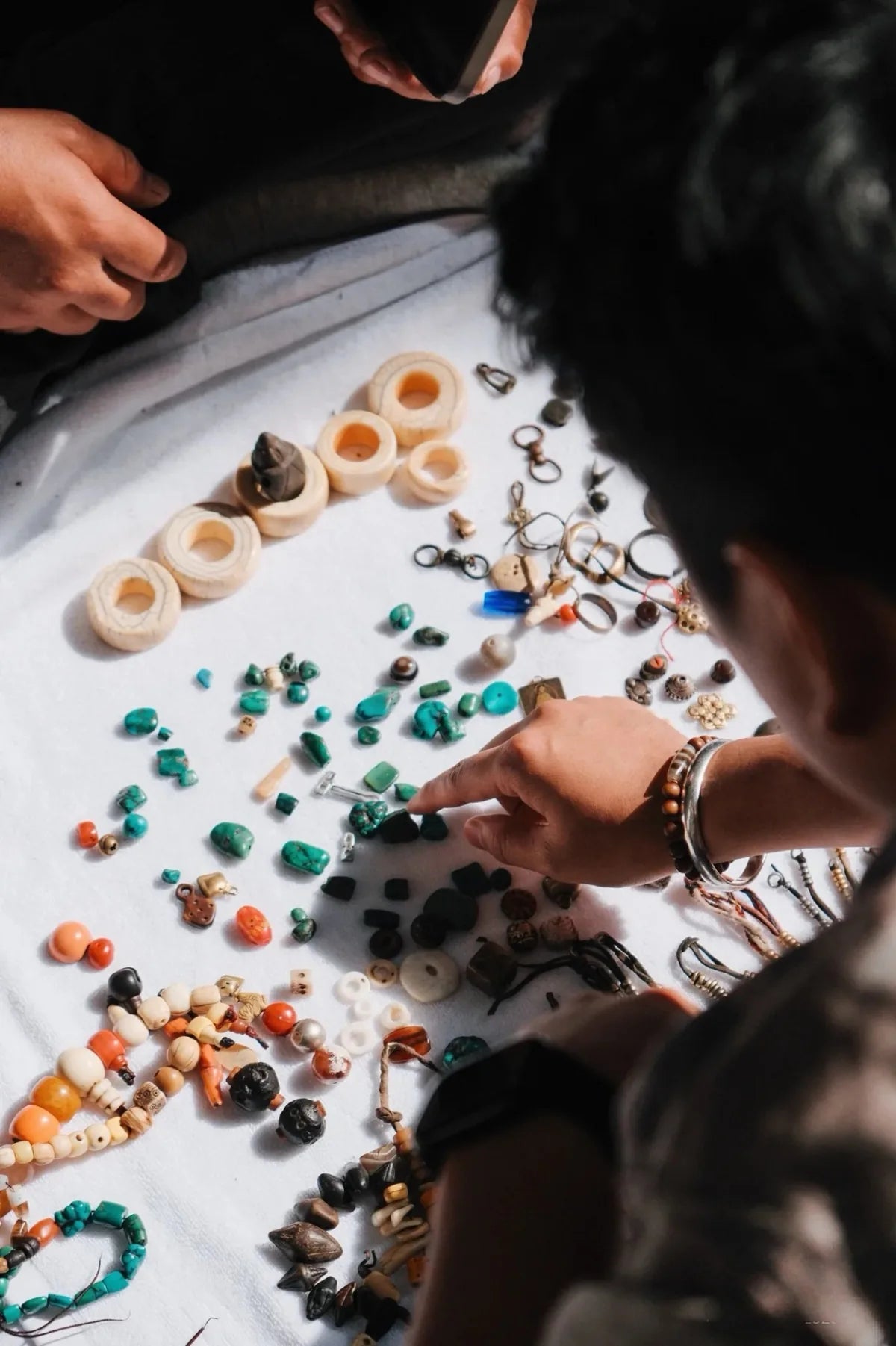
Historic Tibetan ornaments frequently combine materials rather than presenting a single gemstone in isolation. Museum collections preserve necklaces and dress ornaments in which red coral contrasts with blue-green turquoise, warm amber, silver-toned metal, shell, pearls, or other beads.
The visual effect is powerful: strong color contrasts remain legible across layered clothing and substantial jewelry. But the combination also reflects how materials with different origins could acquire value within the same cultural setting.
For more on another major material in Tibetan adornment, read Turquoise in Tibetan Culture. Our guide to Tibetan amber explores another material whose history also intersects with trade and jewelry.

How Was Coral Worn?
There is no single “traditional Tibetan coral necklace.” Dress and jewelry varied by region, community, gender, wealth, occasion, and historical period. Coral might appear as beads in necklaces, be incorporated into elaborate head ornaments, accompany silver fittings, or form part of larger arrangements of turquoise and other materials.
In some contexts, the quantity and quality of ornament could communicate prosperity, family resources, regional identity, or ceremonial importance. Jewelry could also be portable wealth: valuable materials could be stored in wearable form, passed between generations, restrung, repaired, or reconfigured.
To see how jewelry worked together with clothing rather than as isolated accessories, explore How Jewelry Is Worn with Traditional Tibetan Dress.
Does Coral Have One Fixed Tibetan Meaning?
No single modern keyword can summarize every historical use of coral. Online jewelry descriptions often assign universal meanings such as “protection,” “life force,” “luck,” or “healing” to red coral. Such associations may appear in particular religious, astrological, medical, regional, or modern spiritual contexts, but they should not be presented as one timeless Tibetan definition.
The more historically grounded observation is that coral was valued, visually distinctive, traded over long distances, and incorporated into personal adornment in many Himalayan communities. Meaning came from context: who wore it, where it appeared, what it was combined with, and how an object moved through family and social life.
Historic Objects Show a Culture of Combination
Historic Tibetan necklaces combine coral with materials such as turquoise and metal. These objects matter because they move the discussion away from modern gemstone marketing and toward evidence of how materials were actually assembled.
They also remind us that Tibetan jewelry has never been reducible to a single material. Color, texture, metalwork, bead form, textile attachment, and the relationship to dress all contribute to the finished object.
Coral in Contemporary Tibetan-Inspired Jewelry
Contemporary jewelry can reference historic color relationships—such as red, turquoise, silver, or amber—without claiming to reproduce a specific regional costume or sacred object. When Kailora uses Tibetan-inspired material language, the goal is to acknowledge those visual histories while keeping the modern product distinct from museum objects and ritual traditions.
Our All Tibetan Products collection includes contemporary jewelry influenced by Tibetan and Himalayan material culture. Not every piece contains coral, and a historical reference should never be read as a claim that a modern item is an antique, ritual artifact, or exact reproduction.
Why Coral Matters to the Story of Tibetan Jewelry
Coral makes the history of Tibetan adornment more interesting precisely because it did not originate on the plateau. Its presence demonstrates connection rather than isolation. A marine material could travel over great distances, enter Himalayan markets, and become part of a visual language that today is strongly associated with Tibetan dress and jewelry.
Looking closely at coral therefore changes the question from “What power does this red bead have?” to a richer set of questions: Where did the material come from? How did it travel? Who worked with it? How was it worn? And what did its value mean within a particular community?
Cultural note: Tibetan jewelry traditions are regionally diverse and changed over time. Coral can carry different religious, social, aesthetic, economic, or personal associations depending on context. This article introduces material history rather than assigning a universal spiritual meaning to coral.