






Quick answer: Jewelry in Tibetan dress is best understood as part of a larger system of personal adornment rather than as a list of stones with fixed meanings. Historical and regional ensembles may include silver, turquoise, coral, amber, agate, beads, belts, amulet boxes, earrings, necklaces, hair ornaments, and other objects. What is worn—and how much—is shaped by region, community, gender, age, wealth, occasion, trade, and period.
This article focuses on jewelry as it appears with dress. For a broader introduction to symbolic interpretation, see Tibetan Jewelry Meaning: A Guide to Energy & Symbols.
Jewelry Is Part of Dress, Not Separate From It
In museum photographs and surviving garments, ornament often works together with robes, aprons, belts, hair arrangements, and textile layers. A silver element may fasten clothing, hang from a belt, hold an amulet, or simply add visual weight and status to an ensemble.
That is why modern categories such as “necklace,” “belt,” and “charm” do not always capture the full social role of an older object. Personal adornment can be decorative, practical, inherited, protective, prestigious, or ceremonial at the same time.
Why Regional Variation Matters
There is no single traditional Tibetan jewelry set. Clothing documentation from the Smithsonian emphasizes the diversity of Tibetan dress across regions and subcultural groups. The same caution applies to jewelry. Styles associated with central Tibet may differ significantly from those documented in Amdo, Kham, pastoral communities, urban settings, or neighboring Himalayan regions.
When an online image is labeled simply “Tibetan woman in traditional jewelry,” it often hides this regional specificity.
Turquoise in Tibetan Adornment
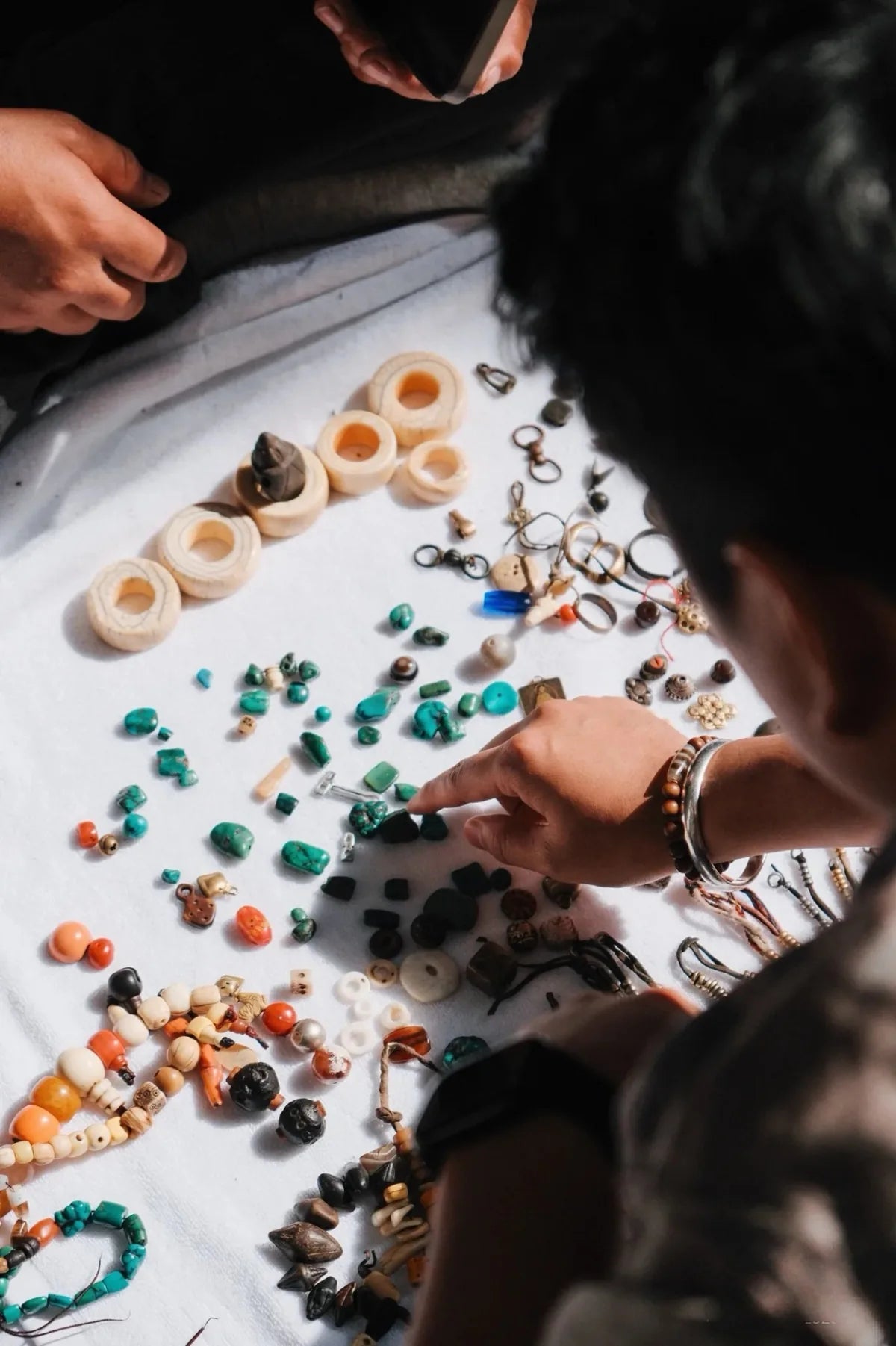
Turquoise is among the most recognizable materials in Tibetan and Himalayan ornament. It appears in silverwork, necklaces, earrings, hair ornaments, belts, and amulet containers. Historic museum objects show turquoise set directly into silver as well as strung alongside other stones and beads.
Its visual importance does not mean every turquoise object has one universal religious meaning. Material value, trade, aesthetics, family possession, regional fashion, and symbolic associations can overlap.
For the stone itself, see our dedicated guide to Tibetan Turquoise: History, Gemology, Symbolism & Jewelry or browse the Kailora Turquoise Collection.
Silver: Structure, Surface, and Setting
Silver is especially important because it can function as both structure and decoration. It can frame turquoise, form beads, create chains and plaques, or become a large wearable object such as a belt or girdle. A 19th-century Tibetan girdle in the Cleveland Museum of Art, for example, combines silver chains and plates with extensive turquoise inlay.
Modern shoppers should also distinguish historical silver objects from contemporary trade terms. “Tibetan silver” is not a guarantee of a particular silver purity. Our Tibetan Silver Jewelry guide explains the materials question in more detail.
Coral, Amber, Agate, and Other Beads
Coral is frequently visible in historic Himalayan adornment even though coral does not come from the Tibetan Plateau. Its presence is evidence of long-distance exchange. Amber and agate likewise connect jewelry history to trade, availability, and personal preference.
For a closer look at amber as a traded material in Tibetan adornment—including historic necklaces and the limits of origin claims—see Tibetan Amber: History, Jewelry, Trade & What to Know.
This is an important corrective to the idea that every material in “traditional Tibetan jewelry” must originate locally. Tibetan material culture has always been shaped by movement as well as place.
Belts, Girdles, and Hanging Ornaments
Some of the most visually striking adornments are worn around the waist. Silver plaques, chains, suspended elements, and stone settings can interact directly with a robe. The featured object above is a useful example: it is not simply a piece of jewelry in isolation but a body ornament designed to be understood through dress.
Earrings and the Face
Earrings create a different relationship with clothing because they frame the face and head rather than the torso. Historic and contemporary Tibetan and Himalayan styles vary from relatively restrained metal forms to larger bead-and-stone combinations. Again, scale and material depend on community and occasion.
Jewelry with the Chuba
The chuba provides the garment structure around which many ornaments are seen. A practical pastoral robe and an elite silk robe do not call for identical accessories. The visual relationship between textile, belt, jewelry, and hairstyle changes with the whole ensemble.
Is Traditional Tibetan Jewelry Mainly Religious?
No. Some objects have explicit Buddhist contexts, such as certain amulet boxes or mantra-related items, but personal adornment also expresses family wealth, taste, regional identity, social presentation, and access to materials. Calling every turquoise-and-silver object “Buddhist jewelry” removes much of its material and social history.
A Contemporary Kailora Lens
Kailora draws from Tibetan-inspired materials, textures, colors, and symbolic traditions while presenting contemporary jewelry for daily wear. A modern earring or necklace should not be mistaken for a reconstruction of a specific historical regional costume unless that provenance is actually documented.

Frequently Asked Questions
What stones are common in Tibetan jewelry?
Turquoise, coral, amber, agate, and other beads appear in documented adornment, often combined with silver or other metals. Their use varies greatly by region and period.
Is turquoise always a protection stone in Tibetan jewelry?
Turquoise has many cultural associations, but it is too simplistic to assign every historic turquoise object one fixed meaning. Context matters.
Can modern Tibetan-inspired jewelry be worn with everyday clothing?
Yes. Contemporary styling can draw from materials and design traditions without pretending to reproduce formal historical dress.