






The chuba is one of the most recognizable forms of traditional Tibetan clothing: a long robe adapted to climate, movement, social life, and regional textile traditions. Yet there is no single “Tibetan costume” that represents every Tibetan community.
Quick Answer
A chuba is a traditional Tibetan wrap-style robe worn in many regions of the Tibetan cultural world. Its cut, length, fabric, decoration, layering, and way of wearing it can vary according to region, gender, occupation, season, social setting, and occasion.
What Does a Chuba Look Like?
A chuba is generally a wrap-style robe with a broad body and long sleeves. It is secured around the waist, often with a belt or sash. Depending on how it is worn, the upper part can create a generous fold or pouch-like space around the torso.
That basic description is only a starting point. A heavy pastoral robe designed for cold weather can look and function very differently from a fine silk chuba worn for ceremony or by an urban or aristocratic wearer.
Why Is There No Single Tibetan National Costume?
Tibetan-speaking communities extend across a vast geographic area with different climates, livelihoods, trade connections, local identities, and histories. Clothing developed accordingly. Dress can signal region, age, occupation, wealth, community, festive status, or changing fashion.
This is why museum labels and commercial descriptions should be specific whenever possible. “Tibetan robe” may be technically correct, but identifying a region, period, material, or social context gives a more accurate picture.
What Materials Are Used for Chubas?
Materials vary widely. Wool and sheepskin have been important in colder pastoral environments, while woven wool, cotton, silk, brocade, and other textiles appear in different regional and social contexts. Trade also brought fabrics and decorative materials across long-distance networks.
A garment's material can reveal both environment and exchange. Thick animal-derived materials respond to cold and wind, while silk and brocade may reflect ceremonial use, wealth, patronage, or trade connections.
How Does Nomadic Dress Differ from Other Chubas?
In pastoral settings, clothing must work with an outdoor life shaped by temperature changes, herding, travel, and physical labor. Nomadic dress can therefore be heavier and more protective than garments used in warmer or more urban settings.
But “nomadic Tibetan clothing” is not one uniform category either. Pastoral communities themselves differ by region, and contemporary clothing choices continue to change.
How Is a Chuba Worn?
The robe can be wrapped and belted so that its length and upper folds are adjusted to the wearer. In some settings, sleeves may be worn normally; in others, one or both sleeves may hang while the upper body is adjusted for work or temperature.
Photographs of Tibetans with one sleeve hanging should therefore not be turned into a fixed symbolic rule. Practical comfort, weather, local style, and immediate activity can all matter.
Women's and Men's Chubas
Men and women may wear chubas with different cuts, accessories, jewelry, aprons, headwear, belts, shirts, and decorative conventions. Some forms of dress are strongly associated with particular communities or life stages. Others have changed significantly over time.
A particularly recognizable textile worn with women’s dress in some Tibetan communities is the striped pangden apron. It should not be treated as a universal marker worn by every Tibetan woman.
What Do Chubas Tell Us About Textile History?
Clothing is a record of material circulation. Tibetan dress can incorporate locally produced wool alongside imported or traded textiles. Silk, brocade, dyes, metal ornaments, coral, turquoise, and other materials moved through regional networks connecting the plateau with neighboring parts of Asia.
That makes clothing history broader than fashion. A chuba can help us ask where fibers came from, who wove the fabric, which trade routes supplied luxury materials, how households organized labor, and how communities expressed identity.
For the production side of cloth, see How Are Tibetan Textiles Woven?. For pile textiles and rugs, continue to Tibetan Carpet Weaving.
Chuba and Jewelry
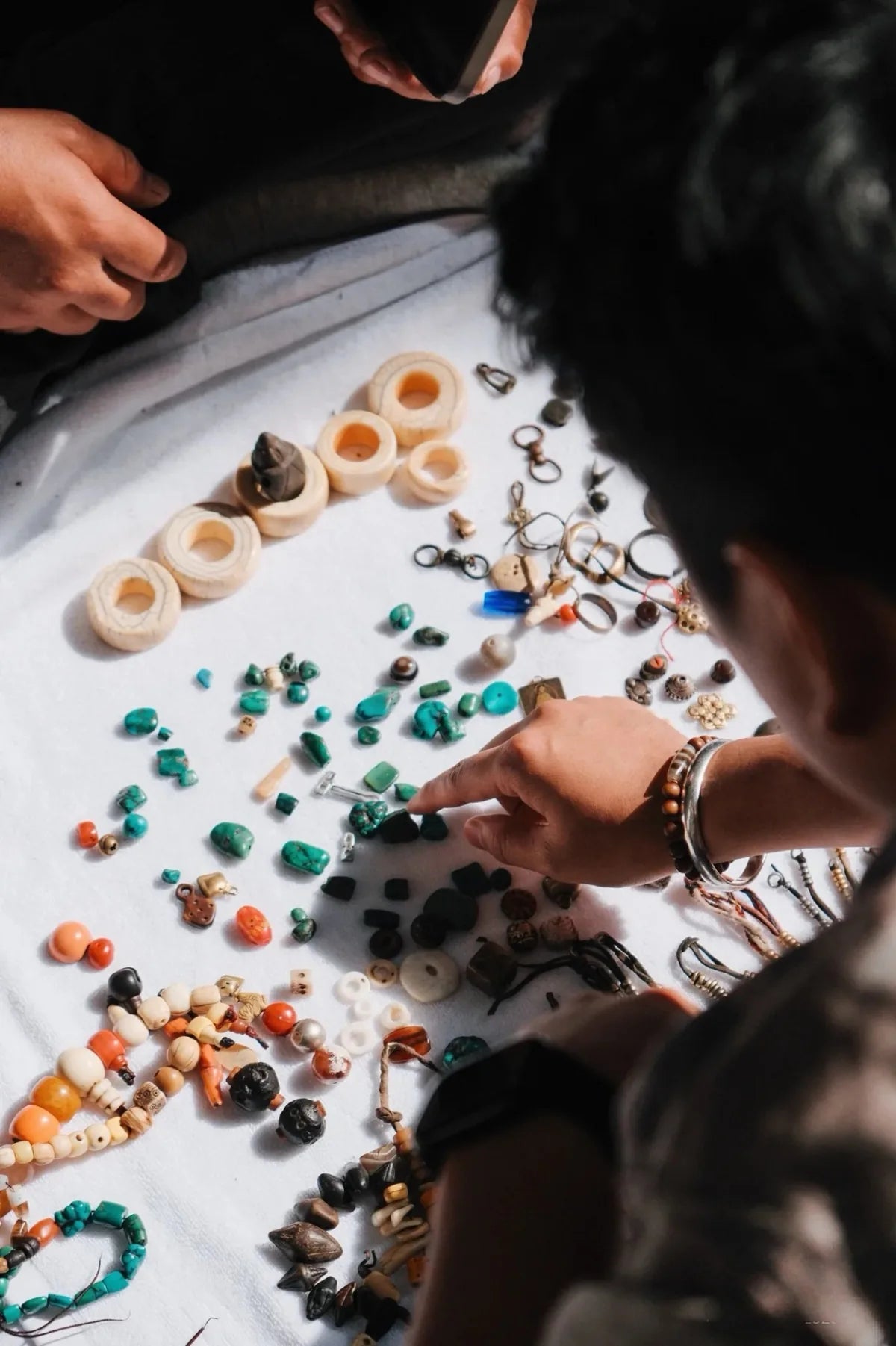
Traditional dress is often seen together with jewelry, amulet containers, beads, earrings, necklaces, belts, and other accessories. These objects can carry social, regional, aesthetic, or religious significance depending on context.
For a fuller discussion of how turquoise, silver, coral, amber, belts, earrings, and necklaces appear with regional dress, see How Is Jewelry Worn with Traditional Tibetan Dress?.
Kailora also has separate guides to the Tibetan ga'u amulet box and the khata ceremonial scarf. Neither should be treated as a generic accessory simply because it appears alongside traditional clothing.

Traditional Dress vs. Tibetan-Inspired Fashion
Modern fashion frequently borrows silhouettes, brocades, colors, braiding, tassels, or jewelry ideas associated with Tibetan culture. The respectful distinction is straightforward: a contemporary product inspired by Tibetan aesthetics should be described as Tibetan-inspired unless it is a documented traditional garment made within a specific cultural context.
This distinction protects both cultural accuracy and consumer clarity. It also leaves room for contemporary design without pretending that every modern object is an inherited ritual or folk form.
Contemporary cord and braid construction is explored separately in Tibetan Knotting in Jewelry, where functional knots are distinguished from modern symbolic marketing.
Kailora's Contemporary Reflection: Clothing as Lived Material Culture
A chuba is meaningful not because it matches a single visual stereotype, but because it connects material, climate, movement, community, and history. For Kailora, that supports a contemporary design principle: inspiration should begin with context.
This is a modern Kailora interpretation, not a traditional Tibetan teaching.
Frequently Asked Questions
What is a Tibetan chuba?
A chuba is a traditional Tibetan wrap-style robe. Its fabric, cut, decoration, and way of wearing it vary across regions and social contexts.
Are all chubas made from wool?
No. Wool is important, especially in colder settings, but chubas can also be made from sheepskin, cotton, silk, brocade, and other textiles.
Do Tibetan men and women wear chubas?
Yes, although styles, accompanying garments, accessories, and regional conventions may differ.
Is a chuba a Buddhist religious robe?
Not in the same sense as monastic robes. Chuba refers broadly to Tibetan lay dress. Buddhist monks and nuns have their own monastic clothing traditions.
What is the striped apron worn with some Tibetan women’s dress?
It is commonly called a pangden. Its use and social associations vary by region and community, so it should not be treated as a universal uniform.
Can modern Tibetan-inspired clothing be called traditional?
Only when the description is supported by provenance and cultural context. For contemporary fashion, “Tibetan-inspired” is usually more accurate than claiming an item is a traditional regional garment.
Editorial Note: Tibetan dress varies substantially by region, community, livelihood, period, and occasion. Kailora distinguishes documented traditional dress from contemporary Tibetan-inspired design.
Continue Exploring Tibetan Everyday Culture
Read the Tibetan Culture Guide, learn about the yak-hair tent, explore Tibetan weaving, or see why the yak matters in Tibetan pastoral culture.