




Few materials are as immediately associated with Tibetan and Himalayan jewelry as turquoise. Its blue-green color appears beside coral, silver-toned metal, gold, glass, amber, agate, textiles, and beads in historic ornaments preserved by museums around the world.
Yet “Tibetan turquoise” is often used online as if it described one specific mine, one fixed spiritual meaning, or one guaranteed kind of stone. The cultural history is more nuanced. Turquoise matters because of how it has been worn, traded, valued, combined, inherited, and interpreted across Tibetan material culture.
Quick Answer
Turquoise has a long history in Tibetan adornment and appears in necklaces, earrings, belts, amuletic objects, prayer-bead traditions, and other forms of material culture. Historic Tibetan jewelry preserved by museums shows turquoise combined with metals, coral, glass, cotton, and other materials. Cultural associations can include vitality, well-being, value, identity, and auspiciousness, but wearing turquoise should not be presented as a medical guarantee.
What Does Historic Tibetan Jewelry Show Us?
Museum objects provide a useful starting point because they show turquoise in actual material combinations rather than as an abstract “crystal meaning.”
The Metropolitan Museum of Art preserves Tibetan necklaces from the eighteenth and nineteenth centuries made with turquoise alongside metal, glass, cotton, coral, and other materials. It also holds earrings from the Lhasa area made with gold and turquoise, as well as belts and other ornaments set with turquoise.
These objects demonstrate that turquoise was not limited to one type of jewelry. It participated in a broad visual language of dress and adornment.
Turquoise as Color, Material, and Social Object
A gemstone can matter for more than its mineral composition. Turquoise has a color that remains highly visible against dark hair, wool, leather, metal, and richly colored textiles. That visual contrast makes it especially effective in ornament.
But an ornament can also carry information about region, status, family resources, trade connections, ceremonial dress, personal taste, and inherited value. A turquoise bead therefore exists inside social relationships, not only inside a modern list of gemstone properties.
This is one reason cultural meaning changes depending on the object. A small bead on a prayer strand, a large stone on an earring, and turquoise set into an elaborate belt do not function in exactly the same way.

What Did Turquoise Symbolize?
Turquoise has been associated in Tibetan and Himalayan contexts with valued qualities including life, well-being, auspiciousness, and status. In an exhibition discussion of historic Himalayan jewelry, The Metropolitan Museum of Art noted pure-blue turquoise elements from Lhasa-area earrings in connection with health and life.
That historical association should be read culturally rather than medically. It tells us how a material could participate in ideas about vitality and well-being; it does not establish that wearing turquoise treats illness.
Like many long-used materials, turquoise can carry several meanings at once. Color, rarity, durability, trade value, family history, religious association, and personal memory can all shape interpretation.
Was All Turquoise Used in Tibet Mined in Tibet?
No assumption of geological origin should be made from the phrase “Tibetan turquoise.” Tibet has long participated in regional trade networks connecting the Himalayan world, Central Asia, South Asia, and China. Materials moved across those networks along with textiles, metals, tea, coral, beads, pigments, and other valued goods.
In modern retail language, “Tibetan turquoise” may describe style, cultural association, a trade label, or claimed origin. Those are different things.
If exact geological provenance matters to you, look for specific sourcing documentation rather than relying only on a cultural product name.
Turquoise and Coral: A Recognizable Pairing
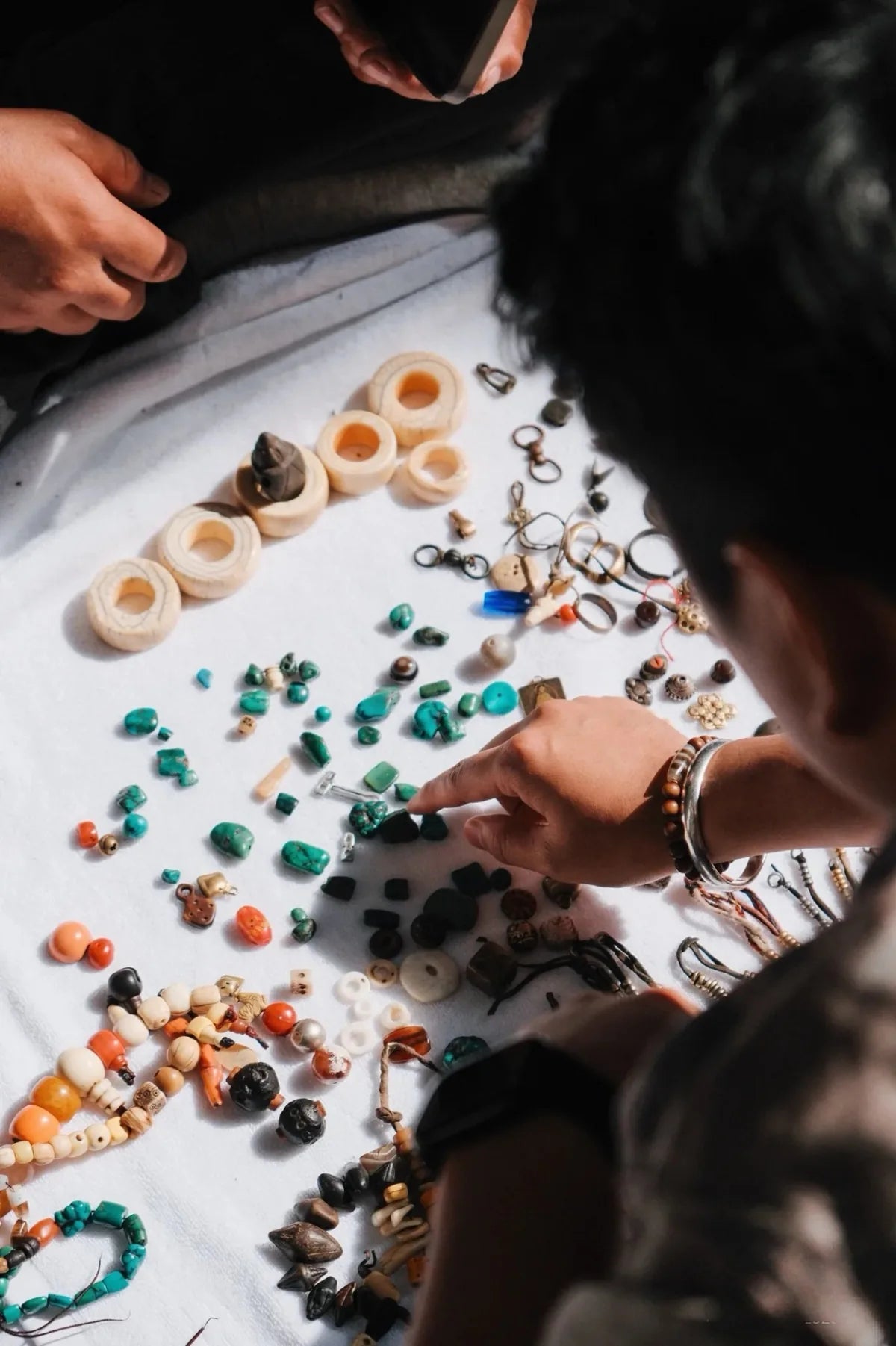
Historic Tibetan jewelry frequently places turquoise beside red or orange coral. The visual effect is striking: cool blue-green against warm red, often framed by silver or gold-toned metal.
This pairing became so recognizable that modern audiences can read it as “Tibetan” almost instantly. But the beauty of the combination should not make us forget that both materials entered complex systems of trade, value, craft, and regional dress.
Studying the combination as material culture is more informative than assigning one simplified spiritual keyword to each color.
Turquoise in Prayer Beads
Turquoise may also appear in Buddhist bead traditions, including as individual beads, separators, decorative elements, or components added to a prayer strand. However, the presence of turquoise does not by itself define an object as a ritual mala.
Prayer beads are identified by their structure and use as well as their materials. For the counting logic behind a full mala, see Why 108 Beads? Understanding Tibetan Buddhist Prayer Beads.
Turquoise and Dzi Beads
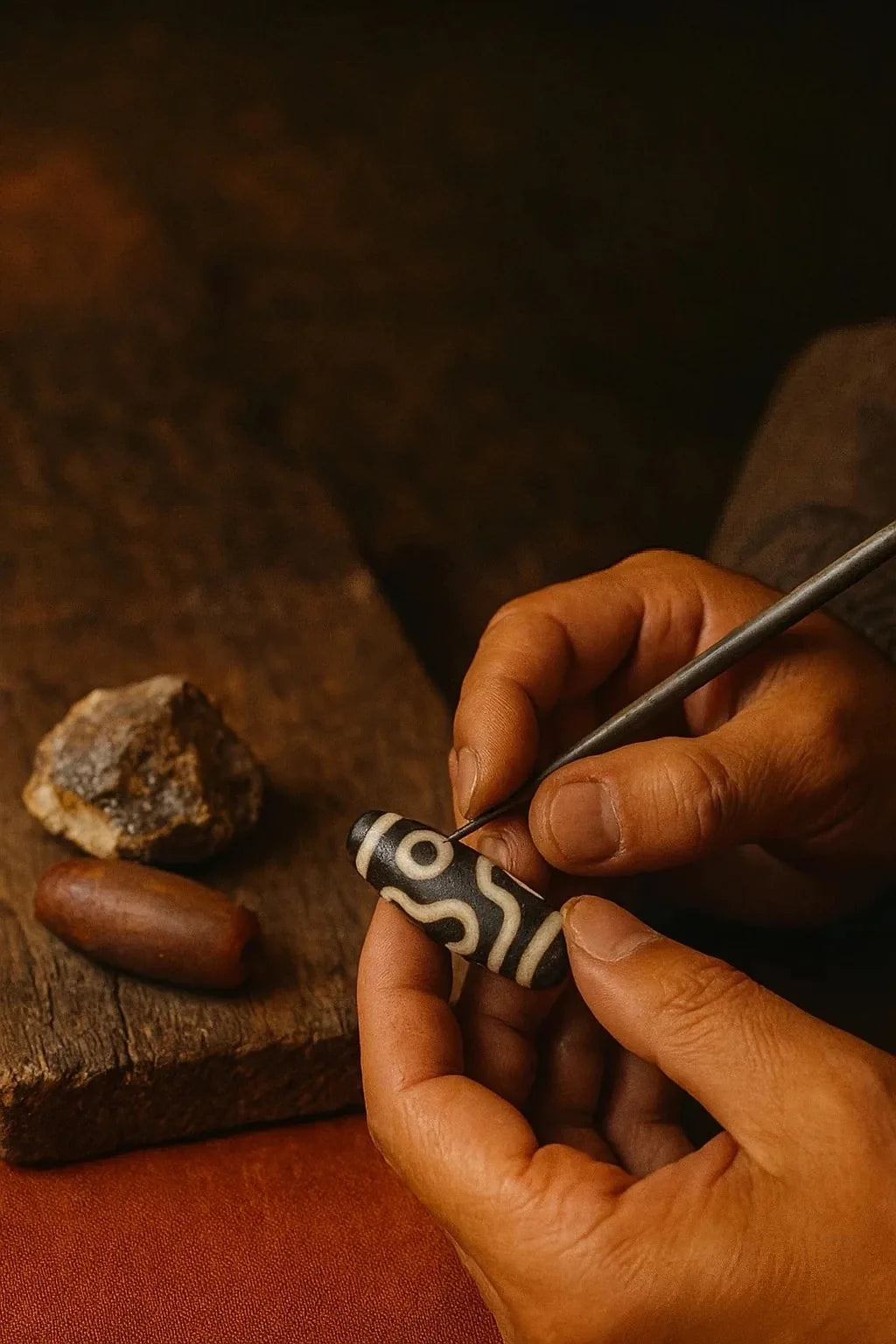
In contemporary Tibetan-inspired jewelry, turquoise is often combined with agate and Dzi-style beads. Visually, the turquoise introduces a bright natural color beside the darker browns, blacks, creams, and etched patterns of agate.
Dzi beads have their own complex history and symbolic vocabulary, so combining the two materials does not merge them into one traditional meaning. Each element should be understood on its own terms.
Readers interested in that material pairing can explore Kailora's Tibetan Dzi Beads collection.
How to Think About “Turquoise Meaning” Today
There are three different layers that are often mixed together online.
Historical cultural association: what documented Tibetan and Himalayan objects, texts, collections, and communities tell us about the material.
Modern spiritual interpretation: the meanings contemporary wearers or wellness communities assign to turquoise.
Personal meaning: what the material comes to represent for an individual through memory, intention, travel, family, or daily wear.
These layers can coexist, but they should be labeled honestly. A personal interpretation does not become an ancient Tibetan teaching simply because it sounds meaningful.
Natural Variation Is Part of the Material
Turquoise can vary in hue, matrix pattern, surface texture, and appearance. In the modern gemstone market, turquoise may also be stabilized, treated, reconstructed, dyed, or imitated.
That does not make every treated material inherently undesirable; it means buyers should distinguish aesthetic preference from claims about naturalness and provenance. When a seller makes a specific mineral or origin claim, that claim should be supported rather than inferred from color alone.
Traditional Context and Kailora's Contemporary Interpretation
Traditional context: turquoise has a long documented place in Tibetan jewelry and adornment, appearing in museum-preserved necklaces, earrings, belts, and other objects.
Kailora's contemporary interpretation: turquoise can become a wearable reminder of openness, vitality, clarity, or connection to Himalayan-inspired color and craft.
Those contemporary ideas are symbolic choices, not medical effects or universal translations of Tibetan belief.
Explore Kailora's Turquoise collection to see how the material is used in contemporary Tibetan-inspired jewelry.
How Turquoise Fits Into a Wider Material Culture
Turquoise becomes even more interesting when viewed beside other materials. Tibetan jewelry and decorative objects can combine stones, metals, amber, coral, glass, textiles, wood, seeds, and agate in ways that reflect both availability and aesthetic tradition.
For another example of a material shaped by trade, adornment, and cultural interpretation, read Tibetan Amber: History, Jewelry, Trade & What to Know.
Frequently Asked Questions
What does turquoise mean in Tibetan culture?
Historic Tibetan and Himalayan contexts associate turquoise with valued ideas including vitality, well-being, auspiciousness, and social or personal value, but meanings vary by object and context.
Does Tibetan turquoise come only from Tibet?
No. Cultural use and geological origin are different questions, and materials have long moved through regional trade networks.
Was turquoise used in Tibetan jewelry historically?
Yes. Museum collections preserve historic Tibetan turquoise necklaces, earrings, belts, and other ornaments.
Does turquoise have proven healing powers?
This article makes no such medical claim. Historical associations with health or life are cultural evidence, not proof that wearing a stone treats a medical condition.
Can turquoise be combined with Dzi beads?
Yes, especially in contemporary Tibetan-inspired jewelry, but the two materials retain separate histories and symbolic associations.
A Stone Carries More Than One Story
Turquoise in Tibetan culture is not interesting because one keyword can explain it. Its story is richer: color, trade, dress, craft, value, ritual context, family memory, and modern interpretation all meet in a single material.
Looking at those layers allows turquoise to remain both beautiful and culturally specific—without turning history into a marketing promise.
Continue exploring Tibetan jewelry, symbols, materials, and living traditions in the Kailora Tibetan Culture Guide.