




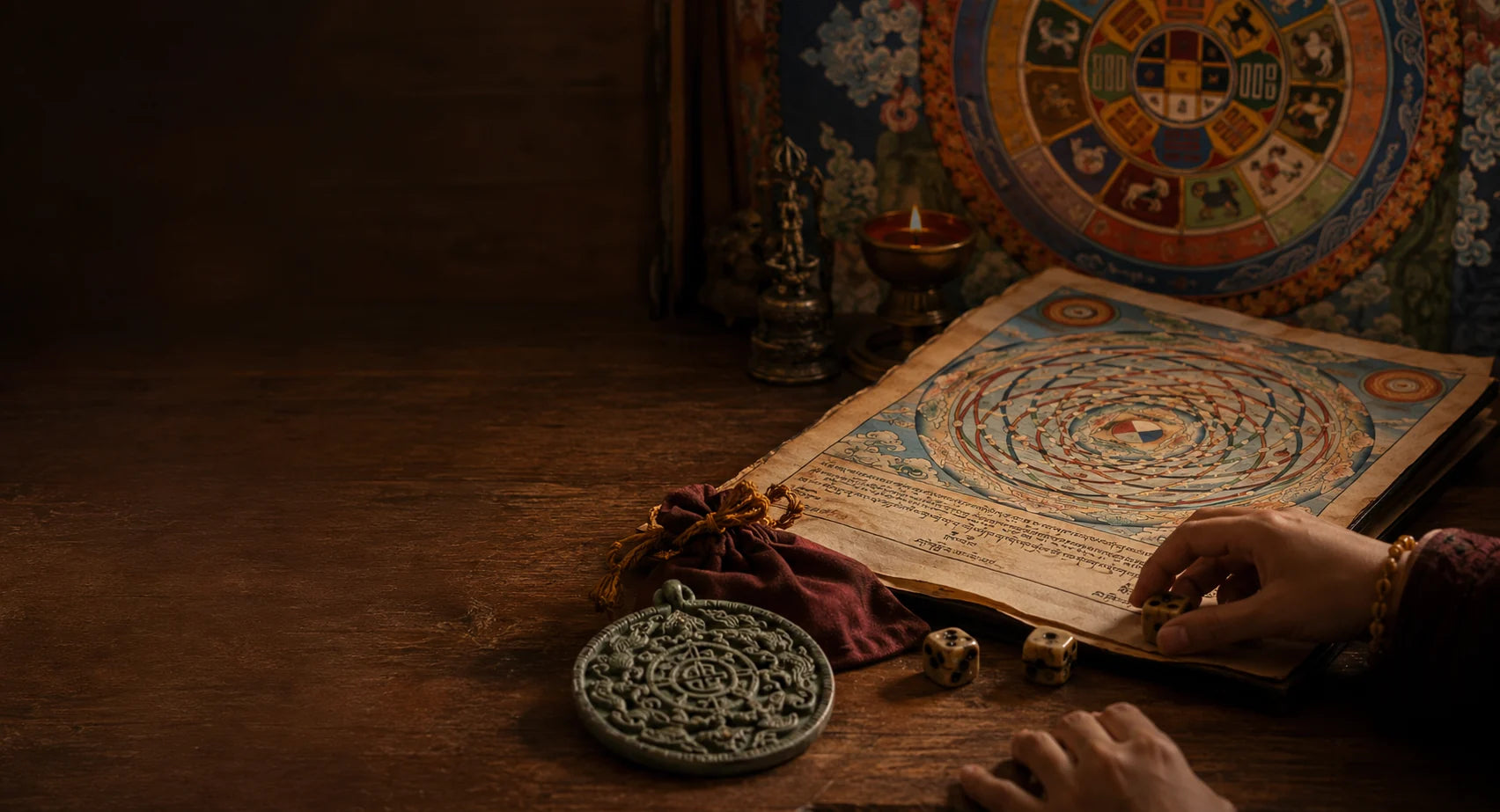

Prayer beads are sometimes described as if every traditional strand followed one fixed recipe. Museum collections show something more human. Tibetan prayer beads can vary dramatically in material, separators, counters, tassels, added objects, and signs of use. They are structured ritual tools, but they can also become intensely personal possessions.
Quick answer: Tibetan prayer beads were often personalized through material choice, counters, separators, tassels, and owner-added attachments. Historical strands demonstrate that religious function and individual taste could exist together.
The basic structure can stay recognizable
Many Tibetan Buddhist long malas, or trengwa, contain 108 main beads. Separator beads may divide the strand into four groups of 27, and a larger guru bead can mark the joining point. Counters and tassels may hang from the strand.
That gives a recognizable framework, but it does not make every mala identical. For the counting system itself, see What Are Mala Counters?.
Materials ranged from simple seeds to precious substances
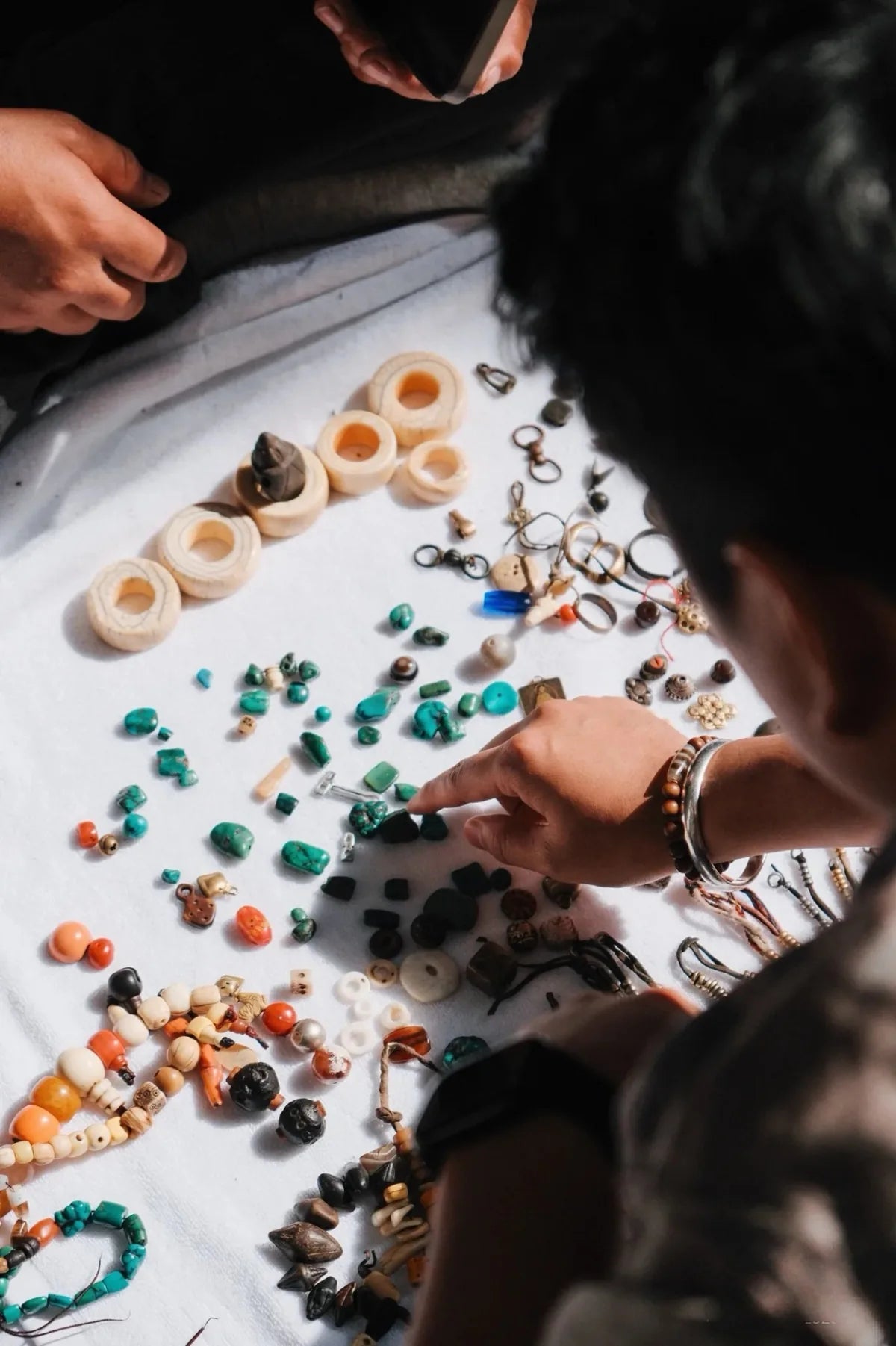
Historical prayer beads survive in bodhi seed, rudraksha seed, wood, bone, turquoise, mother-of-pearl, coral, metal, ivory, agate, carnelian, conch, and many other materials. Some strands mix several of these.
Material choice could relate to ritual practice, availability, status, inherited possessions, aesthetics, or personal preference. It is therefore risky to treat every historical material as a one-to-one spiritual code.
Turquoise, coral, and precious materials
Turquoise and coral appear frequently in Tibetan ritual and personal objects. On prayer beads they can form the main strand or act as separators and accents. Mother-of-pearl and metal components also appear in refined historical examples.
Some museum strands are associated with elite owners, showing that prayer beads could reflect social position as well as devotional use. Yet other examples are much simpler. Both belong to the history of the object type.
Attachments can reveal the owner
One of the most compelling details in museum collections is the presence of unexpected additions. A twentieth-century turquoise strand includes beads and plastic buttons added to a counter. A nineteenth-century rudraksha strand includes small copper ear picks attached to its tassels.
These additions make the mala a record of lived practice. They show that religious objects are handled, repaired, adapted, and incorporated into everyday life.

Why personalization does not erase ritual function
Modern discussions sometimes create a false choice: either a mala is sacred and standardized, or personal and decorative. Historical evidence suggests that those categories can overlap. A practitioner can use prayer beads seriously while still preferring particular materials or adding useful and decorative attachments.
The object’s ritual role comes from practice and context; its individuality can come from the owner.
What about bone and ivory?
Bone and ivory appear in historical collections, but historical documentation is not a recommendation to reproduce every material today. Modern sourcing is governed by ethical, conservation, and legal concerns. Contemporary jewelry should identify materials accurately and avoid endangered wildlife products.
Modern mala-inspired personalization
Today people often choose mala-inspired jewelry according to color, stone, tactile feel, length, or personal intention. This is not identical to a lineage-specific Buddhist practice, but it does continue one broad material truth visible in historical strands: the object becomes meaningful through repeated contact with a person.
The Yak Bone 54-Bead Hand Mala offers a contemporary example of a shorter mala-inspired form, while the Clear Quartz 108 Mala Wrap Necklace retains the familiar 108-bead rhythm.
Frequently asked questions
Were all Tibetan prayer beads made of 108 beads?
No. 108 is a major and common structure, but historical collections also contain shorter strands and other bead counts.
Could prayer beads show status?
Yes. Precious materials and refined craftsmanship can reflect wealth or status, although devotional function remains important.
Were mala attachments standardized?
Not completely. Counters have recurring functions, but surviving strands show varied tassels, ornaments, separators, and owner-added objects.
For more on Tibetan material culture, visit the Tibetan Culture Guide.