


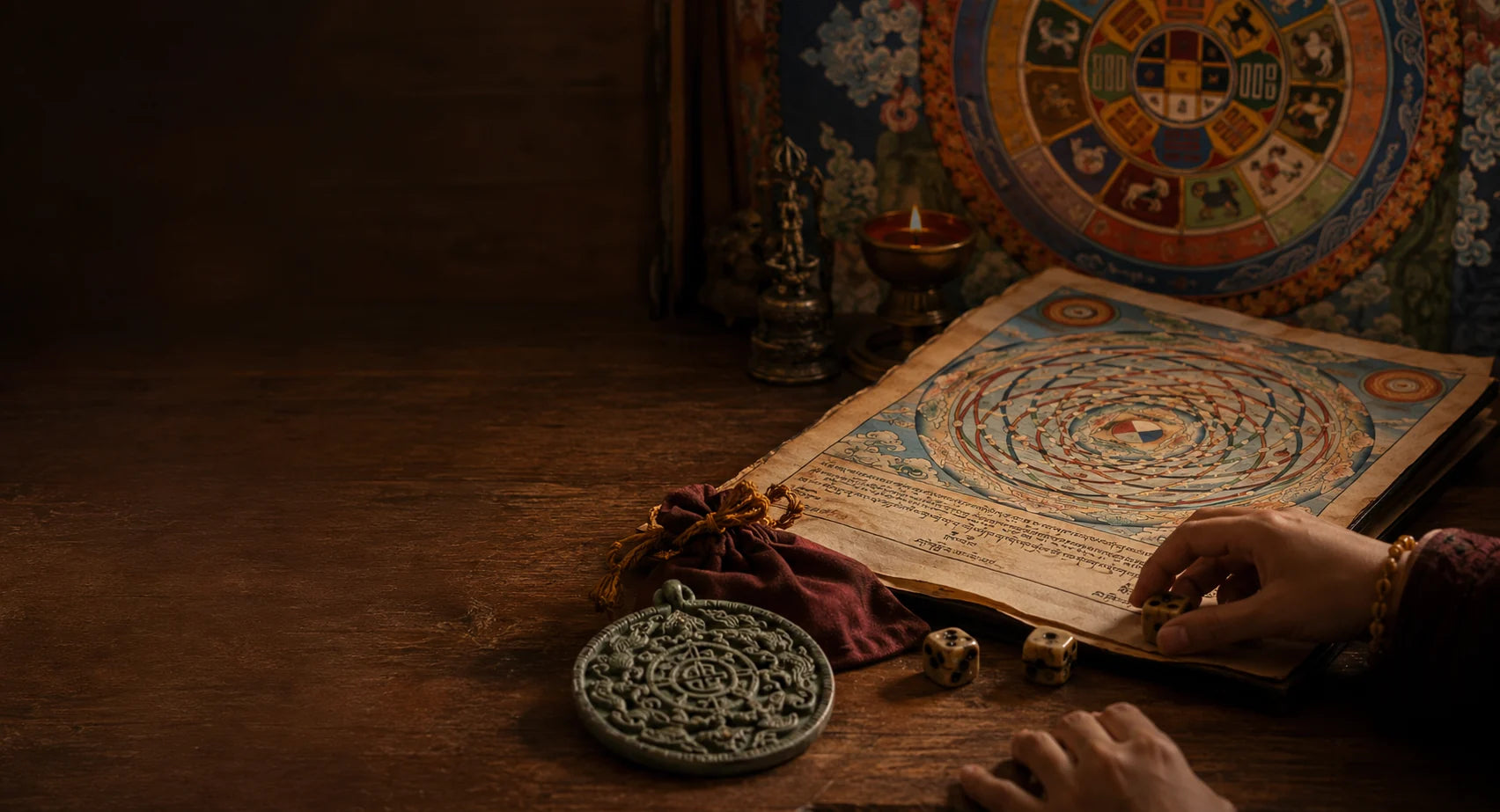

The Tibetan term lungta is usually translated as Wind Horse. Many people first encounter it at the center of a prayer flag, but lungta is larger than one printed image. Tibetan texts also speak about raising, strengthening, or restoring one’s windhorse in connection with auspicious circumstances, vitality, good fortune, reputation, and the successful course of activity.
Quick Answer
Lungta (rlung rta) literally combines “wind” and “horse.” In Tibetan cultural and religious contexts it can refer both to the familiar Wind Horse image on prayer flags and to a broader idea of auspicious momentum or life-force-like fortune that may rise or decline. Traditional Tibetan Buddhist liturgies include practices for “raising the windhorse.” It should not be reduced to the modern phrase “high vibration,” and it is not the same thing as an ordinary horse.
What Does Lungta Mean?
The two parts of the Tibetan term evoke movement and strength: rlung, wind, and rta, horse. The image is powerful because wind is invisible but mobile, while the horse gives speed, force, direction, and embodied motion.
In English, “Wind Horse” often sounds like the name of a mythological animal. That is only part of the picture. In Tibetan usage, lungta can also describe a quality of fortune or energetic circumstances associated with a person or undertaking.
The Wind Horse on Prayer Flags
Many traditional lungta flags place a horse at the center, often carrying a jewel-like emblem and accompanied by other animals or sacred text. The horse is not merely decorative. It gives visual form to the idea that auspicious prayer and intention can move outward.
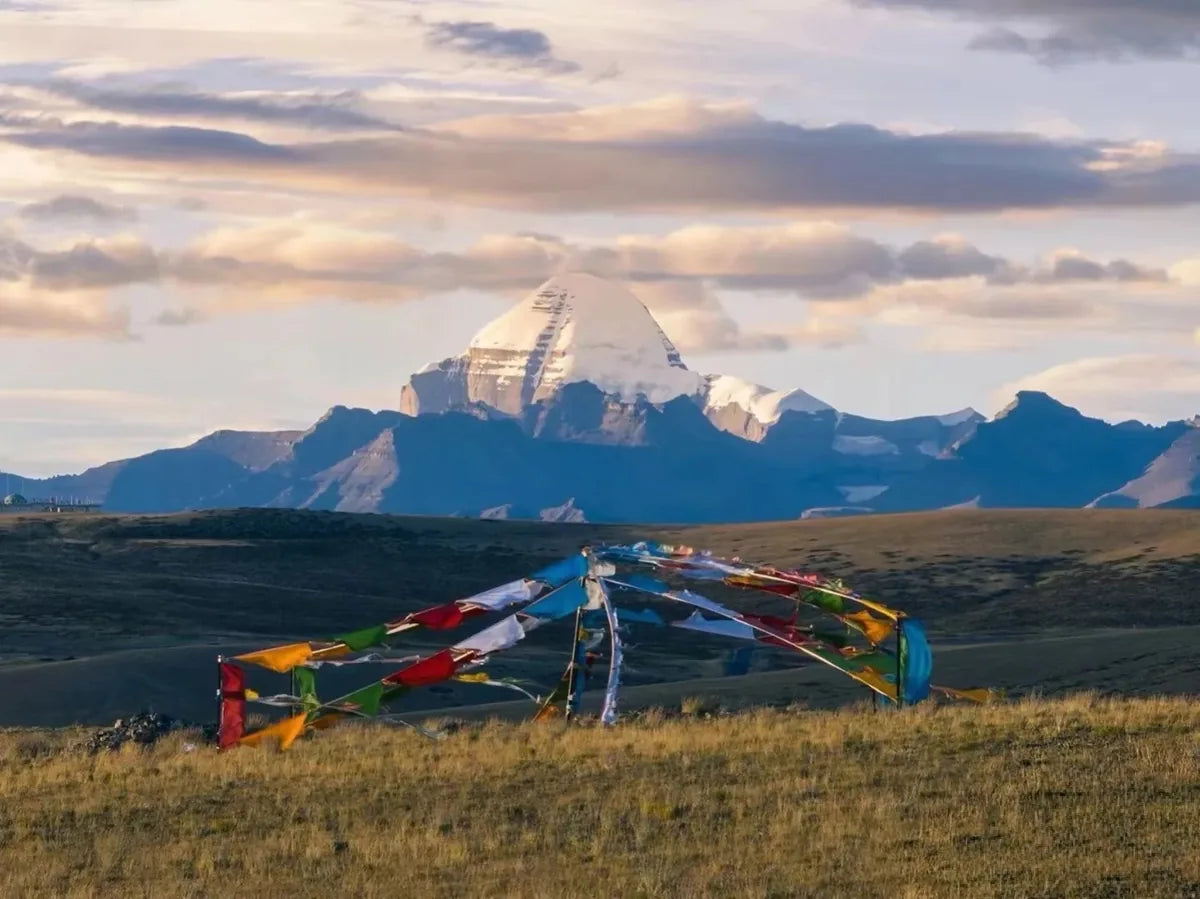
Because the imagery is strongly associated with flags, people sometimes assume that lungta simply means “prayer flag.” It does not. Prayer flags are a broader category, and not every Tibetan prayer flag is a Wind Horse flag.
For the full flag tradition, read What Do Tibetan Prayer Flags Mean?.
What Does It Mean to “Raise the Windhorse”?
This phrase is not a modern wellness invention. Tibetan religious literature contains multiple lungta practices.
Traditional texts speak of raising or increasing windhorse in connection with favorable circumstances and the effectiveness of virtuous activity. These sources show that lungta can be understood as something that may weaken, sink, recover, or be strengthened. The metaphor is dynamic rather than static.
Is Lungta the Same as “Energy”?
“Energy” is a convenient English shorthand, but it can become misleading very quickly.
Lungta is not a scientific energy field, and traditional texts do not support claims that a bracelet, crystal, or printed horse automatically changes measurable bodily energy. It is better to translate around the concept: auspicious momentum, vitality, fortune, effectiveness, or the favorable “wind” behind one’s activity.
Even those words are approximations. Tibetan terms often carry social, ritual, cosmological, and emotional layers that do not map perfectly onto one English word.
Wind Horse and the Five Colors
Modern lungta imagery frequently appears within the familiar five-color prayer-flag system: blue, white, red, green, and yellow. Different traditions connect those colors with elements and other symbolic systems.
Contemporary museum interpretations sometimes connect Wind Horse imagery with five-element color systems and ideas of positive energy, life force, and good luck. That can be useful for orientation, but it should not make us assume every historical Wind Horse print used one identical color chart.
The Four Animals Around the Wind Horse
Many classic Wind Horse compositions place four animals around the central horse, commonly identified in later Buddhist contexts as the tiger, snow lion, garuda, and dragon.
As with prayer flags more generally, iconography varies across time, region, and Bön or Buddhist contexts. A modern infographic that assigns one fixed personality trait to each animal may be memorable, but it is not automatically a reliable historical interpretation.
Wind Horse, Fortune and Action
One reason lungta remains compelling is that it links inner condition with outward circumstances. Traditional prayers do not speak only about private feelings; they can concern activity, obstacles, reputation, prosperity and favorable conditions.
That makes lungta different from a purely inward meditation metaphor. It concerns how a person’s life moves through a world of relationships and circumstances.
Where Does Wind Horse Appear in Tibetan Elemental Astrology?
Wind Horse also has a technical connection with Tibetan Jung-Tsi, or Elemental Astrology. In traditional pebble-element calculations, a category commonly translated as fortune (klung) is closely associated with lungta.
This does not mean “Wind Horse = guaranteed luck.” The fortune category is one calculated factor among several, alongside traditional categories translated as life-force, body, power or capacity, and life-spirit. Their elemental relationships are considered together rather than as a single fortune score.
For that astrological layer, read The Five Personal Forces in Tibetan Astrology: Life-Force, Body, Power, Fortune and Life-Spirit. For the wider system, begin with What Is Tibetan Astrology?.
Is Wind Horse Pre-Buddhist?
Popular explanations often say simply that lungta is “an ancient pre-Buddhist Tibetan symbol later adopted by Buddhism.” The historical development is more complicated than that sentence suggests.
Wind Horse traditions intersect with Bön and Tibetan Buddhist contexts. Rather than claim a single point of origin, it is safer to recognize that lungta developed across overlapping Tibetan religious and cultural worlds and was incorporated into Buddhist liturgical practice.
Wind Horse Is Not Every Horse in Tibetan Culture
Actual horses also matter in Tibetan life: transport, trade, cavalry, pastoral movement, racing, status, and regional history. Those real horses should not automatically be interpreted as lungta.
A horse becomes the Wind Horse through a specific symbolic and ritual context. This distinction prevents a common mistake in contemporary design: taking any Tibetan horse image and labeling it “Wind Horse energy.”
How Kailora Interprets Lungta
Kailora’s Vital Energy collection uses “energy” as contemporary brand language. Lungta offers a useful cultural reflection on movement, courage, favorable momentum, and intention entering action, but Vital Energy is not a traditional Tibetan Buddhist category.
For Kailora, the responsible bridge is conceptual rather than doctrinal: an intention matters when it moves into the world. That is our modern reflection, not a translation of a lungta liturgy.
Frequently Asked Questions
What does lungta literally mean?
It is commonly translated as “Wind Horse,” combining the Tibetan words for wind and horse.
Is lungta just a prayer flag?
No. Wind Horse flags are one important form, but lungta also appears in Tibetan prayers and practices as a broader concept connected with auspicious fortune and effectiveness.
What does “raising the windhorse” mean?
Traditional Tibetan sources use this language for practices connected with improving favorable circumstances and the effectiveness of activity.
Is lungta a scientific form of energy?
No. “Energy” is an approximate modern translation in some contexts, not a measurable scientific claim.
Is Wind Horse part of Tibetan astrology?
It has a connection with the traditional fortune category used in Tibetan Elemental Astrology, but Wind Horse also has broader religious, prayer-flag and cultural meanings outside horoscope calculation.
Are all Tibetan horse symbols Wind Horses?
No. Historical, domestic, equestrian, and decorative horse imagery has many contexts. Wind Horse should be identified from its specific iconography or textual setting.
Continue Exploring Kailora
- Tibetan Prayer Flags: Lungta & the Five Colors
- The Five Personal Forces in Tibetan Astrology
- What Is Tibetan Astrology? A Beginner’s Guide
- Vital Energy — Kailora’s Contemporary Intention Collection
- Tibetan Culture Guide
Cultural note: Lungta carries overlapping ritual, cultural and astrological meanings. This article explains those historical associations without presenting them as scientifically verified effects or guarantees of luck.