


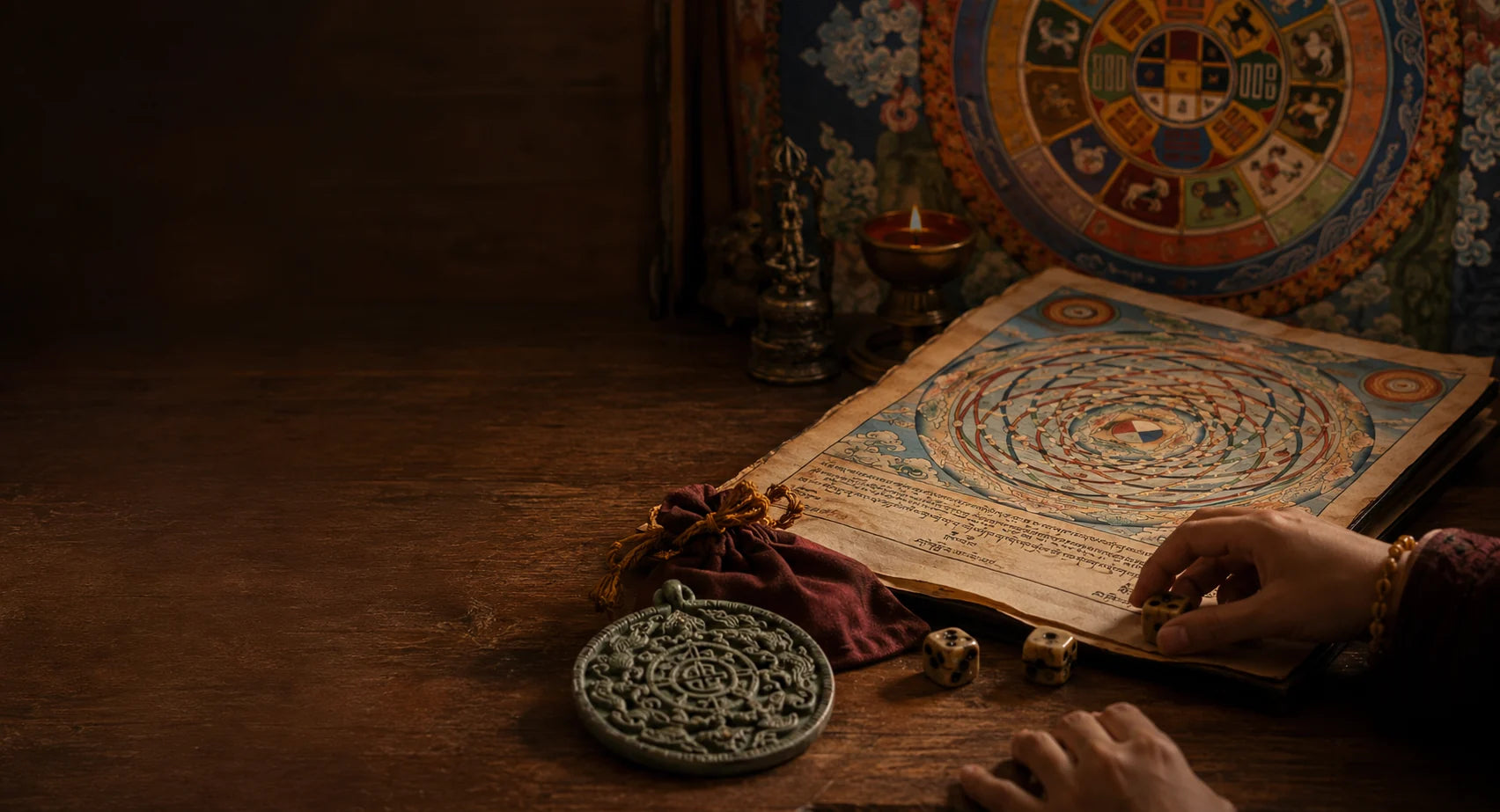

Quick answer: Tsa-tsas are small molded Buddhist votive objects, usually made from clay or another earthen material. They can depict Buddhas, bodhisattvas, teachers, stupas, sacred formulas, and other religious imagery. Across Tibetan and Himalayan Buddhist cultures they have been made for devotional practice, merit, pilgrimage, sacred deposits, memorial contexts, and the reproduction of sacred images.
Their small size can make them easy to overlook. Yet tsa-tsas show how Buddhist visual culture could be multiplied, carried, offered, deposited, and shared far beyond monumental temples or large sculptures.
What Is a Tsa-Tsa?
A tsa-tsa is a molded sacred object produced by pressing prepared clay or another moldable material into a carved mold. Historic examples range from relatively flat plaques to small three-dimensional stupas.
The term describes a broad class of devotional objects rather than one fixed image. A tsa-tsa may depict Tara, Avalokiteshvara, a Buddha, a teacher, a protective figure, a stupa, or an inscription.
The tradition became deeply established in Tibetan Buddhism while belonging to a wider Buddhist history of reproducing sacred images and texts through molds.
How Are Tsa-Tsas Made?
The basic process is simple in principle: prepare the material, press it into a mold, remove the formed object, and allow it to dry. Depending on region, period, purpose, and lineage, additional finishing, painting, inscriptions, fillings, or ritual preparation may follow.
A mold can be used repeatedly, allowing many images to be made from a single design. This differs from a unique hand-painted thangka or an individually modeled sculpture.
Repetition does not make the objects culturally insignificant. In Tibetan Buddhist contexts, repeated production can itself become part of devotional activity.
Why Were So Many Tsa-Tsas Produced?
One important reason is the Buddhist concept of merit. Creating or commissioning sacred images can be understood as a positive religious action, especially when connected with prayer, dedication, pilgrimage, or other practice.
Because molds make repetition possible, tsa-tsa production lends itself to cumulative practice. But there is no universal rule that one exact number always produces the same spiritual result. Instructions and interpretations vary by text, lineage, teacher, and ritual context.
It is therefore more accurate to say that tsa-tsa making has long been associated with merit-making and devotional practice than to treat the objects as mechanical spiritual tokens.
What Images Appear on Tsa-Tsas?
Surviving examples are diverse. They include Buddhas, bodhisattvas, teachers, tantric figures, stupas, auspicious imagery, and sacred writing. Some are relatively simple; others preserve surprisingly detailed iconography within a very small surface.
When a tsa-tsa depicts Avalokiteshvara, Tibetan viewers may understand the figure as Chenrezig. See Who Is Chenrezig?. For Tara imagery, continue with Green Tara and White Tara.
Why Are Tsa-Tsas Placed Inside Chortens and Stupas?
Tsa-tsas can serve as sacred deposits. Tibetan stupas or chortens may contain relics, texts, mantras, tsa-tsas, and other ritually prepared materials. This means a monument that looks solid from the outside can contain a carefully organized sacred interior.
Read What Is a Chorten? for the architectural form, and Buddhist relics in Tibetan culture for the wider reliquary context.
Not every tsa-tsa is created for insertion into a stupa. Sacred deposit is one important function among several.
Why Are Tsa-Tsas Connected with Pilgrimage?
Small molded objects are portable. Pilgrims could make, obtain, carry, offer, or deposit tsa-tsas in connection with monasteries, caves, mountains, stupas, and other sacred locations.
A tsa-tsa can therefore connect material object and sacred place. Its significance may depend not only on what it depicts but also on where it was made, carried, offered, or left.
For the wider relationship between movement and sacred place, see kora and circumambulation and Tibetan Buddhist sacred geography.
Can Tsa-Tsas Contain Ashes or Other Materials?
Some can, especially in funerary or memorial contexts. Cremated remains, medicinal substances, or other materials may be incorporated into certain tsa-tsas according to the practice involved.
That does not mean every tsa-tsa contains human ashes. Ashes are a context-specific possibility, not the defining material of the tradition.
Are All Tsa-Tsas Consecrated?
No universal claim should be made that every historical or contemporary tsa-tsa has undergone the same ritual preparation. Many tsa-tsas are made for religious use and may be consecrated, but surviving objects often lack complete documentation, and modern molded objects can also be produced for education, collecting, or decoration.
This distinction is similar to the one discussed in how Tibetan Buddhist statues are consecrated: physical appearance alone does not tell us the complete ritual history of an object.
Are Tsa-Tsas Amulets?
Calling every tsa-tsa an amulet is too narrow. Their documented functions include merit-making, sacred deposits, pilgrimage, memorial or funerary use, reproduction of sacred imagery, and devotional practice.
Tibetan material culture also includes portable containers such as gau or ga’u boxes. A gau is a container or portable shrine-like object; a tsa-tsa is typically a molded sacred object. They should not be treated as interchangeable categories.
Are Tsa-Tsas Still Made Today?
Yes. Tsa-tsa making remains a living practice in Tibetan Buddhist and Bon communities, although materials, workshops, rituals, and methods vary. Contemporary tools may change while inherited forms and purposes continue.
A modern decorative cast may resemble a tsa-tsa visually without sharing the ritual history of a consecrated or deposited object. Appearance and ritual status are not the same thing.
Frequently Asked Questions
What does tsa-tsa mean?
A tsa-tsa is a small molded Buddhist sacred or votive object, usually made from clay and bearing an image, stupa form, inscription, or other sacred design.
Why are tsa-tsas made?
Documented purposes include merit-making, devotional practice, pilgrimage, sacred deposits, memorial contexts, and reproducing sacred images or texts.
Are tsa-tsas placed inside stupas?
Many are, but not all. Tsa-tsas can be one type of sacred material deposited within stupas or chortens.
Do tsa-tsas contain human ashes?
Some funerary tsa-tsas may include cremated remains, but many do not. Ashes are not a universal ingredient.
Are all tsa-tsas consecrated?
No. Many are associated with ritual preparation, but the ritual status of a specific historical or modern object should not be assumed without evidence.
Are tsa-tsas protection charms?
That description is too narrow. Their traditional roles are broader and depend on the specific religious context.
Cultural note: Tsa-tsa materials, imagery, ritual uses, and meanings vary by region, period, lineage, and community. This article is a cultural introduction rather than ritual instruction.
Continue with the Kailora Tibetan Culture Guide for related sacred art, ritual objects, and pilgrimage traditions.