



Himalayan quartz generally refers to natural quartz associated with sources in or around the Himalayan region. Mineralogically, it is still quartz—silicon dioxide (SiO₂)—rather than a separate mineral species. What makes a specimen “Himalayan” is therefore not a different chemical composition, but its claimed or documented provenance, together with its individual crystal form, clarity, inclusions, and geological character.
For jewelry lovers, collectors, and people drawn to symbolic objects, that distinction matters. A beautiful clear crystal may be quartz, but appearance alone does not establish that it came from the Himalayas. Understanding origin, material, cultural context, and modern symbolism makes it easier to appreciate Himalayan quartz without relying on exaggerated claims.
Himalayan Quartz at a Glance
- Mineral: Quartz
- Chemical composition: Silicon dioxide, SiO₂
- Appearance: Commonly clear to translucent; natural veils, fractures, clouding, and mineral inclusions may occur
- “Himalayan” refers primarily to: Geographic provenance rather than a unique mineral species
- Common jewelry forms: Beads, pendants, malas, necklaces, bracelets, and ritual-inspired jewelry
- Modern symbolic associations: Clarity, awareness, intention, stillness, and reflection

What Exactly Is Himalayan Quartz?
Quartz is one of the most common minerals in Earth’s crust and is composed of silicon dioxide. Pure quartz can appear colorless and transparent, while natural impurities, structural variations, and mineral inclusions can create a wide range of visual characteristics.
The term Himalayan quartz works differently from mineral names such as amethyst or smoky quartz. “Himalayan” is mainly a geographic descriptor. It tells us where a crystal is said to have originated, not that the quartz has a different chemical formula.
This is why provenance is so important. Two clear quartz crystals can look broadly similar while coming from entirely different parts of the world. When a seller describes a crystal as Himalayan quartz, the most meaningful question is not simply “Does it look Himalayan?” but: What evidence supports its origin?
That evidence may include supplier documentation, mining locality information, sourcing records, or a traceable relationship with a known mineral-producing area. For this reason, Kailora treats material identity and geographic origin as two separate questions. “Natural clear quartz” describes the material. “Himalayan quartz” should only be used when the Himalayan origin can be responsibly supported.
Where Does Himalayan Quartz Come From?
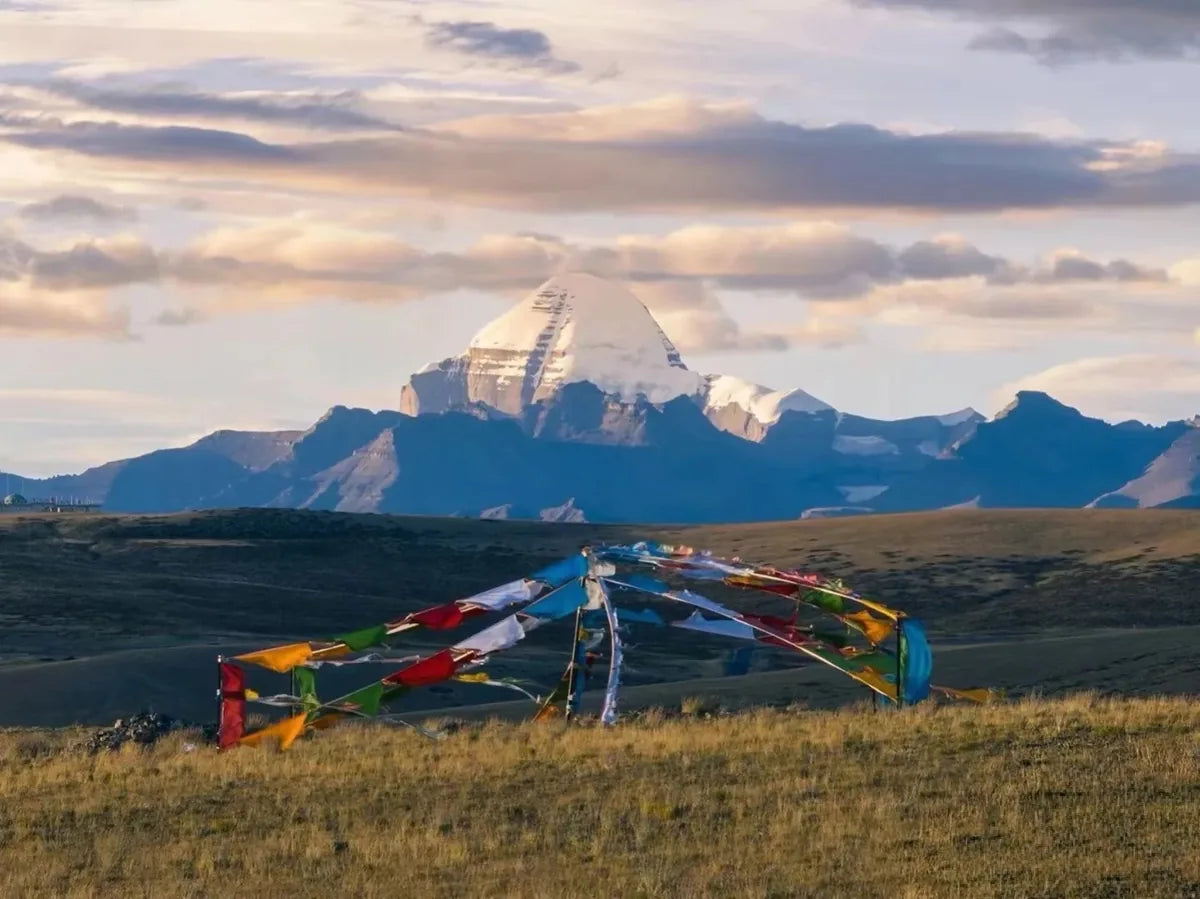
The Himalayas stretch across a vast and geologically complex region. Quartz occurs in multiple parts of this broader mountain system, so the term “Himalayan quartz” should not automatically be interpreted as meaning “from Tibet” or “from one specific mountain.”

Ganesh Himal, Nepal
One of the best-known names in the international mineral community is Ganesh Himal, in Nepal. Mineralogical records for the Ganesh Himal area in Dhading District document quartz together with minerals including members of the chlorite group, albite, and titanite.
This helps explain why some Ganesh Himal quartz specimens are visually distinctive. Natural mineral associations and inclusions can create greenish, clouded, phantom-like, or landscape-like internal structures. These features are geological characteristics—not proof of spiritual power—and they vary from specimen to specimen.
Ganesh Himal quartz deserves its own detailed guide because “Ganesh Himal Quartz” has become an important provenance term within the collector and crystal-jewelry markets. A dedicated Kailora guide will follow as part of this journal series.
The Wider Himalayan Region
Quartz also occurs elsewhere throughout the broader Himalayan geological system. Because commercial labels are not always standardized, terms such as “Himalayan Quartz,” “Tibetan Quartz,” and regional trade names can overlap in online marketplaces.
That makes careful sourcing especially important. A crystal should not be called Tibetan simply because it has dark inclusions, a double termination, an unusual shape, or a spiritual-looking presentation. Appearance is not a reliable substitute for provenance.
What Makes Himalayan Quartz Different?
If Himalayan quartz is chemically still quartz, what creates its appeal? Usually it is a combination of four factors.
1. Provenance
For genuinely sourced Himalayan material, geographic origin can form an important part of the crystal’s identity. Collectors may value a specimen not only for how it looks, but because it can be associated with a specific mineral locality. In jewelry, provenance can also deepen the relationship between material and design—but only when that provenance is credible.
2. Crystal Form
Natural quartz grows in a wide range of habits and formations. Some Himalayan-region specimens are collected for sharply defined crystal points, unusual terminations, clusters, or distinctive natural growth patterns. When crystals are later cut and polished into beads, some of this original crystal form is lost, making documentation even more important.
3. Clarity
Quartz can range from highly transparent to milky, clouded, or heavily included. Greater transparency does not automatically mean greater authenticity or greater cultural significance. A naturally included crystal can be just as geologically interesting as a highly transparent one.
4. Natural Inclusions
Quartz may contain visible mineral inclusions, internal veils, healed fractures, or other growth features. At Ganesh Himal, quartz is documented in association with chlorite and other minerals. These internal landscapes are one reason certain Himalayan specimens have become visually recognizable in the mineral market. Inclusions should be described for what they are: natural geological features.
Himalayan Quartz vs. Clear Quartz
“Himalayan quartz” and “clear quartz” are not opposing mineral categories. A piece of Himalayan quartz can also be clear quartz—but not every piece of clear quartz is Himalayan quartz.
| Feature | Himalayan Quartz | Clear Quartz |
|---|---|---|
| Mineral species | Quartz | Quartz |
| Main composition | SiO₂ | SiO₂ |
| Main distinction | Claimed or documented Himalayan provenance | Colorless/transparent quartz from many possible origins |
| Appearance | Variable | Clear to translucent |
| What matters when buying | Provenance + material quality + craftsmanship | Material quality + craftsmanship |
This distinction is especially important in jewelry, where polished beads may no longer show the external crystal habits that mineral collectors use to study natural specimens.
Rock Crystal in Tibetan Material Culture
The connection between quartz and Himalayan culture becomes more interesting when we move away from modern crystal marketing and look at documented objects. Museum collections preserve examples of rock crystal prayer beads from Tibet, establishing a real place for rock crystal within Tibetan material and ritual culture.
That does not prove every modern claim attached to “Tibetan quartz.” It would be inaccurate to turn historical prayer beads into sweeping statements such as “Tibetans have always used quartz to heal the body” or “Himalayan quartz has been considered the most powerful crystal for thousands of years.”
The evidence supports something more precise: rock crystal was among the materials used to create ritual objects and prayer beads in Tibetan culture. Tibetan material culture also includes many other materials, including turquoise, coral, amber, agate, seeds, shell, and precious metals.
For a broader look at adornment materials, explore our guide to jewelry worn with traditional Tibetan dress.
Himalayan Quartz Meaning & Symbolism
In contemporary crystal and spiritual communities, clear quartz and Himalayan quartz are commonly associated with ideas such as clarity, awareness, intention, reflection, focus, and stillness.
These are best understood as modern symbolic and spiritual associations, not established medical effects. Kailora approaches crystal meaning in the same way: a crystal can function as a personal reminder—something tactile that helps connect a wearer with an intention, meditation practice, or moment of reflection. The object does not need to make a medical promise to carry personal meaning.
Intuition & Awakening
Clear quartz can symbolize mental clarity, awareness, and the act of listening inward.
Healing & Inner Peace
Here, “healing” is used in a personal and symbolic sense: slowing down, creating space, returning to stillness, and reconnecting with oneself. It is not presented as medical treatment.
This distinction is central to Kailora’s philosophy: jewelry as ritual, intention as a daily practice.
Himalayan Quartz in Jewelry
Quartz is well suited to jewelry because of its durability, visual clarity, and versatility. Depending on how it is cut and assembled, it can take very different forms.
Quartz Bracelets
Round quartz beads create a tactile rhythm around the wrist and are easy to wear every day. A bracelet can also combine clear quartz with other stones, metals, Tibetan-inspired symbols, or traditional craft elements.
Quartz Mala Beads
Prayer beads create a closer relationship between jewelry and ritual practice. In Tibetan Buddhist material culture, prayer beads are functional ritual objects rather than simply decorative necklaces. Modern mala-inspired jewelry may draw on this bead-based format while being designed for contemporary wear.
Quartz Pendants
Natural points, carved forms, polished crystals, and symbolic pendants allow the quartz itself to become the visual center of the piece. When a crystal is paired with a Tibetan-inspired symbol, the strongest design tells the truth about both elements rather than inventing a false ancient tradition around the combination.
How to Choose Himalayan Quartz Jewelry
Ask About Provenance
Can the maker or seller explain where the quartz came from? A vague spiritual story is not the same as a documented origin. If the origin cannot be verified, “natural clear quartz” may be the more accurate description.
Look at Natural Characteristics
Natural quartz can contain internal veils, small fractures, clouds, inclusions, slight variations in transparency, and differences between beads. Perfect visual uniformity is not a requirement for natural quartz.
Examine the Craftsmanship
For bead jewelry, look at polishing, bead consistency, drill holes, cord or string construction, metal components, finishing, and comfort on the body. A meaningful material still needs good craftsmanship.
Understand the Symbolism
Ask what the design is actually referencing. Is it a modern spiritual interpretation, a Tibetan-inspired symbol, a documented ritual format, or a contemporary design story? Clear distinctions make jewelry more credible.
Choose by Intention, Not Promise
Instead of asking, “Which crystal guarantees the result I want?” a more useful question is: “What idea do I want this object to remind me of?” For clear quartz, that might be clarity. For smoky quartz, grounding. For a mala format, it might be mindful repetition and personal ritual.
A Kailora Clear Quartz Ritual Piece

For readers drawn to the symbolism of clarity and stillness, Kailora’s Tibetan-Inspired Natural Clear Quartz 108 Mala Wrap Necklace is made with natural clear quartz in a 108-bead format.
Kailora currently describes this piece as natural clear quartz, not Himalayan quartz, because the available product sourcing information confirms the material but does not establish a specific Himalayan mining locality.
That distinction reflects an important principle throughout this journal: we would rather describe a stone accurately than make its story larger than the evidence.
You can also explore Kailora’s Crystal Collection for additional natural crystal and Tibetan-inspired jewelry.
Frequently Asked Questions
Is Himalayan quartz a real type of quartz?
Himalayan quartz is real quartz, but “Himalayan quartz” is primarily a geographic or trade description rather than a separate mineral species. Mineralogically, it remains quartz, composed mainly of silicon dioxide.
Is Himalayan quartz different from clear quartz?
Not necessarily in mineral composition. Himalayan quartz can be clear quartz. The key added claim is geographic provenance. Clear quartz can come from many regions around the world, while Himalayan quartz is specifically associated with a Himalayan source.
Where is Himalayan quartz found?
Quartz occurs in several parts of the Himalayan geological region. Ganesh Himal in Nepal is one documented locality associated with quartz and mineral assemblages including chlorite, albite, and titanite.
Is Tibetan quartz the same as Himalayan quartz?
The terms can overlap commercially, but they should not automatically be treated as identical. “Tibetan quartz” implies a more specific geographic association, while “Himalayan quartz” can refer to a broader regional origin. Provenance should be checked rather than inferred from appearance.
What does Himalayan quartz symbolize?
In modern crystal and spiritual practice, quartz is often associated with clarity, awareness, intention, and reflection. These are symbolic interpretations rather than scientifically established medical effects.
How can you tell if Himalayan quartz is authentic?
First establish that the material is natural quartz. Then evaluate the claimed origin separately. Appearance alone usually cannot prove a Himalayan locality, especially after a crystal has been cut into polished beads. Reliable provenance information is therefore important.
From Stone to Ritual
The most compelling story of Himalayan quartz does not need exaggeration. Quartz already carries a remarkable geological story. Himalayan provenance adds place. Tibetan material culture adds historical context. Craftsmanship gives the stone a wearable form. Personal intention gives the object its individual meaning.
When those layers are kept distinct—and connected honestly—a crystal becomes more than a trend. It becomes a material, a story, and a ritual carried close to the body.
Kailora — Awaken Your Inner Energy.