


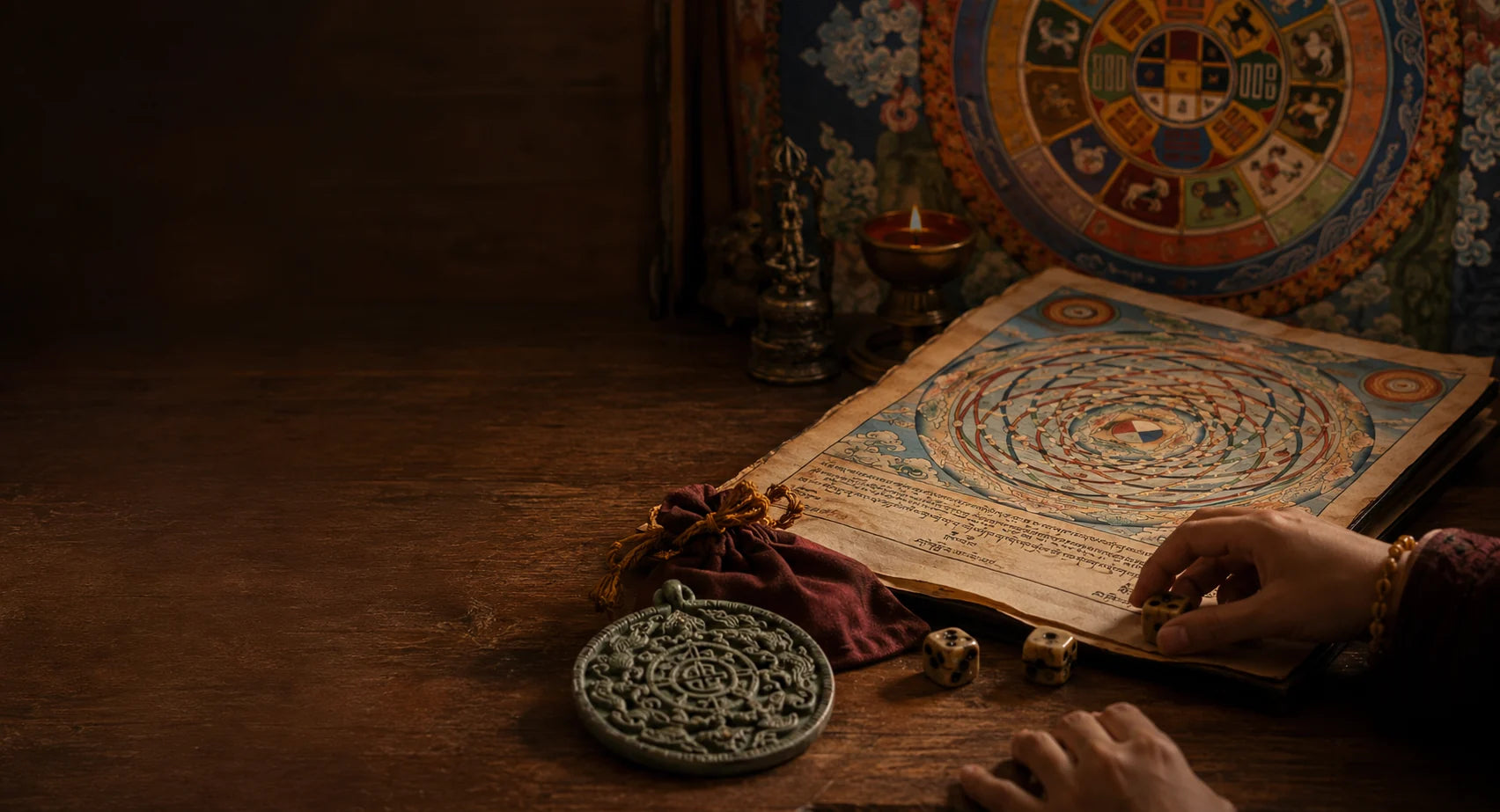

A Tibetan Buddhist protective amulet can contain far more than a visible symbol. One important form is the sungkhor: a ritually prepared protective object that may combine geometric diagrams, mantra formulas, images, sacred substances, folding, and colored cord. Understanding sungkhor helps separate documented Tibetan amulet practice from the much broader modern category of “spiritual charms.”
Quick answer: sungkhor are Tibetan Buddhist protective amulets associated with sacred diagrams and mantra formulas. Documented examples are consecrated through ritual procedures, folded, and may be wrapped with cords of five colors. They can be placed inside a Ga’u amulet box or worn separately.
What does sungkhor refer to?
The term is commonly translated in English as a protection circle, protection wheel, or protective amulet. The exact visual and ritual form can vary, so it is better to understand sungkhor as a category within protective Buddhist practice rather than one standardized graphic design.
In museum and scholarly descriptions, sungkhor and related protective amulets can use geometric diagrams drawn or printed on paper together with mantra formulas and images. The paper object is not simply decorative: it is prepared for a religious function.
The diagram is only one part of the object
Modern reproductions often emphasize the visible chart. Traditional documentation points to a larger process. A protective diagram may be combined with mantra, sacred substances, ritual preparation, folding, and wrapping. Once folded, much of the original design may no longer be visible.
This is an important difference between a ritual amulet and a poster or pendant printed with a protective-looking diagram.
Why are five-color cords used?
Project Himalayan Art documents protective amulets that are folded and wrapped with cords of five colors after ritual preparation. The cord helps bind the physical object while also participating in its ritual presentation.
For the wider material context, read What Do Five-Color Cords Mean in Tibetan Buddhist Culture?. The key point is that the cord’s significance comes from context rather than from a universal color-benefit chart.
Sungkhor and Ga’u
A sungkhor can be carried by itself or placed among the contents of a Tibetan Ga’u. This makes the relationship between amulet and container especially clear: the Ga’u is the portable box, while the sacred contents may include different kinds of ritually meaningful material.
Because the interior may be hidden, a Ga’u cannot be understood only from its exterior stones or metalwork.

Protection in historical Tibetan belief
Sources describing sungkhor record traditional protective uses connected with travel, misfortune, injury, illness, harmful forces, and other dangers. These statements describe religious beliefs and historical practice. They are not scientific evidence that a modern reproduced amulet prevents injury or treats illness.
That distinction protects both cultural accuracy and consumer honesty.
Why provenance matters
If an object is sold as an authentic consecrated sungkhor, the seller is making a factual claim about ritual preparation. A printed diagram made for decoration may reproduce the appearance of a protective chart but does not automatically share the same ritual status.
Questions worth asking include who prepared it, whether it was ritually consecrated, what tradition it belongs to, and whether its contents or origin are documented.
How contemporary jewelry can reference protective forms
Modern Tibetan-inspired jewelry can borrow the portability, geometry, cord construction, or amulet-box form of traditional objects while clearly remaining contemporary design. Personal symbolism—such as using a piece as a reminder of steadiness or boundaries—can be meaningful without claiming historical consecration.
Kailora’s Medicine Buddha Ga’u Bracelet references a portable amulet form in modern jewelry. Unless a specific listing documents otherwise, it should be understood as symbolic Tibetan-inspired design rather than a ritually prepared sungkhor.

Frequently asked questions
Is a sungkhor the same as a Ga’u?
No. A sungkhor is a protective amulet or protection diagram; a Ga’u is a portable container that can hold sacred or protective contents.
Can a sungkhor be worn?
Yes. Documented protective amulets can be worn separately or carried inside a Ga’u.
Does every Tibetan amulet contain a sungkhor?
No. Tibetan amulet traditions are varied, and Ga’u can hold different kinds of sacred images, texts, relics, blessed substances, or protective materials.
Continue with the Kailora Tibetan Culture Guide for the broader ritual and material context.