







If a crystal is sold as Himalayan quartz, the most important question is not whether it looks clear, included, double-terminated, or visually dramatic. The real question is: where did the rough crystal actually come from, and what evidence follows that claim?
“Himalayan” is a geographic description, not a separate mineral species. Quartz from Nepal, Tibet, India, Pakistan, Bhutan, or another part of the broader Himalayan system is still quartz. A more specific name such as “Ganesh Himal quartz” makes an even narrower provenance claim and therefore deserves more specific evidence.
If you are new to the material itself, begin with our overview, What Is Himalayan Quartz? Origin, Geology, Meaning & Jewelry. This second guide focuses on place, provenance, and the difference between a mineral identity and an origin story.
Where Does Himalayan Quartz Actually Come From?
The Himalayas are not a single mining locality. They are an enormous mountain system extending across several countries and many distinct geological belts. Quartz is widespread in the Earth’s crust and occurs in multiple geological settings throughout this wider region.
For buyers, that means a label such as “Himalayan quartz” sits at the broad end of an origin spectrum:
- Broad region: the Himalayas
- Country: for example, Nepal
- District or mountain area: for example, Dhading or the Ganesh Himal region
- Named locality or mine: a specific extraction site
- Collector or supplier lot: a traceable parcel linked to that locality
The more specific the claim becomes, the more specific the supporting information should become. A beautiful crystal may be genuine natural quartz while its exact geographic origin remains uncertain. Those two statements are not contradictory.

Nepal: A Documented Quartz-Producing Country
Nepal is one of the clearest places to begin because the country’s mineral authorities explicitly include quartz among Nepal’s non-metallic gemstone minerals. Government mineral-resource information also describes gemstone potential in the Higher Himalayan geological zone.
Historical mineral-resource summaries from Nepal additionally record quartz prospecting and mining licenses and describe small-scale quartz-crystal mining from pegmatites in parts of the country. This establishes an important point: quartz production in Nepal is real and documented.
What it does not establish is that every crystal marketed internationally as “Himalayan quartz,” “Nepal quartz,” or “Ganesh Himal quartz” came from the locality named by a seller. National mineral occurrence and an individual retail stone’s provenance are different levels of evidence.
Why Does Ganesh Himal Appear So Often in the Quartz Market?
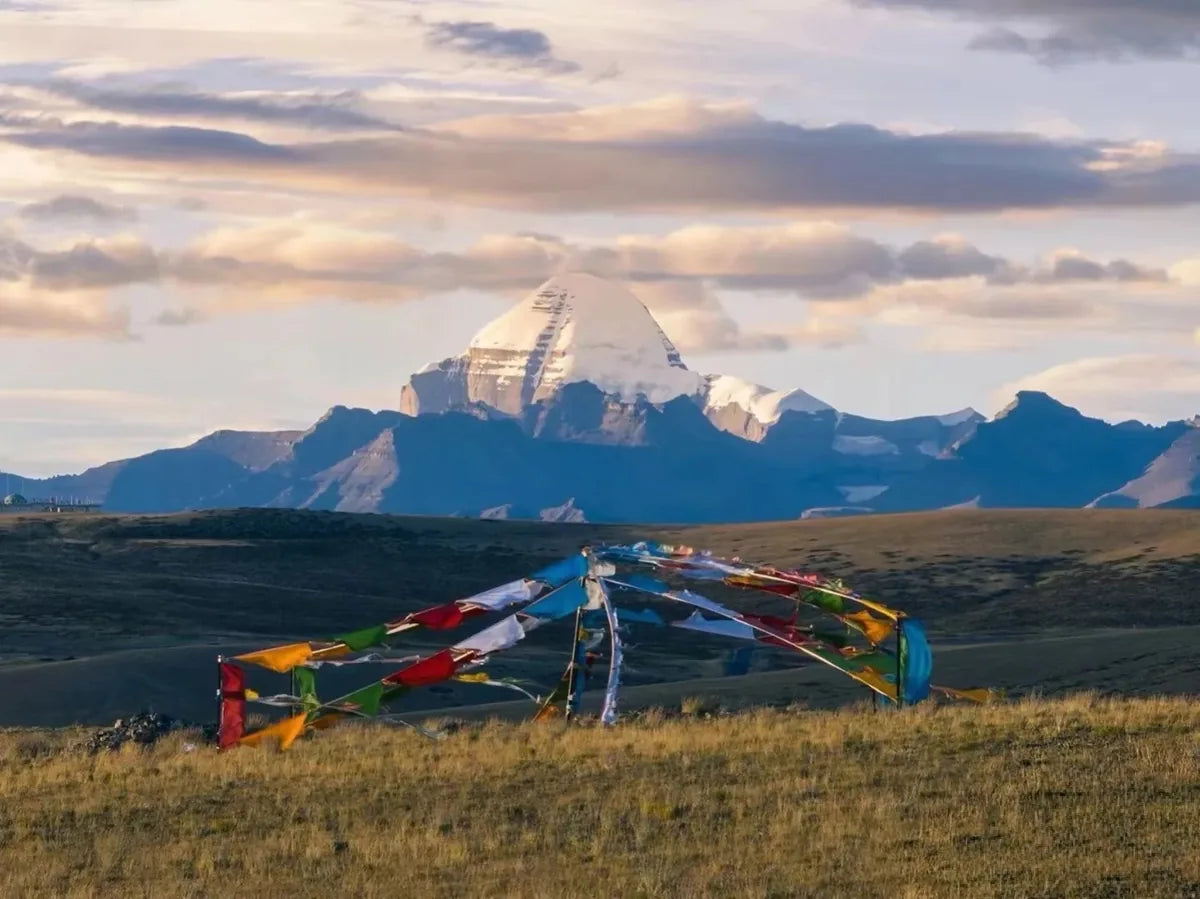
Ganesh Himal is a mountain region of central Nepal, associated with the Rasuwa–Dhading area. Geological literature documents complex metamorphic rocks and important mineralization in the region, including rocks such as quartzite, mica schist, dolomite, calcareous schist, and amphibolite near the Main Central Thrust zone.
In crystal and mineral commerce, “Ganesh Himal” has also become a recognizable provenance label. The problem is that a trade label can travel much farther than the documentation that originally supported it. Once rough material moves through collectors, traders, cutting workshops, bead factories, wholesalers, and jewelry makers, the original locality can become difficult to verify unless records travel with the lot.
For that reason, Kailora treats “Ganesh Himal quartz” as a specific geographic claim, not as a visual style. A crystal does not become Ganesh Himal quartz merely because it is highly transparent, contains green or dark inclusions, has phantoms, shows unusual terminations, or resembles specimens commonly sold under that name.
Ganesh Himal Is a Region, Not a Visual Test
This distinction is easy to miss online. Marketplace descriptions often mix three different ideas:
- Mineralogy: what the material is
- Provenance: where the material came from
- Trade language: how sellers describe or market the material
Only the second category answers the question “Where was this crystal mined?” The first can often be tested gemologically. The third may be useful for search and commerce, but it is not automatically evidence.
What About “Tibetan Quartz”?
“Tibetan quartz” is another term that requires care. In some parts of the crystal trade, it is used as a claimed geographic label. In other contexts, it can function more loosely as a commercial name for quartz with certain inclusions, growth forms, or spiritual associations.
That inconsistency is exactly why the label should not be inferred from appearance alone. A double termination, a dark inclusion, a “record keeper”–like surface feature, or a dramatic internal landscape does not independently prove that a quartz crystal was mined in Tibet.
There is also an important difference between where a stone was mined and where jewelry was made. A necklace can be handmade in Tibet using natural clear quartz whose geological source is not documented to Tibet. The craft location is still meaningful—but it should not be converted into a mining-origin claim.

Can a Laboratory Prove Where Quartz Came From?
A gemological laboratory can use microscopy, spectroscopy, physical properties, and other analytical methods to identify quartz and study its inclusions. Such testing can also help distinguish natural material from laboratory-grown material or identify particular inclusions.
Geographic-origin determination is a more demanding problem. For certain high-value colored stones—such as ruby, sapphire, emerald, and some other gems—major laboratories maintain extensive reference collections and may issue origin opinions by comparing inclusions, chemistry, spectra, and known-source samples.
Quartz is different in the retail crystal market. There is no simple universal test in which a laboratory looks at an ordinary clear-quartz bead and prints “Ganesh Himal” or “Tibet” with certainty. Similar quartz growth features and inclusion types can occur in different geological environments. Cutting and polishing can also remove external growth features that might have helped a mineral collector evaluate a specimen.
So for most jewelry-grade quartz, the strongest origin story is usually built from traceable sourcing records, ideally supported by credible mineralogical information—not from visual resemblance alone.
From Mountain Locality to Jewelry: How Provenance Gets Lost
A quartz crystal may change hands many times before it becomes jewelry. Each transfer creates an opportunity either to preserve provenance or to lose it.

1. Locality
The strongest starting point is a named mine, deposit, collecting area, or recognized mineral locality—not simply “the Himalayas.”
2. Collection
Who obtained the rough? A miner, local collector, cooperative, mineral dealer, or intermediary may each hold different levels of first-hand knowledge.
3. Documentation
Invoices, locality labels, lot numbers, supplier declarations, photographs of rough material, and consistent sourcing records can preserve the origin story as material changes hands.
4. Processing
Once crystals are sorted, cut, polished, drilled, or converted into beads, mixed lots can become much harder to separate. A workshop may know exactly what the material is while no longer having reliable evidence for the original mine.
5. Jewelry Workshop
The final maker should distinguish the facts it can verify from the story it cannot. “Natural clear quartz, handmade in Tibet” is a valid description when those two facts are documented. “Ganesh Himal quartz, mined from a sacred Himalayan peak” requires additional sourcing evidence.
A Practical Provenance Scale for Buyers
| Claim | What it tells you | Evidence to look for |
|---|---|---|
| Natural clear quartz | Material identity | Supplier specification, gemological testing when needed |
| Himalayan quartz | Broad regional origin | Traceable supplier records tied to Himalayan rough |
| Nepal quartz | Country-level origin | Country-specific sourcing documents and lot history |
| Ganesh Himal quartz | Named regional/locality claim | Locality labels, collector/dealer documentation, lot continuity |
| Handmade in Tibet | Craft or assembly location | Workshop and production records; it does not by itself prove stone origin |
How Kailora Handles Quartz Origin Claims
Kailora’s editorial rule is simple: the specificity of the language should not exceed the specificity of the evidence.
If we can verify the material as natural clear quartz but cannot document a named Himalayan mining locality, we describe it as natural clear quartz. If a piece is crafted or assembled in Tibet, that craft origin can be stated separately. We do not merge those two facts into an unsupported claim that the quartz itself was mined in Tibet or Ganesh Himal.
This approach may sound less dramatic than some crystal-market language, but it protects the part of the story that is actually meaningful: material, place, craft, symbolism, and personal intention can each be appreciated without turning one into evidence for another.
A Kailora Clear Quartz Piece: Material and Craft Kept Separate

Kailora’s Tibetan-Inspired Natural Clear Quartz Crystal Point Cord Necklace is a useful example of this distinction. The piece is presented as natural raw clear quartz and handmade in Tibet.
Those statements describe two different parts of the object’s story: the material and the craft. We do not automatically relabel the quartz as “Himalayan quartz” simply because the finished necklace was made in Tibet.
Explore additional materials and forms in Kailora’s Crystal Collection.
How to Evaluate a Himalayan Quartz Listing
Ask for a Specific Locality
“Himalayas” is broad. If a seller uses “Ganesh Himal,” “Dhading,” “Nepal,” or “Tibet,” ask whether that is a documented source or a trade description.
Ask What Documentation Exists
Not every small-scale collector will have laboratory paperwork, and provenance systems vary. But a credible seller should be able to explain how the origin information was obtained and how the lot was kept separate.
Do Not Treat Inclusions as a Passport
Inclusions can be scientifically useful and geologically fascinating. They may help identify minerals and, in some gemstone categories, contribute to geographic-origin work. But a visually similar inclusion pattern is not a universal passport for retail quartz.
Separate “Mined In” from “Made In”
Where the stone was extracted, where it was cut, where beads were drilled, and where jewelry was assembled can all be different places. Good product storytelling keeps them distinct.
Be Wary of Spiritual Language Used as Evidence
Claims such as “high vibration,” “ancient healing crystal,” or “sacred mountain energy” are spiritual or marketing interpretations. They do not establish geological provenance. Symbolism can be meaningful without being presented as proof.
Frequently Asked Questions
Is Ganesh Himal quartz from Nepal?
Ganesh Himal is a mountain region in central Nepal, so a genuine Ganesh Himal provenance claim is a Nepal origin claim. The important qualifier is genuine provenance: the name on a listing should be supported by sourcing information rather than appearance alone.
Is all Nepal quartz Himalayan quartz?
Not automatically. Nepal contains multiple geological regions, and quartz is documented in more than one part of the country. “Himalayan quartz” is best reserved for material whose sourcing supports that broader Himalayan origin.
Is Tibetan quartz the same as Ganesh Himal quartz?
No. Tibet and Ganesh Himal are different geographic references. The terms may be blurred in commerce, but they should not be treated as interchangeable provenance labels.
Can chlorite or dark inclusions prove a crystal is from Ganesh Himal?
No single visible inclusion type should be treated as automatic proof of a Ganesh Himal origin. Inclusion studies can provide useful mineralogical and geological clues, but reliable geographic sourcing requires comparison, context, and provenance records.
Can a lab identify natural quartz?
Yes. Standard gemological and analytical methods can identify quartz and examine inclusions, and can help address questions such as natural versus laboratory-grown material. A precise mine-level geographic origin is a separate and more difficult question.
What should I ask before buying Himalayan quartz jewelry?
Ask three things: What is the material? Where is the claimed source? What evidence connects this particular lot to that source? If the seller can only answer the first question, “natural clear quartz” may be the most accurate description.
Why Provenance Matters More Than a Bigger Story
The Himalayas do not need exaggerated crystal mythology to be compelling. The geology is already extraordinary. Nepal has documented quartz resources. Ganesh Himal has a complex, heavily deformed geological setting. Natural quartz can preserve its own internal record of growth, fractures, fluids, and mineral inclusions.
For Kailora, provenance is not about making every stone sound rare. It is about knowing where certainty ends. When a locality is documented, name it. When only the material is known, name the material. When a spiritual meaning is personal or contemporary, present it as symbolism.
That precision creates a stronger connection between stone, place, craft, and intention—and a more trustworthy way to carry Himalayan-inspired jewelry into everyday life.
Kailora — Awaken Your Inner Energy.