




“I’m a Dragon.”
“I’m a Rabbit.”
“My partner is a Horse—are we compatible?”
For many people outside East Asia, the Chinese zodiac begins and ends with a birth-year animal.
The animal is memorable, culturally important and a genuine part of traditional calendrical systems. But treating it as a complete personality profile—or a complete destiny reading—removes most of the system around it.
Tibetan elemental astrology makes this especially clear. A birth-year animal is an entry point, not the whole chart.
The Chinese Zodiac Animal Belongs to a Larger Cycle
The twelve zodiac animals correspond to the twelve Earthly Branches within traditional Chinese calendrical culture.
But Chinese time-reckoning does not consist of twelve animals alone. Traditional systems also use Heavenly Stems, yin and yang qualities and the Five Phases, producing larger cyclical combinations such as the sixty-year sexagenary cycle.
That means two people born under the same animal twelve years apart do not occupy an identical year within the full sixty-year cycle.
So “I am a Tiger” can be culturally meaningful while still being incomplete.
If you are new to the twelve animals, Kailora’s introductory guide is What Is My Chinese Zodiac Sign?
Tibetan Elemental Astrology Also Uses Twelve Animals
Tibetan astro-science developed through multiple historical streams, including systems with Indian and Chinese roots.
Within the Chinese-derived branch often called Jung-Tsi or Tibetan Elemental Astrology, the twelve animals appear together with five elemental categories commonly rendered in English as:
Wood · Fire · Earth · Iron · Water
These combinations participate in a sixty-year cycle.
You can explore that system in more detail in The Tibetan Zodiac: 12 Animals, Five Elements, and the 60-Year Calendar.
But even animal + element is still not the complete story.
What Is Mewa?
Mewa refers to a system of nine numbers used in Tibetan elemental astrology. Mewa calculations are associated with traditional astrological interpretation and calendrical relationships.
They are not simply “Tibetan numerology” in the modern personality-quiz sense.
For a dedicated explanation, see What Is Mewa in Tibetan Astrology?
What Is Parkha?
Parkha is the Tibetan term commonly used for the eight trigrams, historically related to Chinese bagua traditions and incorporated into Tibetan elemental astrology.
The trigrams are another layer used within traditional systems of calculation and interpretation.
Read more in What Is Parkha in Tibetan Astrology?
Why a Birth Year Cannot Be a Complete Traditional Reading
A full traditional Tibetan astrological assessment can involve more than the animal and element of a birth year. Depending on the tradition and purpose, calculations may consider calendrical details, Mewa, Parkha and personal forces, among other factors.
This is why Kailora must be precise about what a simple birth-year experience can and cannot do.
A birth-year animal can provide:
- a culturally grounded entry point into a calendrical cycle;
- an animal and elemental relationship used in simplified year-based reflection;
- a way to begin learning how Chinese and Tibetan systems differ and overlap historically.
It cannot, by itself, provide:
- a complete authoritative Tibetan natal horoscope;
- a guaranteed prediction of personality, compatibility, fortune or future events;
- the full calculation a traditionally trained astrologer might use.
If you want to understand that distinction more deeply, read What Is a Traditional Tibetan Natal Horoscope?
A Better Way to Use Your Zodiac Animal
Instead of treating the animal as a verdict—“I am this, therefore I must behave this way”—use it as an opening question.
1. Learn the Cultural Layer
What does the animal represent within the calendrical system rather than only in social-media personality lists?
2. Add the Element
See where the birth year sits in the larger sixty-year sequence.
3. Notice the Limits
Do not turn a simplified birth-year label into medical, financial or relationship certainty.
4. Let Symbolism Become Reflection
Ask which qualities of the animal or cycle you want to consciously carry—without assuming they are fixed traits assigned to you forever.
From Zodiac Symbol to Handcrafted Object
Kailora’s Chinese Zodiac Hand-Embroidered Brooch collection brings the twelve animals into a tactile form through hand embroidery made in Tibet.
The brooch does not contain your complete astrological chart, and wearing your animal does not guarantee compatibility or fortune.
Its role is symbolic: a way to carry a cultural marker of birth-year identity while remembering that identity is always richer than one sign.

Your Animal Is a Beginning, Not a Conclusion
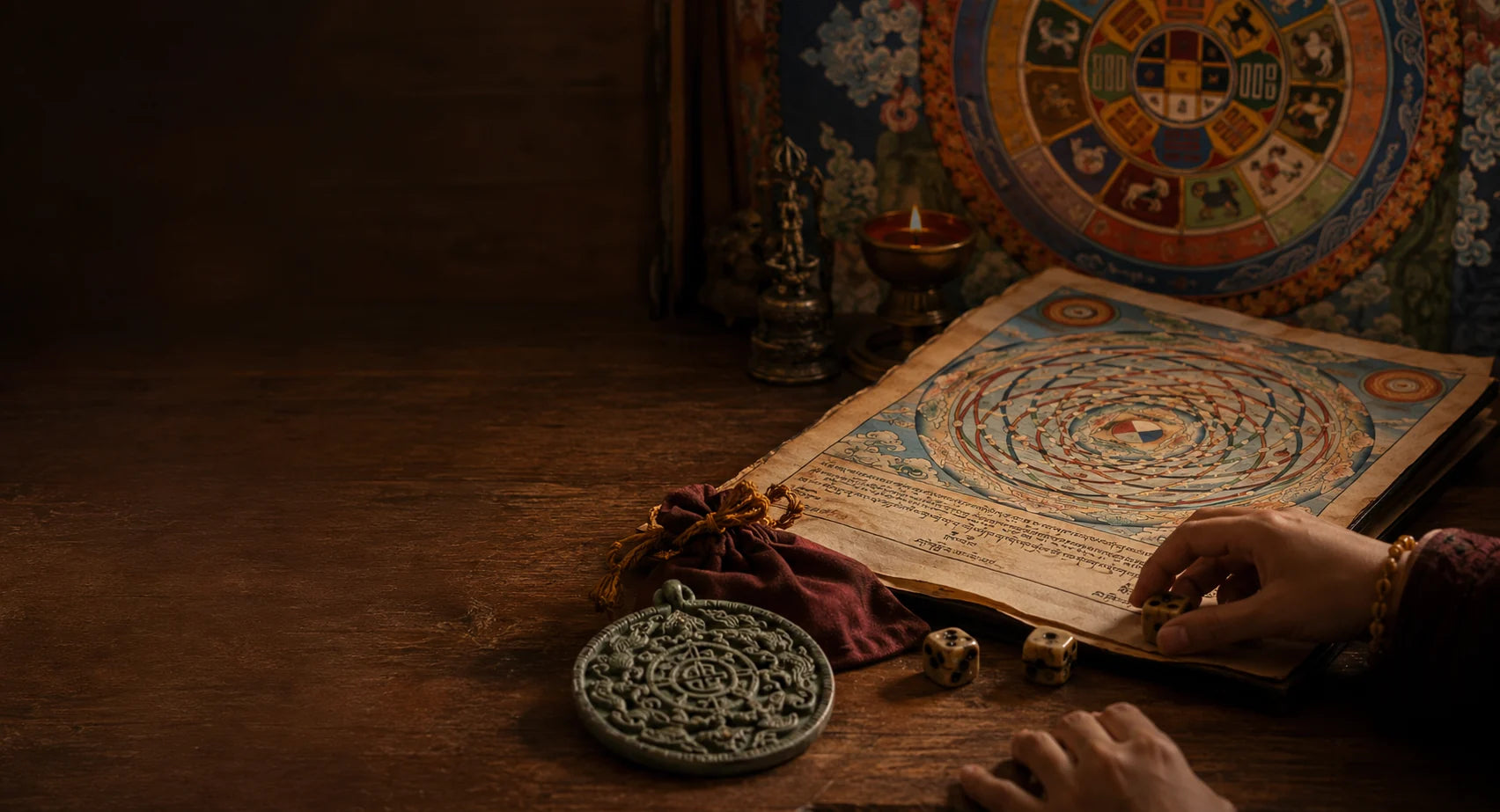
Chinese zodiac culture gives us twelve memorable animals. Tibetan elemental astrology places those animals inside a wider system of elements, Mewa, Parkha and cyclical time.
The more deeply we study these traditions, the less useful simplistic statements become.
“I’m a Dragon” can be meaningful.
It just should not be mistaken for the whole story.
So instead of asking only:
“What does my zodiac animal say about me?”
try:
“What larger cycle does this symbol belong to—and what part of that tradition do I actually understand?”
Know the symbol.
Respect the system.
Wear your intention.